Skip to content
You can now search across every topic, entity and event.What's new
UK Local Elections 2026
3AUG

Sinn Fein warns Stormont is in a precarious place

2 min read
15:31UTC

Conor Murphy said on 31 July that power-sharing is faltering and blamed the DUP. Gavin Robinson rejected it and said his party would not be goaded.

PoliticsDeveloping
Key takeaway

Sinn Fein blames the DUP for a wobble whose cause sits with the Treasury.

Conor Murphy of Sinn Féin said on 31 July that power-sharing at Stormont is in "a precarious place", accusing the Democratic Unionist Party of lacking "the political will to make it work" while insisting his own party remains "wedded to power-sharing" 1. Gavin Robinson, the DUP leader, rejected the characterisation, saying his party is "committed to" both the institutions and "delivering for the people", and would not be "goaded".

Ministerial posts in the Northern Ireland Executive are allocated to parties by seat strength, and the First and deputy First Ministers hold a joint office in which neither can serve without the other. If the largest unionist or nationalist party withdraws, the Executive stops. The DUP did exactly that between February 2022 and January 2024 over the Irish Sea trading arrangements, and the Assembly sat idle for almost two years.

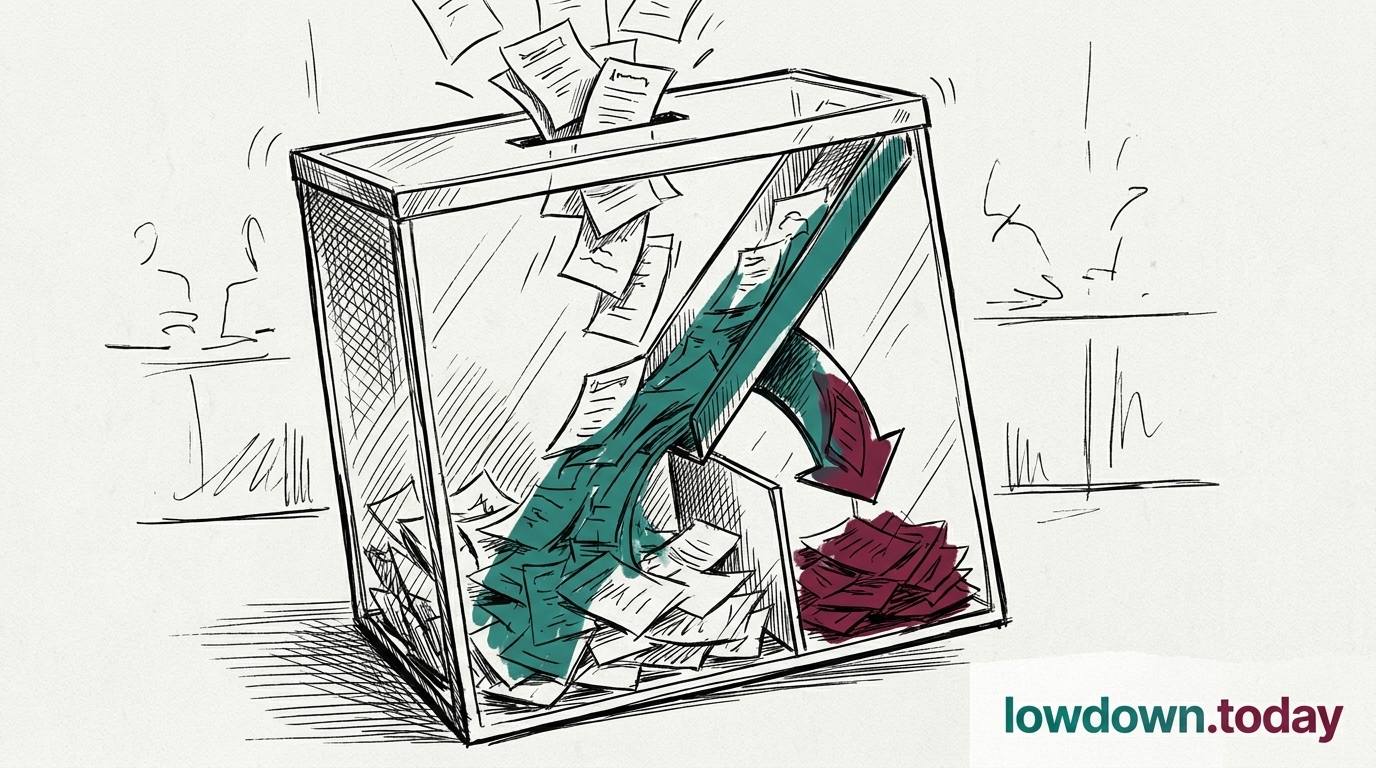
Underneath both statements sits a funding dispute with the Treasury, whose ministers took office only in late July . The four-party Executive wants more money for public services, one of the few positions all four parties share. A settlement that leaves ministers short gives every party a reason to blame someone else, and the nearest target is whoever sits across the table rather than the department in London holding the purse.

Murphy's statement names the DUP. The shortfall he describes is set by a department neither party sits in, which is what makes the argument circular and the institutions vulnerable to it.


Deep Analysis

In plain English

Stormont is the seat of Northern Ireland's devolved government, which by law must be run jointly by the largest unionist party (currently the DUP) and the largest nationalist party (currently Sinn Féin), a system called power-sharing designed to give both communities a say after decades of conflict. Sinn Féin's Conor Murphy said on 31 July that this arrangement is in 'a precarious place', blaming the DUP for lacking the political will to make it work. DUP leader Gavin Robinson rejected that characterisation, saying his party remains committed to the institutions.

Deep Analysis
Root Causes

Northern Ireland's power-sharing executive requires cross-community consent: major budget and funding decisions need both the largest unionist party, the DUP, and the largest nationalist party, Sinn Féin, to agree.

When Treasury funding allocations fall short of what either side has promised its own voters, that consent requirement becomes the structural friction point, since neither party can pass a budget the other refuses to back, distinct from the personal or presentational disputes each side accuses the other of.

What could happen next?
  • Risk

    Public warnings from senior figures in either governing party are typically an early signal in Northern Ireland's power-sharing history, preceding either negotiated resolution or eventual suspension.

First Reported In

Update #14 · Bev Craig wins under a revived voting system

UTV / ITV News· 3 Aug 2026
Read original
Different Perspectives
Democratic Unionist Party
Gavin Robinson rejects Sinn Féin's characterisation of the institutions as precarious, says the DUP is "committed to" delivering for the public, and will not be "goaded" into a dispute he attributes to Treasury funding rather than unionist bad faith.
Sinn Féin
Sinn Féin
Conor Murphy says Stormont power-sharing is in "a precarious place" and blames the DUP for lacking "the political will to make it work", while insisting his own party remains "wedded to power-sharing".
Council leaders in West Sussex and Cambridgeshire and Peterborough
Officers must recruit staff and set shadow budgets through the autumn for boundaries Whitehall has not yet drawn, after October's deferral cost three months of planning time without settling anything, while their May 2027 election date has not moved.
Restore Britain
Restore Britain
Restore Britain beat the Conservatives into fifth place in its first mayoral attempt, evidence Rupert Lowe's party has already displaced the Tories as the default home for voters leaving the Conservative column on Reform's right flank.
Scottish National Party
The SNP, through deputy leader Keith Brown, calls Sarwar's peerage exit "the most undemocratic trick in the Westminster book", arguing Scottish Labour now runs on a caretaker leader chosen by patronage rather than by Scottish voters.
Conservative Party
Conservative Party
The Conservatives finished fifth in Greater Manchester, beaten by Restore Britain, a party founded this year, in a contest the Tories once treated as a two-horse race against Labour.