Skip to content
You can now search across every topic, entity and event.What's new
UK Local Elections 2026
3AUG

Burnham takes No 10 without a ballot

2 min read
15:31UTC

Andy Burnham becomes prime minister on 20 July after 349 Labour MPs backed him, with no members' ballot and no general election.

PoliticsDeveloping
Key takeaway

Andy Burnham becomes prime minister on 20 July, chosen by Labour MPs without a members' ballot.

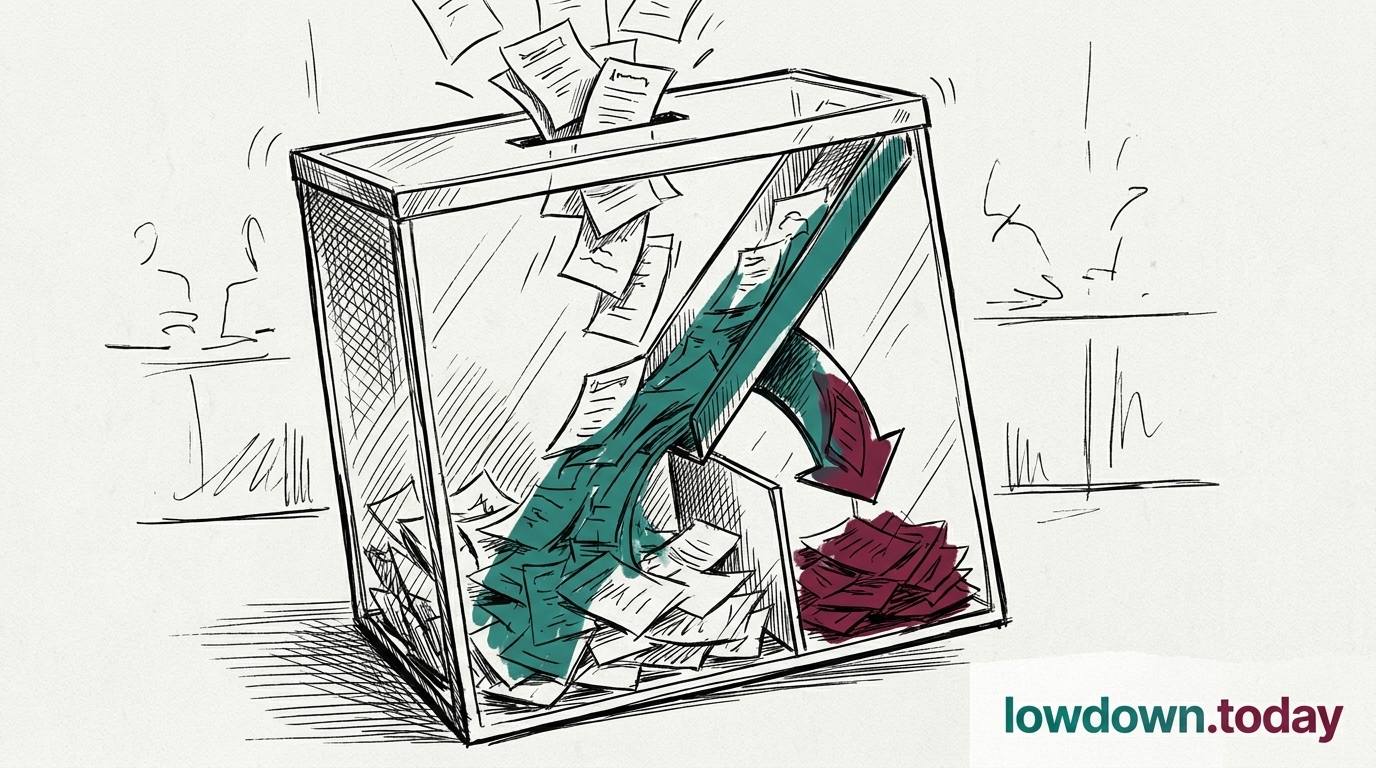
Andy Burnham will become prime minister on 20 July without a single Labour member casting a vote. Nominations opened on 9 July; he took 322 on the first day and 349 by 13 July, past the point any challenger could gather the 81 signatures the National Executive Committee (NEC), Labour's governing body, set to force a contest . 1

The path ran through one by-election. Burnham won Makerfield on 18 June with a 9,231-vote majority , pitched a 'No 10 North' base in Manchester , and inherits the office Keir Starmer left when he resigned four days after that win .

A special conference on 17 July confirms him as Labour leader, and the premiership follows three days later. No members' ballot, no general election, and a mandate conferred by 349 colleagues rather than by voters.

Not everyone reads the coronation as strength. The Spectator's Charles Moore argues the campaign, a mass Westminster Hall selfie and a helicopter trailing Burnham's train, delivered spectacle without a policy platform. 2

Deep Analysis

In plain English

Normally when a governing party changes leader, ordinary party members get to vote on who takes over. That's not happening this time. Andy Burnham has already won the backing of so many Labour MPs, well over the threshold needed, that no other candidate could realistically get enough support to force a proper contest. So Burnham becomes Labour leader and prime minister on the strength of MPs' signatures alone, confirmed at a special party conference rather than a member ballot. It's only happened once before in the party's time in government, when Gordon Brown took over in 2007.

Deep Analysis
Root Causes

The National Executive Committee's own 81-MP threshold, a fifth of the Parliamentary Labour Party, made a contest mathematically improbable the moment senior rivals such as Wes Streeting and David Lammy chose to endorse Burnham rather than stand themselves.

Burnham's route back into Parliament, the Makerfield by-election win on 18 June, was itself the structural precondition: without a Commons seat he had no standing to be nominated at all, so the leadership timetable could not begin until that single by-election concluded.

What could happen next?
  • Risk

    An uncontested succession leaves Burnham without a tested mandate from party members going into an election campaign against a resurgent Reform UK.

First Reported In

Update #12 · The finance bill Reform outran is back

ITV News· 15 Jul 2026
Read original
Different Perspectives
Democratic Unionist Party
Gavin Robinson rejects Sinn Féin's characterisation of the institutions as precarious, says the DUP is "committed to" delivering for the public, and will not be "goaded" into a dispute he attributes to Treasury funding rather than unionist bad faith.
Sinn Féin
Sinn Féin
Conor Murphy says Stormont power-sharing is in "a precarious place" and blames the DUP for lacking "the political will to make it work", while insisting his own party remains "wedded to power-sharing".
Council leaders in West Sussex and Cambridgeshire and Peterborough
Officers must recruit staff and set shadow budgets through the autumn for boundaries Whitehall has not yet drawn, after October's deferral cost three months of planning time without settling anything, while their May 2027 election date has not moved.
Restore Britain
Restore Britain
Restore Britain beat the Conservatives into fifth place in its first mayoral attempt, evidence Rupert Lowe's party has already displaced the Tories as the default home for voters leaving the Conservative column on Reform's right flank.
Scottish National Party
The SNP, through deputy leader Keith Brown, calls Sarwar's peerage exit "the most undemocratic trick in the Westminster book", arguing Scottish Labour now runs on a caretaker leader chosen by patronage rather than by Scottish voters.
Conservative Party
Conservative Party
The Conservatives finished fifth in Greater Manchester, beaten by Restore Britain, a party founded this year, in a contest the Tories once treated as a two-horse race against Labour.
