Skip to content
You can now search across every topic, entity and event.What's new
Russia-Ukraine War 2026
1APR

Ukraine deploys 228 specialists to Gulf

2 min read
16:30UTC

Ten-year defence deals with Saudi Arabia and Qatar turn combat experience into an export commodity. A UAE agreement is expected imminently.

ConflictDeveloping
Key takeaway

Gulf states are paying for Ukrainian combat expertise the US declined to support.

Ukraine signed 10-year defence deals with Saudi Arabia and Qatar in March 2026, deploying 228 counter-drone specialists across five Gulf states.1 A deal with the United Arab Emirates is expected imminently.

The personnel deployments are the most commercially significant element. Zelenskyy proposed drone combat hubs to the White House in August 2025; the US dismissed the offer . The Gulf states did not. At $2,500 to $5,000 per interceptor versus $13.5 million for a PAC-3 Patriot, Ukrainian systems offer a cost advantage of roughly 3,000 to 1. Gulf buyers gain operational counter-drone capability years faster than domestic development would allow. For Ukraine, these deals create a revenue stream independent of Western military aid.


Deep Analysis

In plain English

Ukraine has spent three years developing the world's most battle-tested drone warfare doctrine. Now it is selling that expertise to Gulf states that face real drone threats from Houthi and Iranian forces. The 228 specialists are essentially working as counter-drone consultants, embedded in five Gulf countries. The 10-year deal structure means Ukraine is not just selling equipment; it is selling knowledge and presence. The US had the opportunity to partner on this and declined in August 2025. The Gulf states accepted the same offer.

Deep Analysis
Root Causes

Zelenskyy proposed drone combat hubs to the White House in August 2025 and was dismissed. The Gulf pivot reflects a pragmatic reorientation toward buyers with both the need and the financial capacity to pay for Ukrainian expertise, without the political constraints that made US engagement difficult.

The 10-year deal structure also reflects Ukraine's need for long-term revenue certainty. Annual military aid packages from Western donors are subject to political cycles; a decade-long commercial contract with Gulf states provides a planning horizon that aid cannot.

What could happen next?
  • Consequence

    Ukraine establishes a sustainable revenue stream from Gulf defence relationships that reduces dependence on Western military aid and provides long-term financial planning certainty.

    Short term · High
  • Opportunity

    Gulf states gain combat-proven counter-drone capability far faster and cheaper than domestic development would allow, with practitioners who have real operational experience.

    Immediate · High
  • Risk

    Specialist deployments create potential intelligence exposure for Ukraine and create dependency dynamics that could complicate Ukrainian foreign policy if Gulf state interests diverge.

    Medium term · Medium
  • Precedent

    Ukraine's model of monetising combat expertise through personnel deployments will be studied by other conflict-experienced smaller militaries seeking to diversify beyond traditional hardware exports.

    Long term · Medium
First Reported In

Update #3 · Anduril wins $20 billion counter-drone deal

DroneXL (sourcing NYT)· 30 Mar 2026
Read original
Causes and effects
This Event
Ukraine deploys 228 specialists to Gulf
Monetises Ukraine's three years of combat-proven counter-drone doctrine through personnel deployment and long-term contracts.
Different Perspectives
Belarus
Belarus
Minsk announced completion of its own 37th Separate Airborne Assault Brigade near Gomel, under plans dating to August 2025 rather than a response to any single frontline event this window, keeping its hedge of hosting the war without formally joining Russia's mobilisation drive.
European Union / Operation IRINI states
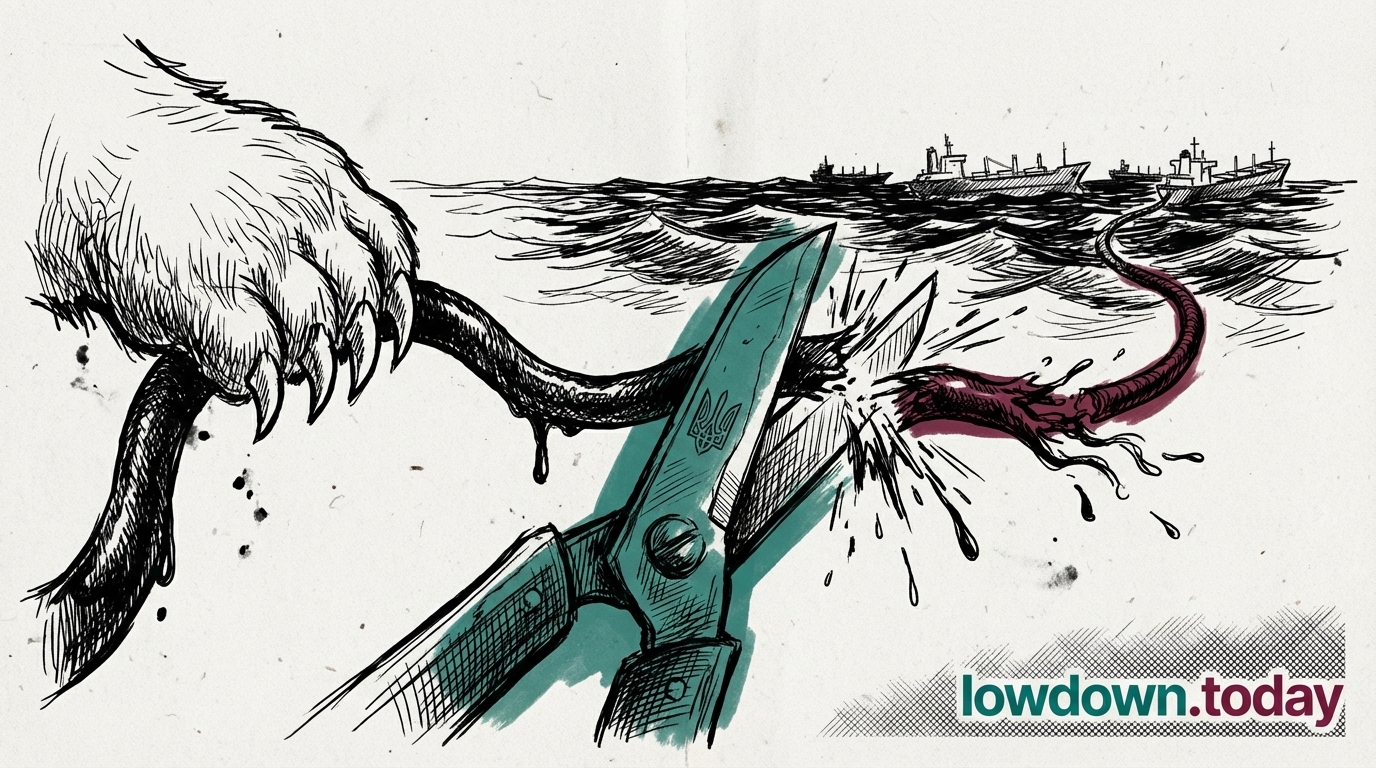
Italy, Greece and Poland boarded the sanctioned tanker Toa Payoh off Pantelleria under a standing EU mandate rather than a national decision, extending enforcement from the Channel and Baltic and the Black Sea and Azov into the Mediterranean. Italian Defence Minister Guido Crosetto praised the crew; the captain's refusal to produce documentation left detention unconfirmed.
Poland and the NATO eastern flank
Warsaw's Coordination Team said explicitly its forces tracked the 30 July missile incursion and were ready to shoot it down, then flew air cover for an EU tanker interdiction three days later. Poland is simultaneously the war's nearest spillover victim and a contributor to enforcing sanctions against the state causing that spillover.
Ukraine (government, defence establishment and civilians)
Kyiv runs its manpower crisis through acting Defence Minister Yevhen Khmara, whose formal appointment waits for parliament's 18 August return, and a fortnight-old Commander-in-Chief, Mykhailo Drapatyi. Reported attacks on enlistment officers rose from 5 cases in 2022 to 341 in 2025, reaching Odesa's Territorial Recruitment Centre staff directly on 2 August.
Kremlin and Russian domestic economic voices
Moscow has not addressed July's advance-rate collapse or Sberbank's OFZ warning; Novak's diary ran to OPEC+ quota diplomacy with no diesel item logged since 15 July. Economist Nikolai Korzhenevsky calls the Central Bank's RUB 2.3tn in bank lending effectively deficit monetisation, a framing Sberbank's Skvortsov, with his own institutional interest, has not disputed.
IAEA (Rafael Grossi)
IAEA inspectors logged Zaporizhzhia's 22nd loss of off-site power, ten of them in the last three months, after a thunderstorm knocked out the plant's sole surviving backup line. Grossi reads the accelerating frequency, not any single outage, as the safety signal now that the plant's redundancy is exhausted.



