Skip to content
Welcome, thoughtbot's Giant Robots listeners!Start here
Russia-Ukraine War 2026
1APR

The EU can now sell a tanker's cargo

2 min read
16:30UTC

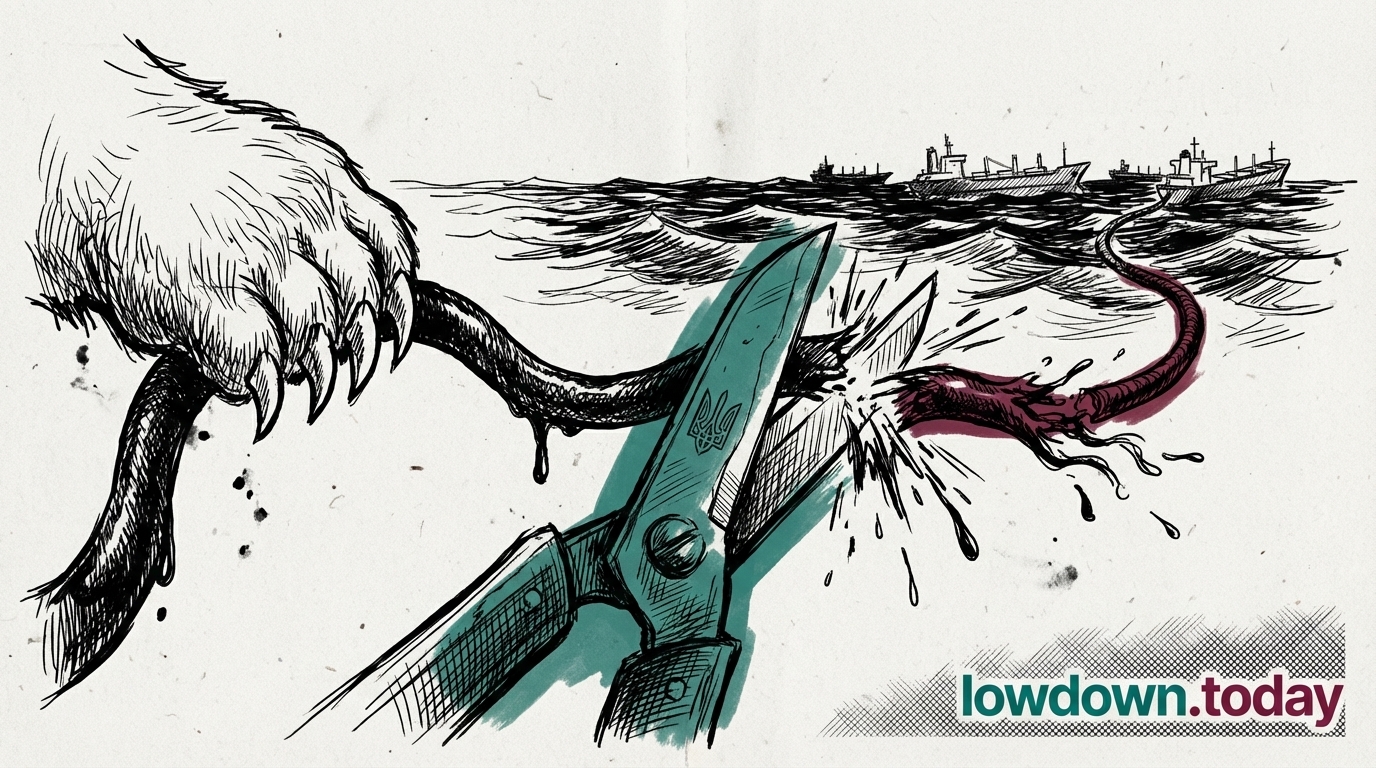
A member state that boards a shadow-fleet tanker may now confiscate and sell its cargo outright, rather than hold the vessel in storage indefinitely, under enforcement powers the EU brought into force this week.

ConflictAssessed
Key takeaway

EU boarding states can now seize and sell a shadow tanker's cargo; the frozen price cap will not rise.

A member state that boards a shadow-fleet tanker may now confiscate and then sell its cargo, rather than hold the vessel and its oil in storage indefinitely, under enforcement provisions in the Council of the EU's 21st sanctions package⁠1. The shadow fleet is the ageing, opaquely owned tanker pool that moves sanctioned Russian crude outside Western insurance and ownership chains. Until now, boarding one left a state holding a vessel it could not easily dispose of; selling the cargo turns a storage liability into a recovered asset and a direct cost to the operator.

The package widened the net in two further ways. It lifted the count of listed vessels from 632 to 673 and, for the first time, designated a crewing agency rather than a ship, extending listing risk from the hulls to the labour supply chain that mans them. The listing criteria now reach bunkering and support vessels, not tankers alone.

The clause that reaches this desk sits in the price cap. The G7 cap's automatic adjustment is paused to 15 July 2027, the Council citing the market situation around the strait of Hormuz. A floating cap would have drifted the $44.10 ceiling upward as Brent climbed; freezing it means Russia gains none of that legal headroom even as the flat price rises. The binding constraint stays the shadow-fleet insurance workaround, which the freeze leaves untouched, so sanctioned crude can still clear above the cap in practice while the ceiling itself no longer moves.

Deep Analysis

In plain English

The EU's newest sanctions package, adopted on 23 July, gives member states a new power: if they stop and board a sanctioned Russian oil tanker, they can now sell its cargo instead of just holding the ship in port indefinitely, which used to tie up money and space without resolving anything. The package also, for the first time, sanctioned a company that supplies crew to these tankers rather than only the ships or their owners, and added 41 more vessels to its blacklist, bringing the total to 673.

What could happen next?
  • Consequence

    Boarding states gain a financial incentive to enforce more actively, since detained cargo now converts to recoverable value rather than an open-ended storage cost.

  • Precedent

    The first crewing-agency designation sets a template for the EU to target labour-supply contractors across the shadow fleet, not only vessel owners and flag states.

First Reported In

Update #20 · Saudi crude reroutes to Suez, freight bites

Council of the European Union· 27 Jul 2026
Read original →
Causes and effects
This Event
The EU can now sell a tanker's cargo
The confiscate-and-sell power changes the economics of detention for both the boarding state and the shadow-fleet operator, and it arrives alongside the first designation of a crewing agency and a freeze on the price cap's upward drift.
Different Perspectives
Bulgarian government
Bulgaria's Prime Minister, Rumen Radev, said the sinking of HS Dignity "benefits the Russian Federation" while saying Bulgaria lacked solid evidence to accuse anyone, and Defence Minister Dimitar Stoyanov asked NATO for air defence on 16 October. The request comes from a government that stopped state military aid to Ukraine in June.
Radoslaw Sikorski
Radoslaw Sikorski
Poland's foreign minister challenged Elon Musk on X after SpaceX capped Ukraine's Starshield terminals on 14 October. Poland pays about $50m a year for Ukraine's Starlink subscriptions, so Warsaw speaks as the paying customer as well as the ally.
Andy Burnham
Andy Burnham
Burnham fast-tracked £10m of a £45m air-defence missile delivery when Zelenskyy visited London on 14 October, and his ministers are lobbying allies to ban maritime services for Russian liquefied natural gas. The measure targets insurers and shipowners, many of them in London, rather than the gas itself.
Ministry of External Affairs (India)
India's foreign ministry said after the 16 September House vote that New Delhi would take all necessary measures to protect its trade.
European Council
European Council
EU leaders on 15-16 October rejected a US idea to hand Washington the roughly €200bn of frozen Russian assets held in Europe, and Kaja Kallas said the decision belongs to Europeans. The same summit put off a decision on financing Ukraine, saying leaders "will revert to the issue in a timely manner".
Donald Trump
Donald Trump
Trump signed the 16 October order that sets the Graham Act's duties and waives them under section 115(a), with a certification sent to Congress. He says the United States has not stopped sharing intelligence with Ukraine, and on 11 October he said both sides had agreed to halt attacks on energy infrastructure.

Written with AI from Lowdown's published reporting. Not individually reviewed by an editor. Editorial standards.

