Skip to content
Briefings are running a touch slower this week while we rebuild the foundations.See roadmap
Russia-Ukraine War 2026
27MAR

Houthis threaten to close Bab al-Mandeb

2 min read
20:48UTC

A senior Houthi official described closing the Red Sea strait as one stage in a deliberate escalation ladder.

ConflictDeveloping
Key takeaway

Dual-chokepoint pressure is now an active threat, not a theoretical scenario.

Mohammed Mansour, Houthi deputy information minister, told reporters: "We are conducting this battle in stages, and closing the Bab al-Mandeb strait is among our options." 1 Roughly 30% of Israeli imports and 6-7 million barrels per day of oil, approximately 7% of global supply, pass through the strait.

Mansour's language mirrors Iranian diplomatic formulations around Hormuz in the war's first week. The framing is a staged escalation ladder, not a single decision. Yahya Saree announced three formal red lines before the missile attack: US and Israeli use of the Red Sea for strikes, growing third-country participation, and escalating attacks on the "Axis of Resistance."

The IEA stated explicitly that its 400 million barrel emergency release "cannot substitute for the transit route itself" . Iran's Hormuz traffic control already routes vessels through a narrow corridor past Larak Island under IRGC escort; the Majlis toll bill would codify that system into domestic law. If both chokepoints tighten further, no reserve release addresses the shortfall.


Deep Analysis

In plain English

Bab al-Mandeb is a narrow sea passage between Yemen and East Africa. Almost all the oil and cargo that moves between Asia and Europe passes through it. Around 6-7 million barrels of oil cross every day. A senior Houthi official said on 28 March that closing this strait is one of their options as the war continues. They already have missiles and drones on Yemen's coastline. Iran already controls the other major oil route, the Strait of Hormuz. If the Houthis block Bab al-Mandeb as well, there would be no alternative route for most of the world's oil. Emergency reserves would run out in weeks; there is no spare capacity to replace both routes at once.

Deep Analysis
Root Causes

The structural driver is the Houthis' geographic positioning. Yemen's Tihama coast overlooks Bab al-Mandeb's 29-kilometre narrows. Anti-ship missiles already deployed there can reach any vessel in the strait. Unlike Hormuz, there is no second passage: cargo cannot route around Bab al-Mandeb without circumnavigating Africa, adding 6,000 nautical miles and roughly 20 days per voyage.

The Houthis' leverage exists regardless of Iranian direction because the geography is permanent. Tehran did not create this chokepoint; it merely held the group back from using it.

What could happen next?
  • Risk

    Dual chokepoint closure would exceed IEA emergency reserve capacity; no government has a contingency plan for simultaneous Hormuz restriction and Bab al-Mandeb closure.

  • Consequence

    Any ceasefire negotiation must now include Houthi participation or Bab al-Mandeb remains at risk regardless of what Iran agrees.

First Reported In

Update #50 · Houthis join; Iran holds two chokepoints

Axios· 28 Mar 2026
Read original
Different Perspectives
North Korea / DPRK
North Korea / DPRK
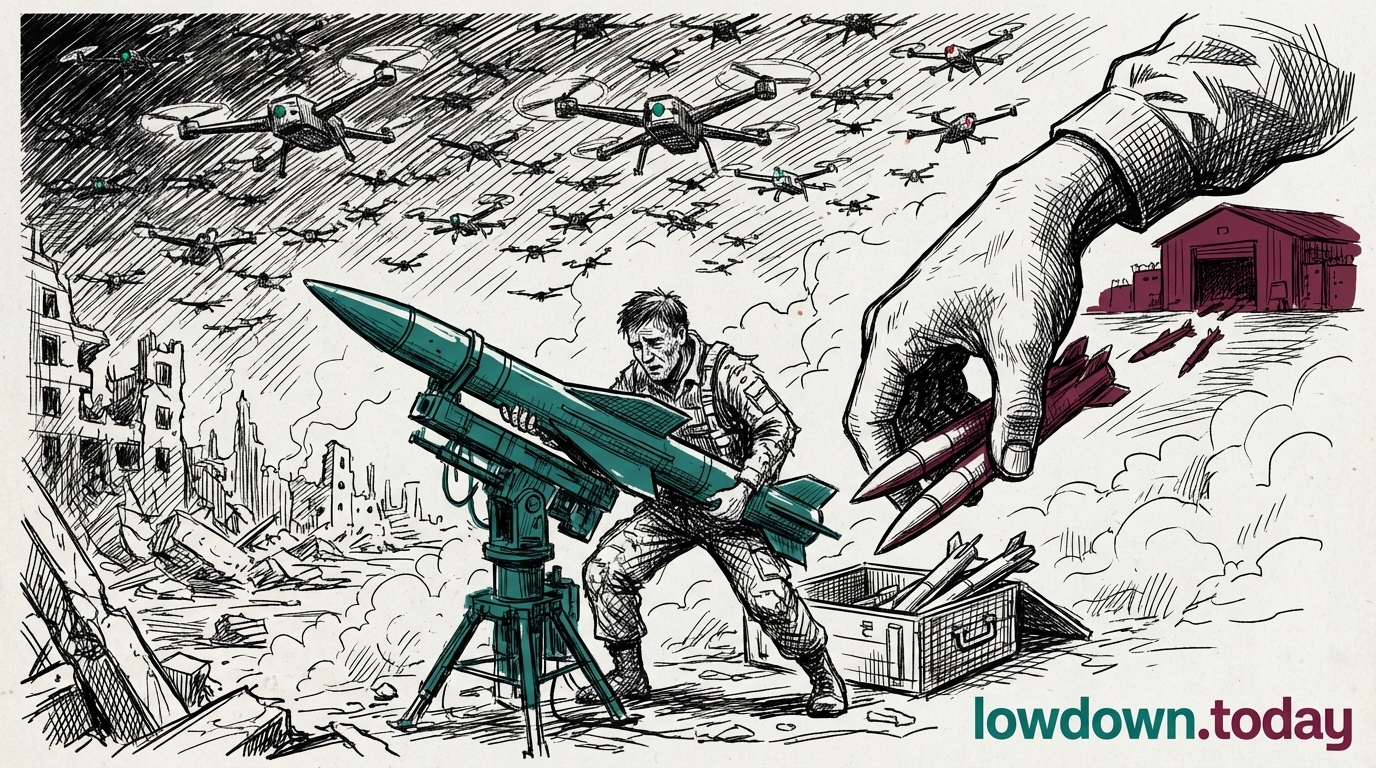
ISW confirmed the first mounting of DPRK Type-75 MLRS on Russian autonomous UGVs near Kharkiv on 7 June, the latest step in a supply axis that escalated from shells in 2023 to troops in 2024. Pyongyang gains live battlefield data on its ordnance and on Russia's uncrewed-systems programme.
IAEA / Rafael Grossi
Grossi confirmed Chornobyl structural damage with nuclear material metres away and could not attribute the ZNPP 15-hour blackout during the agreed repair window. Six ceasefires brokered and broken at ZNPP, compounded by Rosatom's May attack on IAEA neutrality, have eroded his ability to enforce the windows he negotiates.
Emmanuel Macron / France
Macron co-signed the E3 framework whose line-of-contact baseline marks Europe's first formal acceptance that 1991 borders are not the opening position. France's role carries weight because Macron had previously proposed a European force for Ukraine, and the framework's multinational force point is the vehicle for that.
Keir Starmer / E3
Keir Starmer / E3
Starmer, Macron and Merz met Zelenskyy on 7 June and backed a five-point framework taking the line of contact as the talks baseline, conceding roughly one fifth of Ukraine in exchange for a multinational force and frozen assets. With US mediation ended, the NATO Ankara summit on 7-8 July is the next test.
Vladimir Putin / Kremlin
Putin used SPIEF to reject Zelenskyy's summit letter, citing 'elements of rudeness', and repeated the pre-agreed treaty precondition that has frozen every diplomatic round since May. The SPIEF platform's message of investor confidence was punctured by naval fires visible from St Petersburg, which Moscow declined to dispute in scale.
Ukraine / Unmanned Systems Forces
Commander Brovdi confirmed USF units tracked and set fire to Boikyi at Kronstadt, while Code 9.2 struck the Chonhar Bridge the following day. Ukraine is sequencing strikes for rear-area interdiction and political timing rather than ground gains, trading the Baltic Fleet's home base for the logistics squeeze Russia cannot absorb without rationing its own occupied territory.



