Skip to content
You can now search across every topic, entity and event.What's new
Russia-Ukraine War 2026
15MAR

Russia shoots down its own Mi-8

3 min read
06:46UTC

Russian air defences in Rostov Oblast destroyed a Russian Mi-8 on 4 March — the second fratricidal aviation loss in two months, driven by drone-saturated skies that degrade identification discipline.

ConflictDeveloping
Key takeaway

Russia's IFF discipline is breaking down: air defence crews are shooting their own helicopters.

Russian air defence forces in Rostov Oblast shot down a Russian military Mi-8 helicopter on the night of 4 March 1. No casualty figures have been released. It is the second confirmed Russian friendly-fire aviation incident in two months.

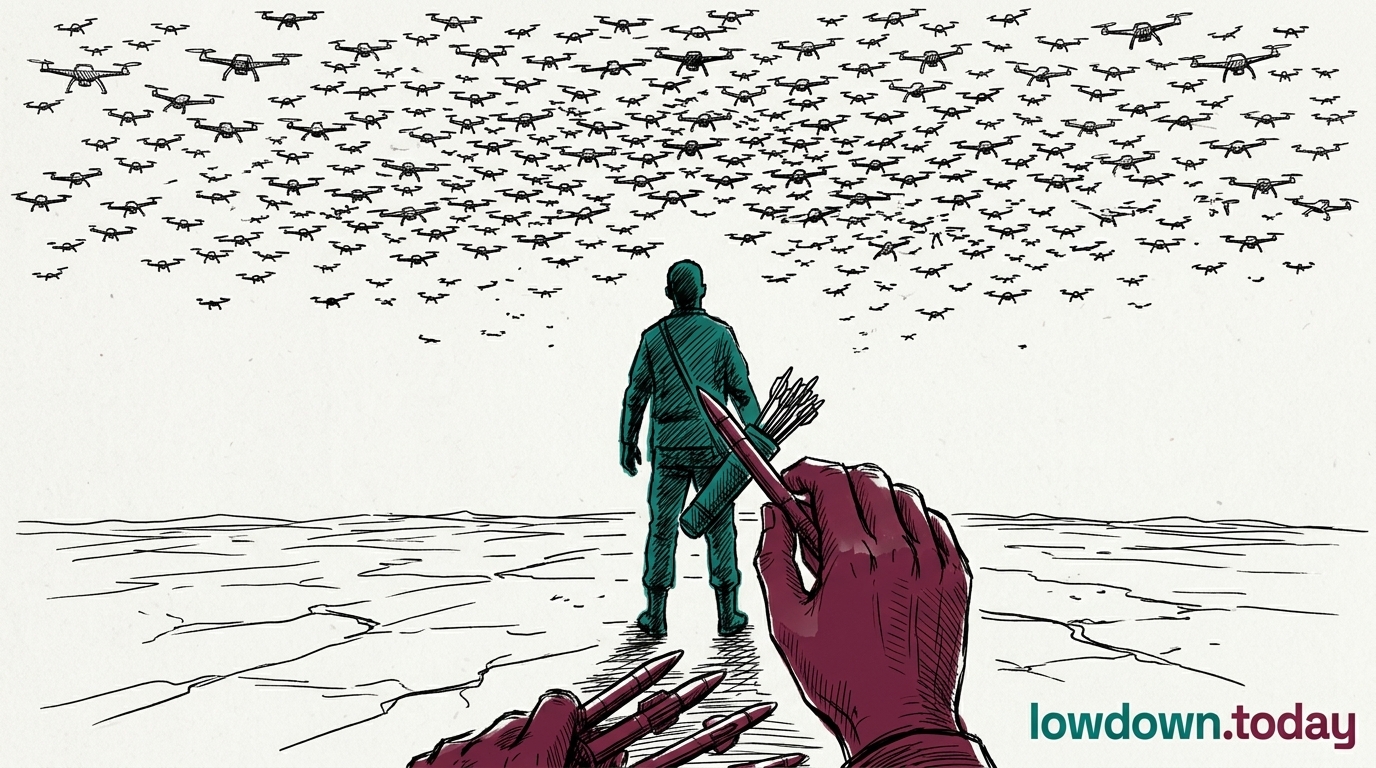
Rostov Oblast is the primary logistics corridor feeding Russia's Donetsk front — and a region saturated with aerial traffic moving in both directions. Days earlier, the Ukrainian General Staff recorded 8,828 Russian kamikaze drones launched in a single 24-hour period , roughly triple the 2025 daily average. Ukrainian drones cross the border with increasing frequency in the opposite direction. For Russian air defence crews, the operating environment has become one of persistent ambiguity: dozens of small, fast-moving objects on radar at any given time, a fraction hostile. Under that cognitive load, IFF (identify friend or foe) discipline erodes. Crews default to engagement-first protocols because the perceived cost of hesitation — a Ukrainian drone striking a fuel depot or ammunition store — exceeds the perceived cost of firing on an unidentified contact.

The result is a compounding problem with no clean solution. As Ukrainian drone volumes rise, Russia deploys more air defence assets along rear areas. More operators making shoot-or-wait decisions under stress means more fratricidal engagements. Fewer assets would reduce friendly-fire risk but invite successful Ukrainian strikes on the logistics infrastructure sustaining the Donetsk offensive. Russia's current air defence doctrine was built for conventional threats — manned aircraft and cruise missiles with distinctive radar signatures and predictable flight profiles. It was not designed for an environment where thousands of small drones share altitudes and speeds with friendly helicopters. Until that doctrinal gap closes, incidents like the Rostov shootdown will recur.

Deep Analysis

In plain English

Every military aircraft carries a transponder — a device that broadcasts a coded 'I am friendly' signal to ground radar. When radar simultaneously tracks hundreds of Ukrainian drones that broadcast no such signal, operators face a dilemma: wait to confirm identity and risk missing a real drone, or shoot immediately. Russia's crews are increasingly choosing to shoot immediately. The Mi-8 either failed to broadcast its identification signal in time, or the ground crew did not wait for confirmation. Two such incidents in two months suggests the pressure on IFF discipline is now systemic rather than the result of individual error.

Deep Analysis
Synthesis

Two confirmed fratricide incidents in two months indicates a systemic failure mode, not an isolated error. Russia now faces a structural choice: accept ongoing fratricide losses, restrict helicopter operations near the front, or attempt rapid IFF doctrine reform under combat conditions. All three options degrade capability in different ways.

Root Causes

Russia's Pantsir-S1 and Tor-M2 systems were designed around a Soviet-era threat model: fast jets and cruise missiles appearing as discrete large radar returns. The IFF interrogation cycle assumes a clear picture with a manageable number of discrete targets. Drone swarm saturation — dozens to hundreds of small, slow, low-altitude targets simultaneously — was not the design scenario. Adapting IFF logic for swarm environments requires software updates and revised engagement protocols; neither can be implemented at front-line units under combat pressure.

Escalation

If Russia grounds or severely restricts helicopter operations in Rostov and adjacent border oblasts in response to fratricide risk, logistics to the Donetsk front will shift entirely to road and rail. Ground routes are slower and more vulnerable to Ukrainian artillery and drone interdiction, which could degrade Russian supply tempos at a critical operational phase.

What could happen next?
  • Consequence

    Systemic fratricide pressure may force Russia to ground helicopter logistics in Rostov Oblast, shifting supply to slower and more interdiction-vulnerable ground routes to the Donetsk front.

    Short term · Assessed
  • Precedent

    Two confirmed incidents in two months establishes a trend; a third would constitute strong evidence of systemic IFF failure requiring doctrinal rather than unit-level response.

    Short term · Assessed
  • Risk

    If Russia restricts helicopter operations across border oblasts, casualty evacuation timelines from the Donetsk front will increase, degrading medical sustainment at the front.

    Short term · Suggested
First Reported In

Update #2 · Shadow fleet tanker sunk, talks seek venue

Ukrinform· 5 Mar 2026
Read original
Causes and effects
This Event
Russia shoots down its own Mi-8
The second friendly-fire aviation loss in two months reveals a structural vulnerability: mass-drone warfare degrades IFF discipline faster than Russian doctrine can adapt, creating a fratricide problem that worsens as drone volumes increase.
Different Perspectives
Turkey
Turkey
Turkey, a major buyer of Russian diesel cargoes, loses that access under Moscow's first producer-binding export ban, in force from 8 July to 31 July. Ankara hosted the same week's NATO summit pledging EUR 70bn to Ukraine, sitting on both sides of the fuel-and-alliance ledger.
NATO
NATO
NATO leaders meeting in Ankara on 7 and 8 July pledged EUR 70bn in equipment, assistance and training for Ukraine across 2026, with a 2027 sustainment commitment and a $40bn Drone Edge counter-drone initiative. European allies now fund the vast majority of that package, filling the gap left by Washington's idled crude waiver.
India
India
India's state refiners continued buying discounted Urals crude as June's price fell to $63.18 a barrel, insulating New Delhi from the OFAC waiver gap still constraining Western buyers. Indian refiners could pick up diesel-export share as Russia's producer-binding ban shuts out its former customers.
China
China
China's independent refiners kept importing discounted Urals crude through June as the price fell to $63.18 a barrel, down 26% month-on-month per CREA. Beijing has said nothing on Moscow's new diesel ban, leaving Chinese refiners a likely beneficiary if Turkish and Brazilian buyers seek replacement cargoes.
United States
United States
No successor licence has been issued since General License 134C lapsed on 17 June, leaving a 26-day gap, the longest of the war, in the Russian crude waiver. Washington's silence is tightening the channel without any stated decision, as Treasury weighs whether to let it die.
Ukraine
Ukraine
Ukraine's long-range strike campaign shifted from refineries to seaborne fuel tankers crossing the Sea of Azov, cutting tracked vessel traffic 55% between 30 June and 11 July, per Starboard Maritime Intelligence. The shift targets Russia's export revenue directly rather than just domestic supply, adding pressure alongside the collapsing Urals price.
