Skip to content
You can now search across every topic, entity and event.What's new
Russia-Ukraine War 2026
13JUL

Urals slips below Russia's budget line

3 min read
10:28UTC

Urals traded near $50 a barrel on 24-25 June, roughly nine dollars below the $59 mark Russia's federal budget is built on, with no new OFAC designation to enforce it.

ConflictDeveloping
Key takeaway

Urals below Russia's $59 budget benchmark squeezes Kremlin revenue without a single new sanctions designation.

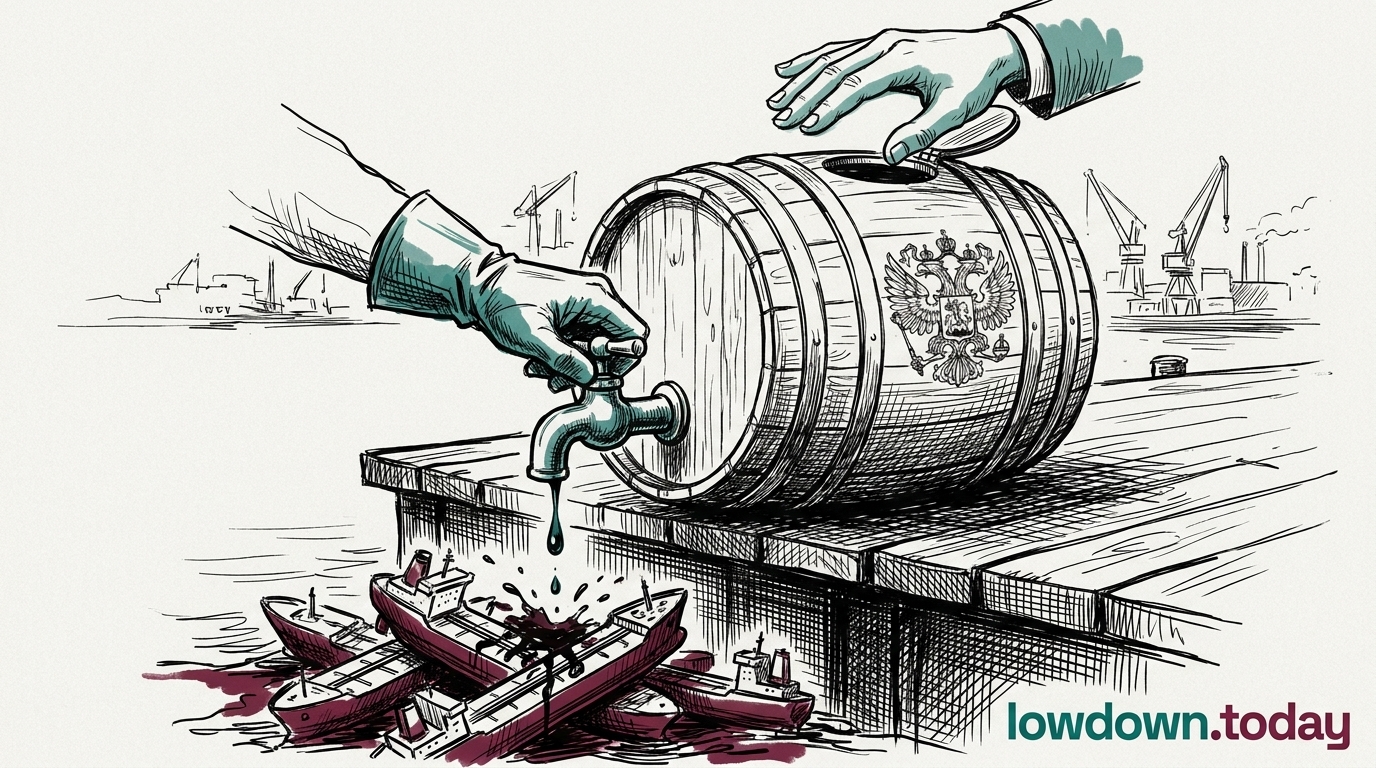
Urals, Russia's main export crude, traded near $50 a barrel on 24-25 June, widening the Brent-Urals discount to about $22 1. That holds Russian crude roughly six dollars above the EU's frozen $44.10 price cap, but around nine dollars below the $59 benchmark the Russian federal budget is built on. A week ago Urals sat 8.81% above that cap ; the floor has dropped clean through Moscow's fiscal line.

Below $59, every barrel Russia ships funds less of the budget it was meant to cover. No OFAC designation of a P&I club, a shadow-fleet operator or a single vessel landed in the 22-26 June window, so the price discount, not enforcement, is carrying the squeeze. The EU cap binds on paper at $44.10; the market has already taken Urals under the line that matters to Kremlin spending.


Deep Analysis

In plain English

Russia's federal government depends heavily on oil and gas export revenues, which flow in through a complex system of taxes and duties linked to the Urals crude price. When Russia set its 2026 federal budget in late 2025, it assumed Urals crude would average around $59 per barrel for the year. Urals is Russia's main export crude grade, priced at a discount to the international Brent benchmark because Western sanctions make it harder to sell and insure. Over the past week, Urals fell to around $50 a barrel. That $9-per-barrel gap against the budget assumption means Russia collects significantly less tax revenue from every barrel it exports. The EU and G7 also imposed a separate "price cap" on Russian crude at $44.10 per barrel, designed to limit revenues further while still allowing Russian oil to reach global markets. At $50, Urals is still above that cap, so Western shipping and insurance can technically service these barrels. However, the market discount is now delivering more fiscal damage to Russia's 2026 budget than the cap mechanism itself. No new OFAC designations of Russian tankers or operators arrived this week, meaning the price pressure comes from market forces, not enforcement action.

First Reported In

Update #11 · Crude longs flushed flat into a loaded week

Caliber.Az· 26 Jun 2026
Read original
Different Perspectives
Turkey
Turkey
Turkey, a major buyer of Russian diesel cargoes, loses that access under Moscow's first producer-binding export ban, in force from 8 July to 31 July. Ankara hosted the same week's NATO summit pledging EUR 70bn to Ukraine, sitting on both sides of the fuel-and-alliance ledger.
NATO
NATO
NATO leaders meeting in Ankara on 7 and 8 July pledged EUR 70bn in equipment, assistance and training for Ukraine across 2026, with a 2027 sustainment commitment and a $40bn Drone Edge counter-drone initiative. European allies now fund the vast majority of that package, filling the gap left by Washington's idled crude waiver.
India
India
India's state refiners continued buying discounted Urals crude as June's price fell to $63.18 a barrel, insulating New Delhi from the OFAC waiver gap still constraining Western buyers. Indian refiners could pick up diesel-export share as Russia's producer-binding ban shuts out its former customers.
China
China
China's independent refiners kept importing discounted Urals crude through June as the price fell to $63.18 a barrel, down 26% month-on-month per CREA. Beijing has said nothing on Moscow's new diesel ban, leaving Chinese refiners a likely beneficiary if Turkish and Brazilian buyers seek replacement cargoes.
United States
United States
No successor licence has been issued since General License 134C lapsed on 17 June, leaving a 26-day gap, the longest of the war, in the Russian crude waiver. Washington's silence is tightening the channel without any stated decision, as Treasury weighs whether to let it die.
Ukraine
Ukraine
Ukraine's long-range strike campaign shifted from refineries to seaborne fuel tankers crossing the Sea of Azov, cutting tracked vessel traffic 55% between 30 June and 11 July, per Starboard Maritime Intelligence. The shift targets Russia's export revenue directly rather than just domestic supply, adding pressure alongside the collapsing Urals price.



