Skip to content
You can now search across every topic, entity and event.What's new
Russia-Ukraine War 2026
16JUN

Sea drones push into the Black Sea

2 min read
10:25UTC

Ukraine's maritime drone campaign left the Sea of Azov overnight on 15 July under the name Operation MoLoChKa, hitting 20 vessels in a single night.

ConflictDeveloping
Key takeaway

Shadow-fleet anonymity defeats sanctions enforcement and leaves those same ships with nobody to defend them.

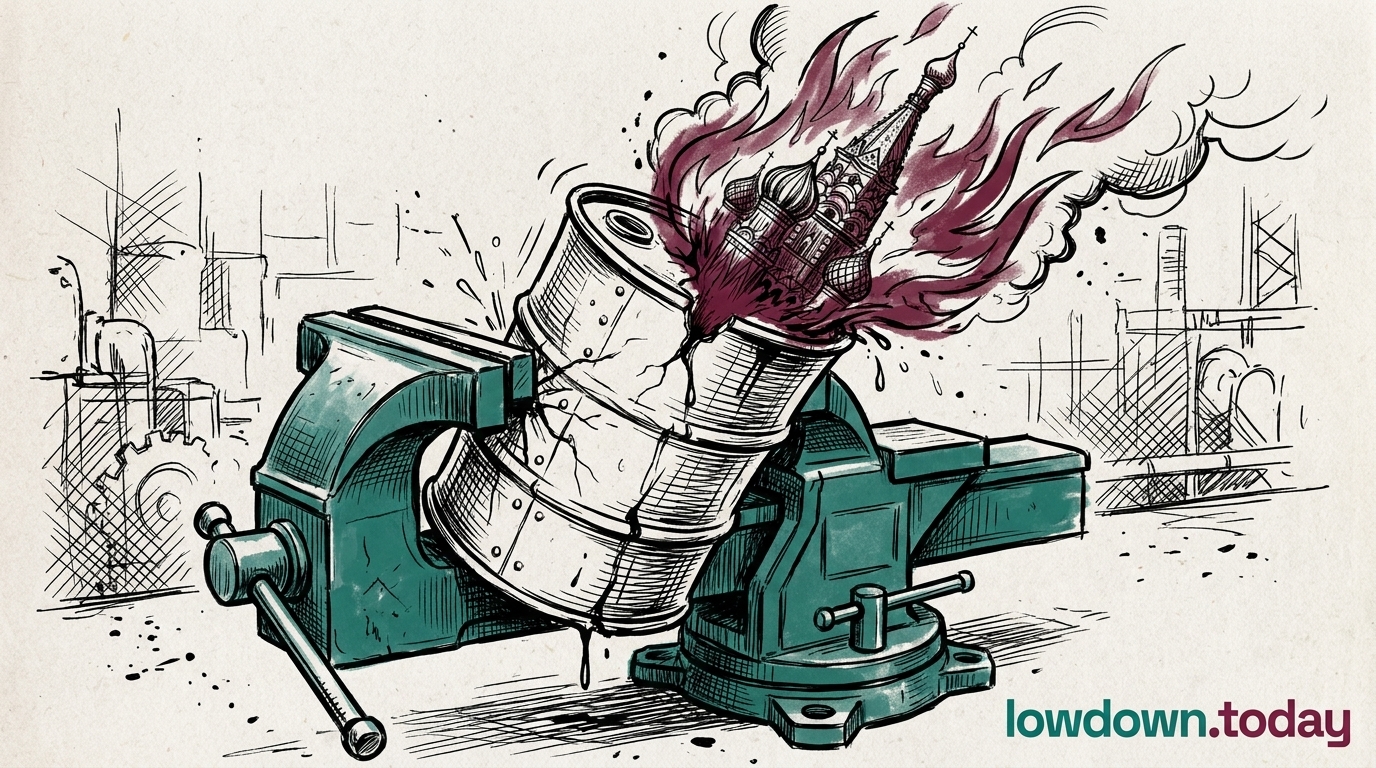
Ukraine's maritime drone campaign moved out of the Sea of Azov and into the Black Sea overnight on 15 July, under the name Operation "MoLoChKa", striking 20 vessels in one night: 17 oil tankers, two gas tankers and a tugboat 1. Two of the named targets, the Louise 1 and the Banda, were running dark on AIS, the automatic identification system merchant ships are required to broadcast, while carrying Russian crude in breach of the price cap set by the G7 group of industrial democracies and the EU. An SBU Sea Baby uncrewed boat had hit the tanker Blue near Yalta a week earlier, on 8 July. The Unmanned Systems Forces struck twelve more vessels on 17 July, taking the 6 to 17 July total to 159 shadow-fleet vessels across both seas 2.

Eleven days before the expansion, the same campaign was a chokepoint tactic confined to the Azov, where it cut tracked traffic by 55% . The Azov is shallow, narrow and effectively closed; the Black Sea is neither, and holding vessels at risk across it demands range and endurance the Azov operations never had to demonstrate.

The G7 and EU price cap runs on insurance certificates and port-entry checks, and a tanker that switches off its transponder, reflags through a shell registry and transfers cargo ship-to-ship outside territorial waters encounters none of them. Sea drones do not need to establish ownership before they arrive. The harder a vessel works at being untraceable, the fewer parties can be identified to protect it, and opaque ownership stops being cover and starts being exposure.


Deep Analysis

In plain English

Ukraine has been using naval drones to attack tankers that carry Russian oil while avoiding Western sanctions. This campaign expanded from the smaller Sea of Azov into the much larger Black Sea overnight on 15 July, under the name Operation MoLoChKa, hitting 20 vessels in a single night. Twelve more were struck two days later, taking the running total to 159 ships hit between 6 and 17 July. The tankers being targeted are part of what is often called Russia's "shadow fleet": ageing ships that turn off their tracking signals and use flags of convenience to keep moving Russian oil to buyers despite the price cap Western governments have imposed. By hitting them directly, Ukraine is making that trade physically dangerous rather than only illegal on paper.

First Reported In

Update #24 · Fedorov sacked as the front stands still

Militarnyi· 19 Jul 2026
Read original
Causes and effects
Different Perspectives
Belgium
Belgium
Belgium blocked outright confiscation of the roughly EUR 210bn in frozen Russian assets held at Euroclear in December 2025, because Euroclear would carry the legal liability. Ukraine has since proposed moving custody to the EU instead.
European Commission
European Commission
The Commission said on 2 September that Ukraine has drawn EUR 3.2bn against an EUR 8.35bn annual target, and that a revenue-mobilisation law stuck in the Rada is one of twelve conditions for the next EUR 3.7bn payment.
Steve Witkoff and Jared Kushner
The US envoys met Putin in Moscow on 5 September and Zelenskyy in Kyiv on 6 September without an announced result from more than three hours of talks. Their mediation continues with no public outcome to show for this round.
Robert Brovdi
Robert Brovdi
Brovdi said on 12 September that his Unmanned Systems Forces struck 285 Russian tankers in ten weeks. His own monthly breakdown sums to 79, and he has given no account of the remaining 206.
Sergei Lavrov
Sergei Lavrov
Lavrov said on 12 September that Russia is ready to negotiate but will not suspend military operations while it does. He treats talking and fighting as compatible policies, ruling out a ceasefire as a precondition for further talks.
Belarus
Belarus
Minsk announced completion of its own 37th Separate Airborne Assault Brigade near Gomel, under plans dating to August 2025 rather than a response to any single frontline event this window, keeping its hedge of hosting the war without formally joining Russia's mobilisation drive.


