Skip to content
You can now search across every topic, entity and event.What's new
Russia-Ukraine War 2026
16JUN

EU cap fight turns on months, not price

2 min read
10:25UTC

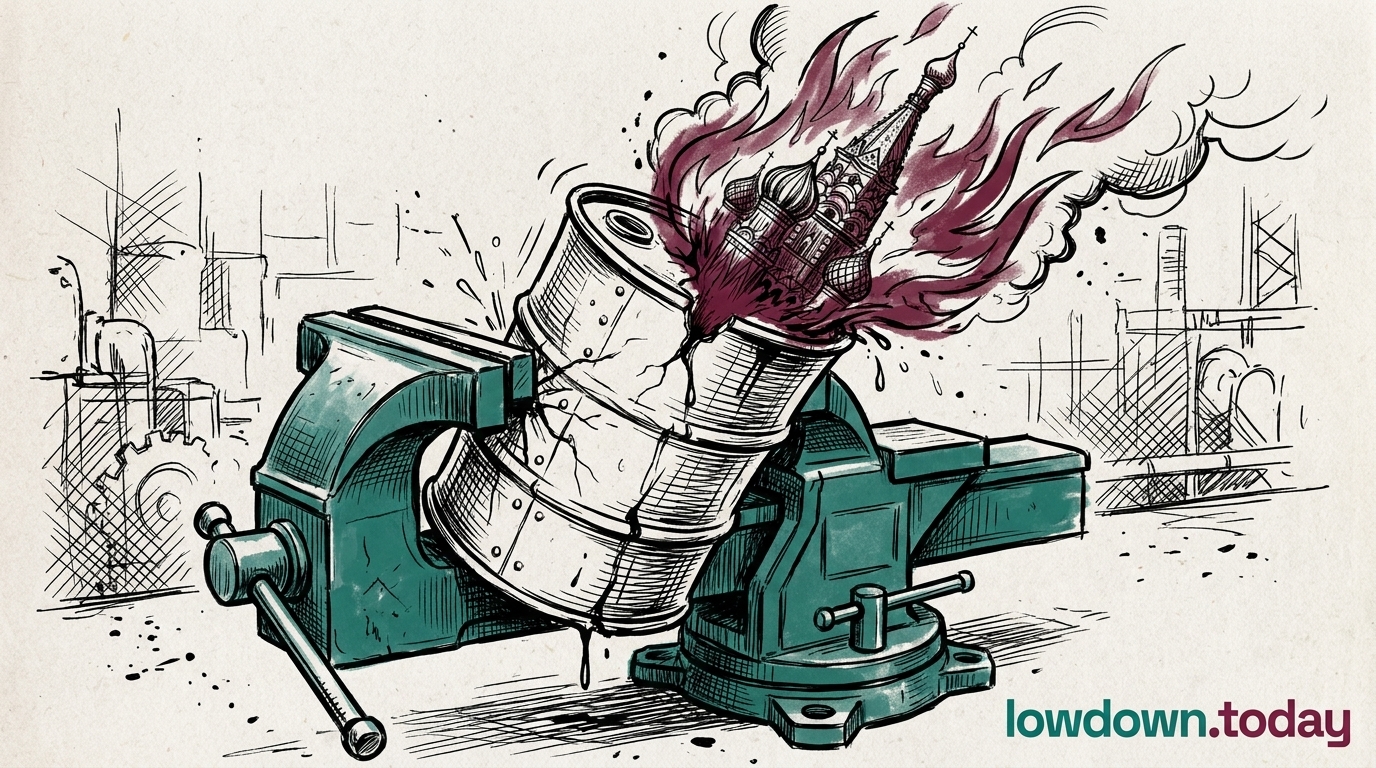
EU foreign ministers vote on 13 July on the 21st sanctions package, two days before a deadline that would auto-lift the $44.10 Russian oil cap; Greece, Cyprus and Malta want a shorter freeze than Brussels.

ConflictDeveloping
Key takeaway

EU ministers vote 13 July on whether to freeze the Russian oil cap three months or to January 2027.

EU foreign ministers are set to vote on the bloc's 21st sanctions package on 13 July, two days before a 15 July deadline that would otherwise auto-lift the $44.10 cap on Russian oil. The Kyiv Independent reported the schedule, citing EU diplomats. 1 The cap bars Western insurers and shippers from servicing Russian crude sold above the set ceiling; letting it lapse would remove that ceiling and loosen the constraint on Moscow's barrels.

The package advances the proposal the Commission tabled in late June , but the fight has narrowed to duration. Greece, backed by Cyprus and Malta, is pushing a three-month freeze to be revisited in the autumn, against the Commission's plan to hold the cap to January 2027 . Both sides accept the level; they disagree only on how long to hold it.

A freeze to January 2027 locks the cap through the first quarter of next year; the three-month version reopens it for review around October. That is a materially shorter runway for any Urals-linked hedge than the desk has been pricing, and the outcome lands inside a week. Whichever way the vote goes, it resets how long traders can rely on the cap rather than the physical market to bound Russian barrels.


Deep Analysis

In plain English

The EU has capped the price other countries can pay for Russian oil at $44.10 a barrel since early 2026, to limit how much Moscow earns from oil exports. That cap is due to lift automatically on 15 July unless EU foreign ministers vote to freeze it first, and they are now set to vote on 13 July. Greece, Cyprus and Malta, all major shipping nations, want a shorter three-month freeze reviewed again in the autumn rather than dropping the cap itself. The European Commission wants the freeze locked until January 2027 instead. Whichever wins shapes how confidently traders can plan around Russian oil for the rest of the year.

Deep Analysis
Root Causes

Greece's and Malta's shipping registries carry a combined 37% of world merchant tonnage, roughly 20% Greek-flagged and 17% Maltese-flagged. Much of that fleet earns revenue carrying cargo, including sanctioned barrels, that a stricter or longer freeze could put at commercial risk.

That fleet economics, more than any view on Russia policy, explains why Athens and Valletta keep pushing the shorter compromise: a freeze reopened in the autumn gives their registries and insurers more frequent chances to reprice risk than one locked to January 2027.

What could happen next?
  • Precedent

    If Greece, Cyprus and Malta again force a shorter compromise, as they did on the 20th package's maritime ban, it confirms shipping-registry economics as a structural veto point on EU energy sanctions rather than a one-off objection.

First Reported In

Update #14 · Brent-WTI blows out as the hike lands priced

Kyiv Independent· 6 Jul 2026
Read original
Different Perspectives
Belgium
Belgium
Belgium blocked outright confiscation of the roughly EUR 210bn in frozen Russian assets held at Euroclear in December 2025, because Euroclear would carry the legal liability. Ukraine has since proposed moving custody to the EU instead.
European Commission
European Commission
The Commission said on 2 September that Ukraine has drawn EUR 3.2bn against an EUR 8.35bn annual target, and that a revenue-mobilisation law stuck in the Rada is one of twelve conditions for the next EUR 3.7bn payment.
Steve Witkoff and Jared Kushner
The US envoys met Putin in Moscow on 5 September and Zelenskyy in Kyiv on 6 September without an announced result from more than three hours of talks. Their mediation continues with no public outcome to show for this round.
Robert Brovdi
Robert Brovdi
Brovdi said on 12 September that his Unmanned Systems Forces struck 285 Russian tankers in ten weeks. His own monthly breakdown sums to 79, and he has given no account of the remaining 206.
Sergei Lavrov
Sergei Lavrov
Lavrov said on 12 September that Russia is ready to negotiate but will not suspend military operations while it does. He treats talking and fighting as compatible policies, ruling out a ceasefire as a precondition for further talks.
Belarus
Belarus
Minsk announced completion of its own 37th Separate Airborne Assault Brigade near Gomel, under plans dating to August 2025 rather than a response to any single frontline event this window, keeping its hedge of hosting the war without formally joining Russia's mobilisation drive.


