Skip to content
Briefings are running a touch slower this week while we rebuild the foundations.See roadmap
Russia-Ukraine War 2026
5MAR

Royal Navy to board sanctioned tankers

2 min read
04:57UTC

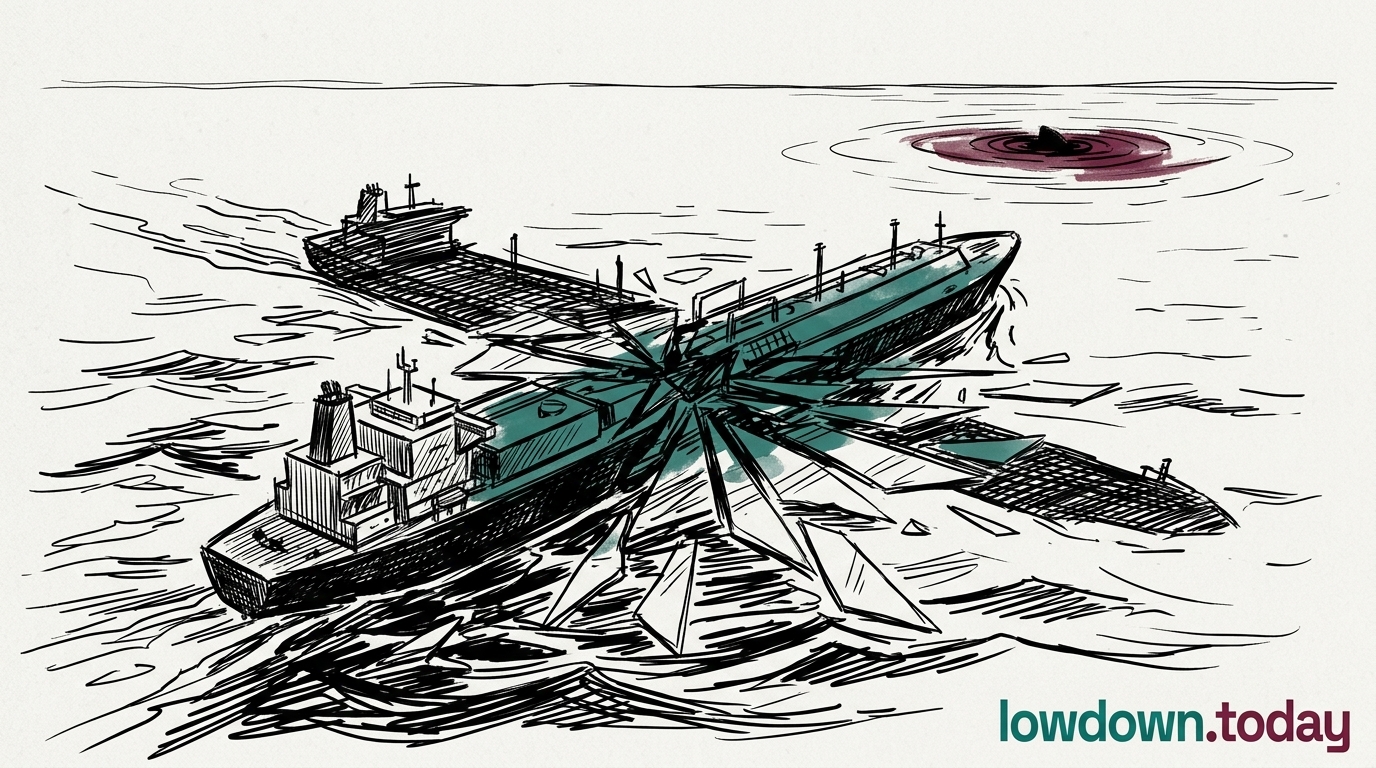
Britain authorised naval interdiction of sanctioned Russian tankers in UK waters, converting a 34-kilometre strait into the most enforceable maritime sanction of the war.

ConflictAssessed
Key takeaway

Britain converted a geographic chokepoint into the most enforceable maritime sanction of the war.

Keir Starmer announced at the JEF summit in Helsinki on 26 March that the Royal Navy is authorised to board and interdict sanctioned shadow fleet vessels in British territorial waters 1. The English Channel is now effectively closed to the more than 600 tankers sanctioned by the EU, UK, and US combined 2.

This is the most aggressive European enforcement action against Russia's oil revenue infrastructure since the war began. Previous seizures of individual vessels, the Ethera in Belgian waters , the Caffa and Sea Owl I off Sweden , were opportunistic. Channel interdiction is structural: it forces sanctioned tankers to circumnavigate Britain, adding over 2,000 nautical miles and several days to each voyage.

For shadow fleet operators, that means tens of thousands of dollars in extra fuel and crew costs per trip, eroding the margin between sanctioned-price oil and market price. The Channel's shallow, narrow waters (34 kilometres at Dover) make boarding operationally straightforward compared to open-ocean enforcement. Shadow fleet vessels are typically older, under-insured, and crewed by mariners with limited consular protection. Geography and legal vulnerability combine to make this chokepoint uniquely enforceable.

The EU had already signalled a shift from chasing individual ships to targeting operators, brokers, and registries . Britain's naval enforcement adds a physical barrier to that administrative squeeze. Denmark controls the only alternative short route through the Danish Straits; if Copenhagen follows London's lead, the last short northern European passage for shadow fleet traffic closes.

Deep Analysis

In plain English

Russia earns billions selling oil to fund its war. It uses a 'shadow fleet' of ageing, poorly insured tankers — over 600 ships — to move oil around Western sanctions. The English Channel at Dover is only 34 kilometres wide. Britain has now told its navy to stop and board any sanctioned Russian tankers using that route. This forces those ships to sail around Britain instead, adding several days and thousands of pounds per trip. The goal is to make sanctions evasion unprofitable, not just inconvenient.

Deep Analysis
Root Causes

The shadow fleet problem has three structural roots.

Western sanctions created a price cap mechanism but not an enforcement mechanism. Ships can lie about cargo origins, use ship-to-ship transfers, and reflag to evade detection. Windward's data shows Sovcomflot has reflagged 56% of its fleet to Russia's own registry, removing Lloyd's oversight.

Insurance markets withdrew from shadow fleet vessels after sanctions, but the vessels found alternative cover in India, the UAE, and Russia itself — degraded but functional.

The Channel interdiction addresses the geography but not the ownership structure. Until flag state accountability is enforced globally — including on India and the UAE — the shadow fleet can route around European chokepoints.

First Reported In

Update #8 · Pentagon diverts funds; 948 drones fired

UK Government· 27 Mar 2026
Read original
Different Perspectives
North Korea / DPRK
North Korea / DPRK
ISW confirmed the first mounting of DPRK Type-75 MLRS on Russian autonomous UGVs near Kharkiv on 7 June, the latest step in a supply axis that escalated from shells in 2023 to troops in 2024. Pyongyang gains live battlefield data on its ordnance and on Russia's uncrewed-systems programme.
IAEA / Rafael Grossi
Grossi confirmed Chornobyl structural damage with nuclear material metres away and could not attribute the ZNPP 15-hour blackout during the agreed repair window. Six ceasefires brokered and broken at ZNPP, compounded by Rosatom's May attack on IAEA neutrality, have eroded his ability to enforce the windows he negotiates.
Emmanuel Macron / France
Macron co-signed the E3 framework whose line-of-contact baseline marks Europe's first formal acceptance that 1991 borders are not the opening position. France's role carries weight because Macron had previously proposed a European force for Ukraine, and the framework's multinational force point is the vehicle for that.
Keir Starmer / E3
Keir Starmer / E3
Starmer, Macron and Merz met Zelenskyy on 7 June and backed a five-point framework taking the line of contact as the talks baseline, conceding roughly one fifth of Ukraine in exchange for a multinational force and frozen assets. With US mediation ended, the NATO Ankara summit on 7-8 July is the next test.
Vladimir Putin / Kremlin
Putin used SPIEF to reject Zelenskyy's summit letter, citing 'elements of rudeness', and repeated the pre-agreed treaty precondition that has frozen every diplomatic round since May. The SPIEF platform's message of investor confidence was punctured by naval fires visible from St Petersburg, which Moscow declined to dispute in scale.
Ukraine / Unmanned Systems Forces
Commander Brovdi confirmed USF units tracked and set fire to Boikyi at Kronstadt, while Code 9.2 struck the Chonhar Bridge the following day. Ukraine is sequencing strikes for rear-area interdiction and political timing rather than ground gains, trading the Baltic Fleet's home base for the logistics squeeze Russia cannot absorb without rationing its own occupied territory.