Skip to content
You can now search across every topic, entity and event.What's new
Russia-Ukraine War 2026
9JUN

Grossi warns Iran on hidden transfers

3 min read
11:54UTC

Araghchi wrote to the IAEA pledging measures to protect nuclear materials; Director-General Rafael Grossi replied that any transfer from a safeguarded facility must be declared.

ConflictDeveloping
Key takeaway

Grossi has the safeguards treaty on his side and no inspectors in Iran to enforce a declared transfer.

Foreign Minister Abbas Araghchi wrote to the International Atomic Energy Agency (IAEA), the global nuclear inspectorate, on Saturday 13 June pledging "special measures to protect our nuclear equipment and materials" 1. Director-General Rafael Grossi replied the same day that any transfer of nuclear material from a safeguarded facility must be declared to the agency under Iran's NPT Safeguards Agreement, the verification pact attached to the Nuclear Non-Proliferation Treaty 2.

The exchange reads as routine. It is not. With dilution now the mechanism both sides are discussing, "protecting materials" is the language under which uranium could be moved before anyone outside Iran can verify where it goes. The agency has been blind on the stockpile since it declared a loss of continuity of knowledge after 97 days without access, leaving roughly 240 kg unaccounted . The deal therefore hinges on a dilution no inspector can currently watch.

Iran's counter is that the IAEA forfeited its standing when its inspections became, in Tehran's account, a targeting input for the strikes that opened the war. The agency's board then adopted resolution GOV/2026/40 demanding disclosure, and Iran rejected it outright . Grossi now asserts an obligation the agency cannot enforce, against a state that suspended cooperation by a 221-0 parliamentary vote. He has the treaty text on his side and no inspectors on the ground to act on it.


Deep Analysis

In plain English

Iran's Foreign Minister wrote to the IAEA (International Atomic Energy Agency, the UN nuclear watchdog) on 13 June promising to take special measures to protect Iran's nuclear equipment and materials. The IAEA's chief, Rafael Grossi, wrote back the same day with a legal reminder: under the Non-Proliferation Treaty (NPT) agreement that Iran signed, Iran must tell the IAEA before moving any nuclear material from one location to another. This exchange matters because the deal being negotiated would have Iran dilute its enriched uranium inside Iran rather than shipping it out. If Iran moves uranium between facilities as part of that process, it must notify the IAEA first. Right now, IAEA inspectors do not have access to four Iranian facilities. The letter exchange puts the pre-notification requirement on the formal record before any movement happens.

Deep Analysis
Root Causes

Iran's IAEA safeguards agreement pre-dates the 440.9 kg stockpile reaching 60 per cent enrichment. The agreement was designed for a state with declared, monitored enrichment. The IAEA lost continuity of knowledge on the stockpile on 4 June when inspectors were denied access.

Without inspector presence, protecting materials is a unilateral Iranian assurance about an unmonitored quantity. The dilution-inside-Iran mechanism now being negotiated requires those same uninspected facilities to perform the dilution, making Grossi's pre-notification demand operationally central rather than procedurally routine.

What could happen next?
  • Risk

    Movement of the 440.9 kg stockpile without IAEA pre-notification would constitute a safeguards breach regardless of MoU status, providing grounds for snapback sanctions under any future agreement.

  • Precedent

    Grossi's written reply creates a paper record establishing Iran's obligation under INFCIRC/214; any future US claim of Iranian safeguards violation can cite this exchange as the point where Iran was formally notified.

First Reported In

Update #127 · US drops red line; signature still slips

IAEA· 14 Jun 2026
Read original
Different Perspectives
North Korea / DPRK
North Korea / DPRK
ISW confirmed the first mounting of DPRK Type-75 MLRS on Russian autonomous UGVs near Kharkiv on 7 June, the latest step in a supply axis that escalated from shells in 2023 to troops in 2024. Pyongyang gains live battlefield data on its ordnance and on Russia's uncrewed-systems programme.
IAEA / Rafael Grossi
Grossi confirmed Chornobyl structural damage with nuclear material metres away and could not attribute the ZNPP 15-hour blackout during the agreed repair window. Six ceasefires brokered and broken at ZNPP, compounded by Rosatom's May attack on IAEA neutrality, have eroded his ability to enforce the windows he negotiates.
Emmanuel Macron / France
Macron co-signed the E3 framework whose line-of-contact baseline marks Europe's first formal acceptance that 1991 borders are not the opening position. France's role carries weight because Macron had previously proposed a European force for Ukraine, and the framework's multinational force point is the vehicle for that.
Keir Starmer / E3
Keir Starmer / E3
Starmer, Macron and Merz met Zelenskyy on 7 June and backed a five-point framework taking the line of contact as the talks baseline, conceding roughly one fifth of Ukraine in exchange for a multinational force and frozen assets. With US mediation ended, the NATO Ankara summit on 7-8 July is the next test.
Vladimir Putin / Kremlin
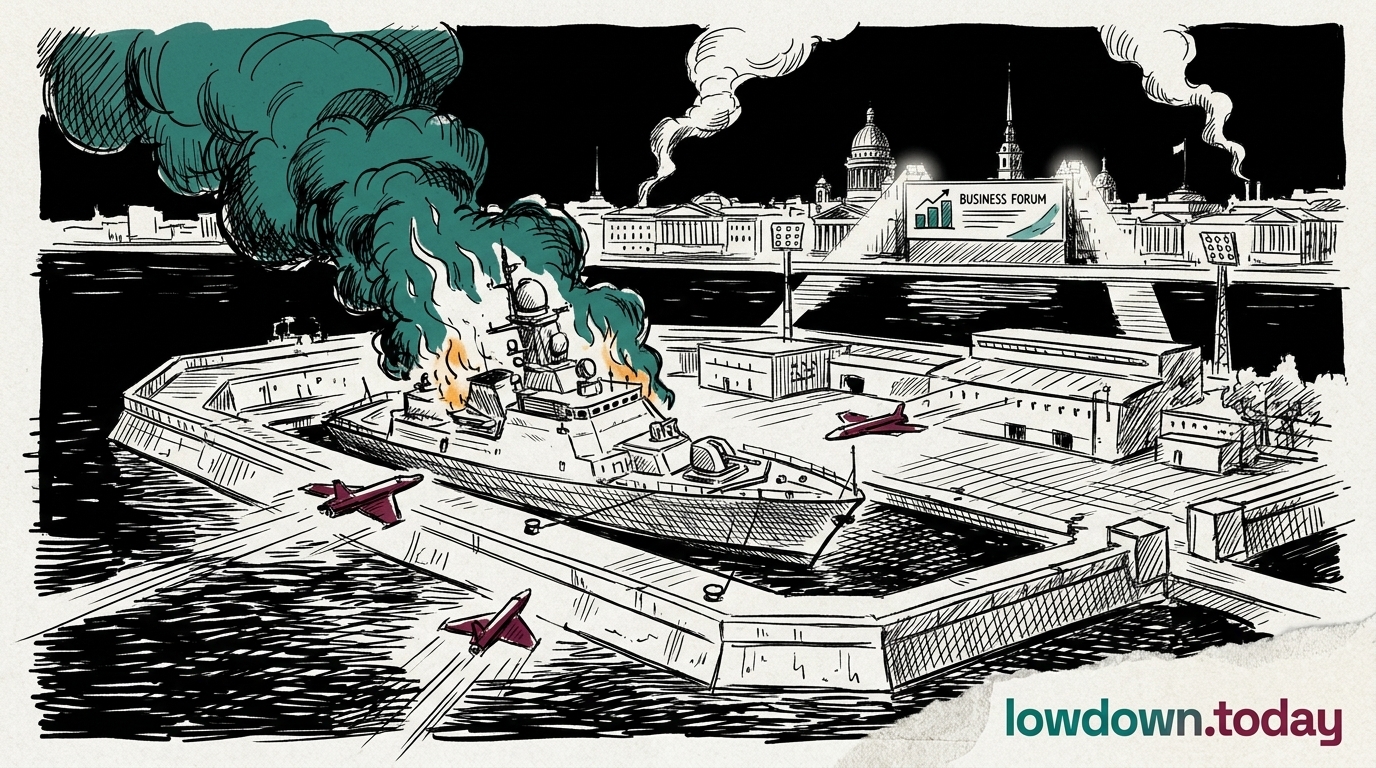
Putin used SPIEF to reject Zelenskyy's summit letter, citing 'elements of rudeness', and repeated the pre-agreed treaty precondition that has frozen every diplomatic round since May. The SPIEF platform's message of investor confidence was punctured by naval fires visible from St Petersburg, which Moscow declined to dispute in scale.
Ukraine / Unmanned Systems Forces
Commander Brovdi confirmed USF units tracked and set fire to Boikyi at Kronstadt, while Code 9.2 struck the Chonhar Bridge the following day. Ukraine is sequencing strikes for rear-area interdiction and political timing rather than ground gains, trading the Baltic Fleet's home base for the logistics squeeze Russia cannot absorb without rationing its own occupied territory.



