Skip to content
You can now search across every topic, entity and event.What's new
Russia-Ukraine War 2026
9JUN

Brent hits two-month low on deal bets

3 min read
11:54UTC

Brent crude traded near $87.33 on 12 June, a near-two-month low, as futures markets priced roughly an 80 per cent chance the Iran deal closes.

ConflictDeveloping
Key takeaway

Traders priced an 80 per cent chance of an unsigned deal, leaving Brent exposed to a sharp rebound.

Brent Crude, the global oil benchmark, traded near $87.33 on 12 June, a near-two-month low and down about 6 per cent on the week, even as the White House register the market is betting on showed no signature. 1 Futures traders are pricing roughly an 80 per cent chance the Iran deal closes, a senior US official's figure, which means they are discounting the unsigned register almost entirely. 2

The fall was a step-down, not a slide: $96.34 on 10 June , $94.71 on 11 June , $89.25 on 12 June , now below $88. In three sessions the benchmark gave back the entire high it set on Hormuz risk. Traders, not diplomats, are the most confident actors that a deal they cannot see will close, discounting the blockade, the drone combat and the IRGC's review hedge on a bet that Hormuz reopens soon.

The confidence cuts one way. A near-two-month low feeds through to softer fuel and freight costs for importers within weeks if the move holds. But with 80 per cent already in the price, the market holds little cushion: a Vahidi re-suspension or a slipped signing would reprice Hormuz risk sharply and snap Brent back above $90, because the good news has been spent before the paper exists.


Deep Analysis

In plain English

Oil is priced on expectations as much as on actual supply. When traders think a conflict that has been disrupting Middle East oil supply is close to ending, the price falls before a single extra barrel flows. On 12 June, with news of a possible deal circulating, the price of Brent crude, the main global oil benchmark, fell to around $87.33, its lowest in nearly two months. Markets were pricing in about an 80 per cent chance the deal would close and the Strait of Hormuz would reopen. But that calculation rests on an unsigned document and unresolved disagreements: where Iran's enriched uranium goes and whether Iran's most powerful military force, the IRGC, has agreed to the deal at all. If those problems cause a delay, the price will jump back up sharply.

What could happen next?
  • Risk

    Brent near $87.33 on an unsigned deal means a single negative signal, a Vahidi re-suspension or a public IRGC contradiction, would produce a $5-$8 upward snap in one trading session.

    Immediate · Assessed
  • Opportunity

    If Hormuz fully reopens and Iran's 67 million stranded barrels clear, Brent could settle in the $80-$83 band within six to eight weeks, reducing fuel and freight inflation across oil-importing economies.

    Medium term · Suggested
  • Consequence

    Lloyd's of London has not de-listed Hormuz from its war-risk register despite the price drop; insurance premiums remain elevated and shipping diversions at 139 vessels continue regardless of futures pricing.

    Short term · Reported
First Reported In

Update #126 · The weekend signing that never reached paper

oilprice.com· 13 Jun 2026
Read original
Different Perspectives
North Korea / DPRK
North Korea / DPRK
ISW confirmed the first mounting of DPRK Type-75 MLRS on Russian autonomous UGVs near Kharkiv on 7 June, the latest step in a supply axis that escalated from shells in 2023 to troops in 2024. Pyongyang gains live battlefield data on its ordnance and on Russia's uncrewed-systems programme.
IAEA / Rafael Grossi
Grossi confirmed Chornobyl structural damage with nuclear material metres away and could not attribute the ZNPP 15-hour blackout during the agreed repair window. Six ceasefires brokered and broken at ZNPP, compounded by Rosatom's May attack on IAEA neutrality, have eroded his ability to enforce the windows he negotiates.
Emmanuel Macron / France
Macron co-signed the E3 framework whose line-of-contact baseline marks Europe's first formal acceptance that 1991 borders are not the opening position. France's role carries weight because Macron had previously proposed a European force for Ukraine, and the framework's multinational force point is the vehicle for that.
Keir Starmer / E3
Keir Starmer / E3
Starmer, Macron and Merz met Zelenskyy on 7 June and backed a five-point framework taking the line of contact as the talks baseline, conceding roughly one fifth of Ukraine in exchange for a multinational force and frozen assets. With US mediation ended, the NATO Ankara summit on 7-8 July is the next test.
Vladimir Putin / Kremlin
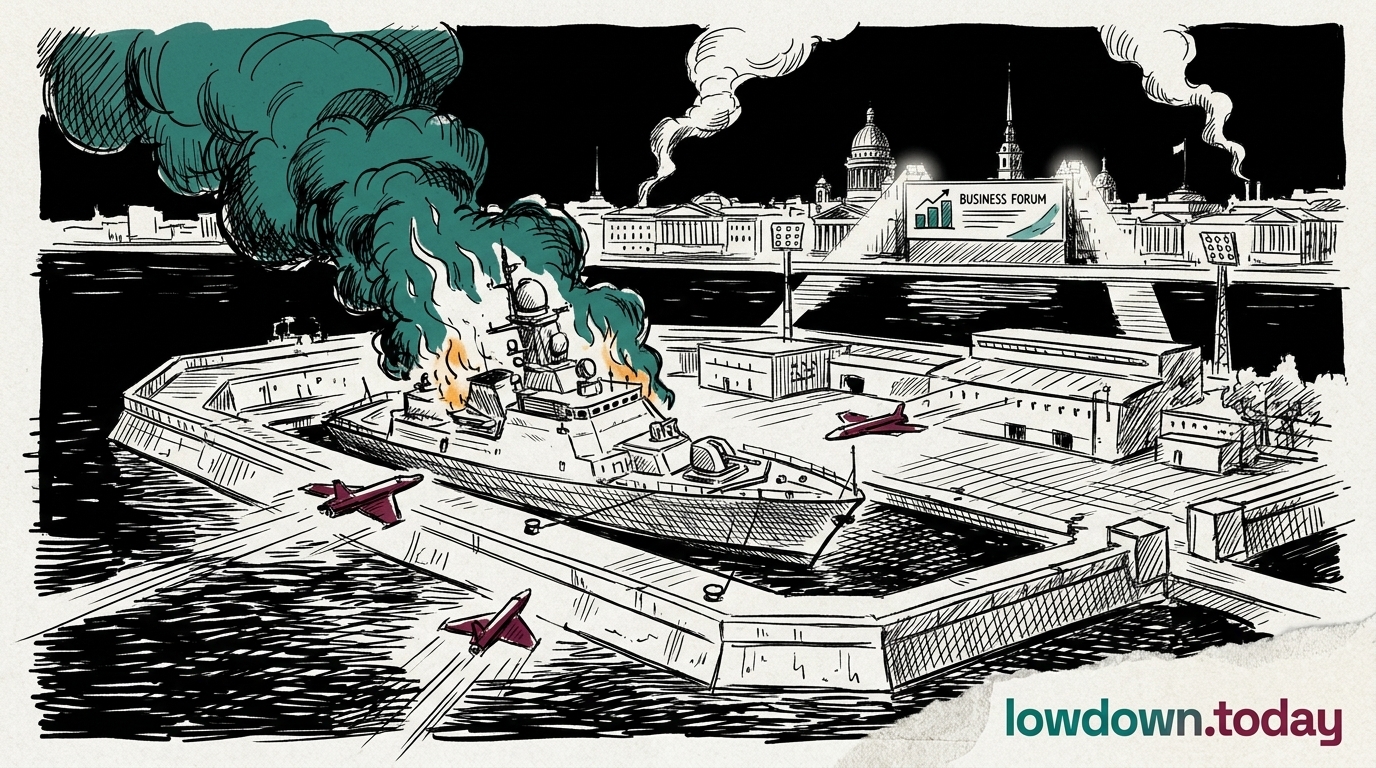
Putin used SPIEF to reject Zelenskyy's summit letter, citing 'elements of rudeness', and repeated the pre-agreed treaty precondition that has frozen every diplomatic round since May. The SPIEF platform's message of investor confidence was punctured by naval fires visible from St Petersburg, which Moscow declined to dispute in scale.
Ukraine / Unmanned Systems Forces
Commander Brovdi confirmed USF units tracked and set fire to Boikyi at Kronstadt, while Code 9.2 struck the Chonhar Bridge the following day. Ukraine is sequencing strikes for rear-area interdiction and political timing rather than ground gains, trading the Baltic Fleet's home base for the logistics squeeze Russia cannot absorb without rationing its own occupied territory.



