Skip to content
Briefings are running a touch slower this week while we rebuild the foundations.See roadmap
Russia-Ukraine War 2026
22MAY

Bruegel: the law leaves the chips problem

3 min read
10:57UTC

Bruegel published Analysis 13/2026 on 19 May finding Europe structurally dependent on US or Chinese computing infrastructure whatever CAIDA does, because the law governs the cloud layer and never reaches the silicon beneath it.

ConflictDeveloping
Key takeaway

Bruegel finds CAIDA cannot close Europe's chip dependency, because the law governs cloud residency, not silicon.

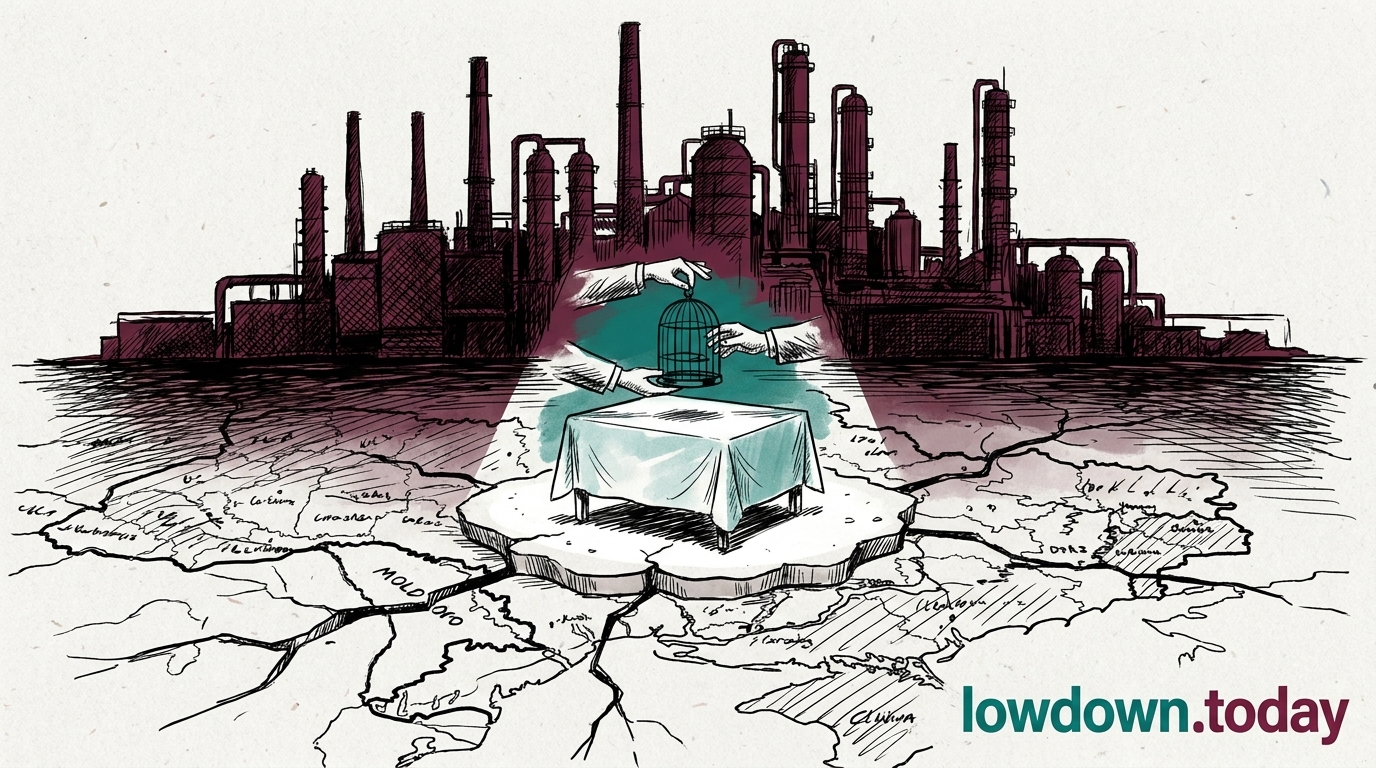
The Brussels think tank Bruegel published Analysis 13/2026 on Tuesday 19 May, finding Europe structurally dependent on US or Chinese computing infrastructure regardless of what CAIDA does 1. Bruegel is an economic policy institute whose work feeds directly into EU debate. Its finding is a layer argument: CAIDA can mandate where European public data is hosted, but it says nothing about where the silicon underneath that data comes from, and Europe has no leading-edge AI accelerator of its own to switch to.

The numbers frame the gap. Chinese domestic chips now power 41 per cent of China's data centres, and Huawei projects AI-chip revenue of $12bn in 2026, up from $7.5bn the year before 2. Both Washington and Beijing are manufacturing their way out of dependence; Europe is legislating around it. The dependency Bruegel measures is a cumulative-investment failure with no fab to point to: the cancelled Magdeburg and Crolles projects left the bloc with no leading-edge plant, and ASML's softening guidance is the only European hardware story with scale, and it sells the machines that make chips elsewhere, not the chips.

Bruegel's recommendation borrows the tool Chips Act II already adopts: coordinated EU procurement for compute on the Airbus model, plus subsidies to compensate firms that move off Nvidia. The Draghi report's delivery-gap diagnosis is the backdrop ; the correct prescription has been on record for a year. A law that governs the cloud layer leaves the hardware layer exactly where it was, which is the case Bruegel puts to a Commission about to adopt that law.

Deep Analysis

In plain English

A European think tank called Bruegel published a report in May 2026 showing that Europe cannot build or buy the computer chips needed to run cutting-edge AI, regardless of what the new EU cloud laws say. Both the US and China are spending tens of billions on their own chip factories and AI hardware. Europe is not. Huawei, the Chinese tech company, now makes enough AI chips to generate USD 12bn in sales in 2026. Europe has no equivalent chip company at that scale. Bruegel recommended that European governments pool their buying power to purchase AI computing capacity together, similar to how Airbus was built through coordinated European aerospace procurement.

What could happen next?
  • Risk

    If Chips Act II adopts without a subsidy mechanism for compute migration, European AI developers will remain on Nvidia infrastructure indefinitely, making CAIDA's data-residency mandate dependent on US-supplied hardware.

  • Consequence

    Huawei's USD 12bn 2026 AI-chip revenue trajectory suggests Chinese compute self-sufficiency by 2028, ending the period in which export controls could meaningfully constrain Chinese AI development.

First Reported In

Update #7 · Sovereignty arrives, minus Brussels

Bruegel· 3 Jun 2026
Read original
Different Perspectives
North Korea / DPRK
North Korea / DPRK
ISW confirmed the first mounting of DPRK Type-75 MLRS on Russian autonomous UGVs near Kharkiv on 7 June, the latest step in a supply axis that escalated from shells in 2023 to troops in 2024. Pyongyang gains live battlefield data on its ordnance and on Russia's uncrewed-systems programme.
IAEA / Rafael Grossi
Grossi confirmed Chornobyl structural damage with nuclear material metres away and could not attribute the ZNPP 15-hour blackout during the agreed repair window. Six ceasefires brokered and broken at ZNPP, compounded by Rosatom's May attack on IAEA neutrality, have eroded his ability to enforce the windows he negotiates.
Emmanuel Macron / France
Macron co-signed the E3 framework whose line-of-contact baseline marks Europe's first formal acceptance that 1991 borders are not the opening position. France's role carries weight because Macron had previously proposed a European force for Ukraine, and the framework's multinational force point is the vehicle for that.
Keir Starmer / E3
Keir Starmer / E3
Starmer, Macron and Merz met Zelenskyy on 7 June and backed a five-point framework taking the line of contact as the talks baseline, conceding roughly one fifth of Ukraine in exchange for a multinational force and frozen assets. With US mediation ended, the NATO Ankara summit on 7-8 July is the next test.
Vladimir Putin / Kremlin
Putin used SPIEF to reject Zelenskyy's summit letter, citing 'elements of rudeness', and repeated the pre-agreed treaty precondition that has frozen every diplomatic round since May. The SPIEF platform's message of investor confidence was punctured by naval fires visible from St Petersburg, which Moscow declined to dispute in scale.
Ukraine / Unmanned Systems Forces
Commander Brovdi confirmed USF units tracked and set fire to Boikyi at Kronstadt, while Code 9.2 struck the Chonhar Bridge the following day. Ukraine is sequencing strikes for rear-area interdiction and political timing rather than ground gains, trading the Baltic Fleet's home base for the logistics squeeze Russia cannot absorb without rationing its own occupied territory.
