Skip to content
Briefings are running a touch slower this week while we rebuild the foundations.See roadmap
Russia-Ukraine War 2026
24APR

$200bn war bill not yet sent to Congress

2 min read
11:21UTC

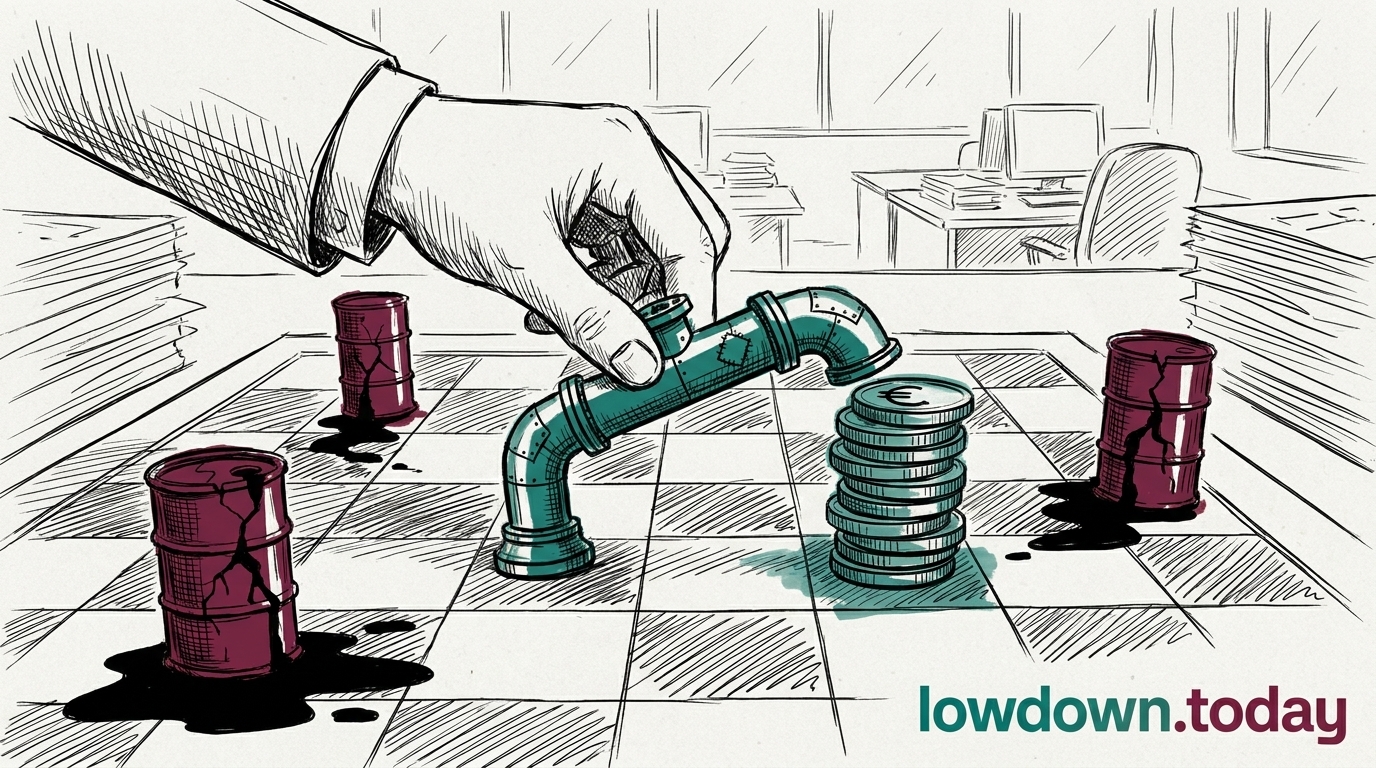
At $800 million per day, the Iran war is burning through money Congress has not authorised and may not approve.

ConflictDeveloping
Key takeaway

Military operations are expanding while Congress refuses to pay for them.

Pentagon officials confirmed on 31 March that their $200 billion Iran war supplemental has not been formally submitted to Congress. 1 Republican leaders told the Washington Post they lack the votes within their own party. The US spent roughly $15 billion in the first 19 days, nearly $800 million per day, more than the entire annual budget of the US Coast Guard.

The funding gap matters operationally. The 82nd Airborne's Devil Brigade is deploying to Kuwait . The USS Tripoli arrived with 3,500 Marines. Three Pentagon sources confirmed planning for "weeks of ground operations" including an amphibious seizure of Kharg Island. All of this requires money Congress has not authorised. Defence Secretary Pete Hegseth confirmed a forthcoming request but said the figure "could move." Heritage Foundation president Kevin Roberts endorsed the Republican resistance.

Deep Analysis

In plain English

The US military has been spending roughly $800 million every day on this war. To keep going, the Pentagon needs Congress to approve a special $200 billion funding package on top of the normal defence budget. That package has not been submitted to Congress yet. Republican leaders, from the president's own party, have said they do not have enough votes to pass it. The Heritage Foundation, a conservative think tank that helped write Trump's policy agenda, is backing the resistance. The practical problem is that the US has already committed ground troops to Kuwait and is planning to seize an Iranian oil island. All of that requires money Congress has not authorised.

What could happen next?
  • Risk

    Without supplemental authorisation, ground force deployments and Kharg Island planning may outpace available funding, creating a legal and operational crisis simultaneously.

    Short term · 0.75
  • Consequence

    Republican resistance from within the president's own party removes the political safety net that a bipartisan supplemental would normally provide.

    Immediate · 0.85
  • Opportunity

    The funding gap creates domestic leverage for a negotiated settlement: if the war cannot be funded at current scale, a deal becomes financially necessary regardless of military preference.

    Short term · 0.7
First Reported In

Update #53 · Trump drops Hormuz goal; toll becomes law

Washington Post· 31 Mar 2026
Read original
Causes and effects
This Event
$200bn war bill not yet sent to Congress
Without the $200 billion supplemental, the military expansion (ground troops, amphibious planning, interceptor replenishment) lacks financial authorisation.
Different Perspectives
EU Council / European Commission
With Orban's veto lifted and Magyar's Tisza government not placing a replacement block, the European Commission is signalling the first 90 billion euro Ukraine loan tranche for late May or early June 2026. Disbursement depends on Magyar's 5 May government formation proceeding to schedule.
Germany
Germany
Russia's Druzhba northern branch transit halt from 1 May removes one of Germany's residual non-Russian crude supply options. The timing compounds Berlin's exposure in the same week Ukrainian strikes drive Russian refinery throughput to its lowest since December 2009.
IAEA / Rafael Grossi
Grossi confirmed the Zaporizhzhia Nuclear Power Plant lost external power for its 14th and 15th times within a single week in late April, with the Ferosplavna-1 backup feeder damaged 1.8 km from the switchyard. He was negotiating a further local ceasefire; the previous IAEA-brokered repair lasted less than a week.
Japan
Japan
Japan authorised direct PAC-3 exports to the United States on 30 April, breaking its post-1945 arms export restrictions to replenish Iran-war-depleted US stockpiles. The White House global Patriot export freeze remains in place; Japan's historic policy shift benefits US readiness without reaching Ukraine.
Kazakhstan
Kazakhstan
Russia's Druzhba northern branch transit halt from 1 May cuts Kazakhstan's access to the German crude market. Astana routes most of its export crude through Russian infrastructure, meaning Moscow's unilateral decision directly constrains Kazakh export diversification despite Kazakhstan's stated neutrality on the war.
Péter Magyar / Tisza Party / Hungary
Magyar targets 5 May for government formation ahead of the 12 May constitutional deadline. Orbán lifted the EU loan veto before leaving office; Magyar supports Hungary's opt-out but has not placed a new veto, leaving the first 90 billion euro tranche on track for late May disbursement.
