Skip to content
Briefings are running a touch slower this week while we rebuild the foundations.See roadmap
Russia-Ukraine War 2026
24APR

Iran writes Hormuz toll into statute

3 min read
11:21UTC
ConflictDeveloping

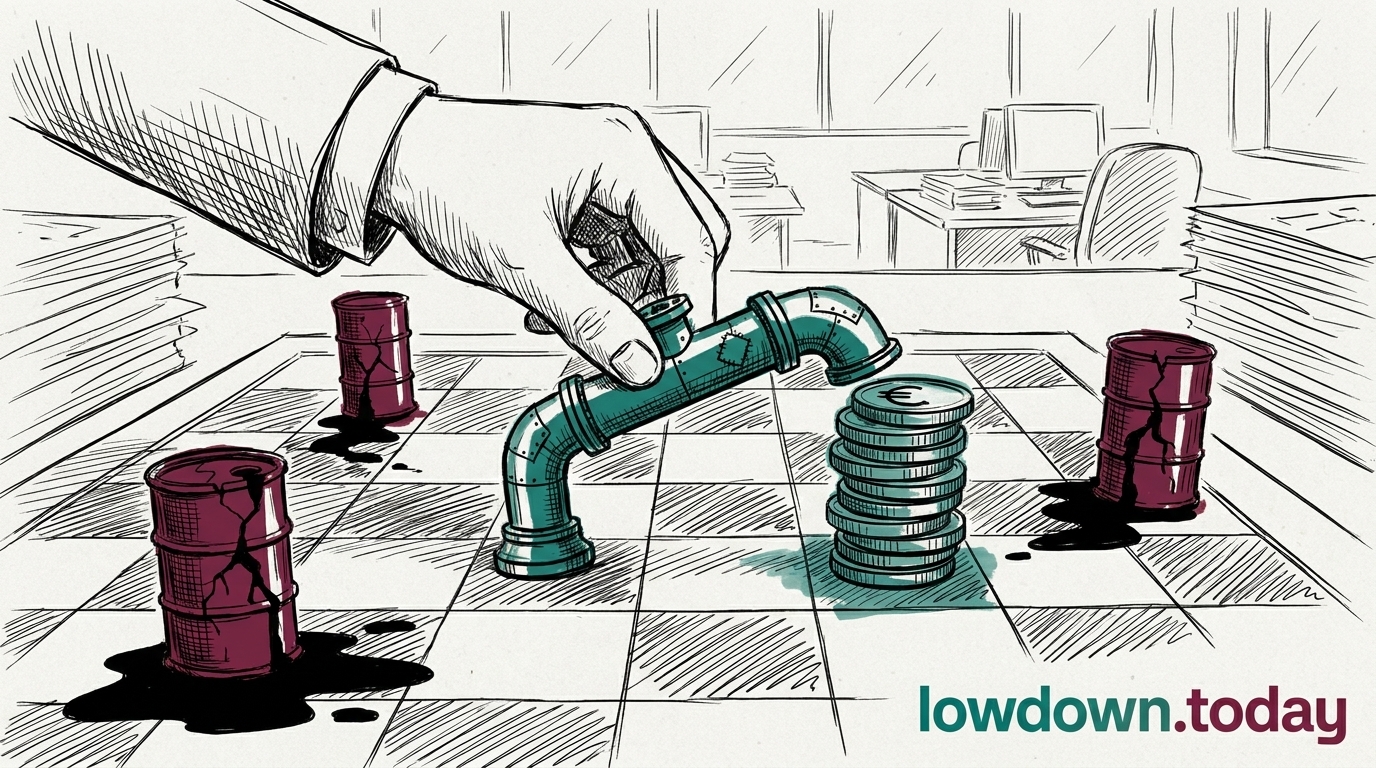
Iran's Islamic Consultative Assembly (the Majlis) is drafting legislation to formalise the strait of Hormuz toll as Iranian domestic law, with finalisation due next week, according to an unnamed lawmaker cited by Fars news agency. 1 The bill would codify what began as an IRGC field improvisation into statute, transforming a wartime military mechanism into a permanent legal claim over one of the world's critical waterways.

The significance of the timing cannot be overstated. IRGC Navy Commander Admiral Alireza Tangsiri, the man who personally built the toll and vetting system from scratch, was killed in an Israeli airstrike hours before this legislation was publicly confirmed. He was killed at 3am on Wednesday. By that afternoon, the Majlis legal committee in Tehran was drafting his toll system into permanent law. Twenty-six vessels have now transited under the IRGC vetting regime; operators submit IMO numbers, cargo manifests, and crew names to IRGC-connected intermediaries, receive a clearance code, and follow an approved route under escort past Larak Island. At least two paid in Chinese yuan. India continues to transit while denying it pays. 2

Iran's UN representative told the IMO this week that vessels linked to 'aggressor parties' have forfeited the right of innocent passage, the international law principle that merchant ships may transit straits freely. 3 Iran frames its vetting system not as a blockade but as legitimate self-defence, a framing designed to survive any post-ceasefire legal challenge.

The closest historical parallel is Egypt's 1957 Suez Canal nationalisation law, which survived the tripartite invasion and became the permanent legal basis for Egyptian canal authority. Iran appears to be following the same playbook: establish physical control during a crisis, then legislate before the crisis ends, so that any resolution begins from the new legal baseline rather than the pre-war status quo. The right of innocent passage existed for decades before this week. Iran told the IMO it no longer applies to hostile parties. If that position is codified in domestic law, every future negotiation over Hormuz will begin from the position that Iran holds a legal claim, not merely a physical one.

Deep Analysis

In plain English

Iran is writing a law that says it can permanently charge ships to pass through the Strait of Hormuz, not just during the war. About 20% of the world's oil travels through this narrow waterway. If that law passes, every barrel of oil, every container of goods, and every tonne of grain that moves through the strait costs more, because a toll gets baked into the price. That cost eventually lands on consumers worldwide in fuel prices, heating bills, and food costs. The clever part, from Iran's perspective, is that a law is much harder to undo than a military order: bombing a toll booth is one thing, repealing another country's legislation is something else entirely.

Deep Analysis
Root Causes

Iran is not merely closing a strait but creating a domestic legal framework that will require treaty-level renegotiation, not just military pressure, to dismantle.

The Majlis drafting process converts a wartime military mechanism into permanent domestic statute. Once codified, reversal requires legislative repeal, not military defeat.

The underlying structural cause is Iran's three-sided physical control of the strait, which no military operation can alter without permanent occupation.

First Reported In

Update #49 · Hormuz toll into law; Tangsiri killed

Bloomberg· 27 Mar 2026
Read original
Different Perspectives
EU Council / European Commission
With Orban's veto lifted and Magyar's Tisza government not placing a replacement block, the European Commission is signalling the first 90 billion euro Ukraine loan tranche for late May or early June 2026. Disbursement depends on Magyar's 5 May government formation proceeding to schedule.
Germany
Germany
Russia's Druzhba northern branch transit halt from 1 May removes one of Germany's residual non-Russian crude supply options. The timing compounds Berlin's exposure in the same week Ukrainian strikes drive Russian refinery throughput to its lowest since December 2009.
IAEA / Rafael Grossi
Grossi confirmed the Zaporizhzhia Nuclear Power Plant lost external power for its 14th and 15th times within a single week in late April, with the Ferosplavna-1 backup feeder damaged 1.8 km from the switchyard. He was negotiating a further local ceasefire; the previous IAEA-brokered repair lasted less than a week.
Japan
Japan
Japan authorised direct PAC-3 exports to the United States on 30 April, breaking its post-1945 arms export restrictions to replenish Iran-war-depleted US stockpiles. The White House global Patriot export freeze remains in place; Japan's historic policy shift benefits US readiness without reaching Ukraine.
Kazakhstan
Kazakhstan
Russia's Druzhba northern branch transit halt from 1 May cuts Kazakhstan's access to the German crude market. Astana routes most of its export crude through Russian infrastructure, meaning Moscow's unilateral decision directly constrains Kazakh export diversification despite Kazakhstan's stated neutrality on the war.
Péter Magyar / Tisza Party / Hungary
Magyar targets 5 May for government formation ahead of the 12 May constitutional deadline. Orbán lifted the EU loan veto before leaving office; Magyar supports Hungary's opt-out but has not placed a new veto, leaving the first 90 billion euro tranche on track for late May disbursement.
