Skip to content
You can now search across every topic, entity and event.What's new
Pandemics and Biosecurity
5JUL

CEPI funds a fourth Ebola vaccine

3 min read
10:12UTC

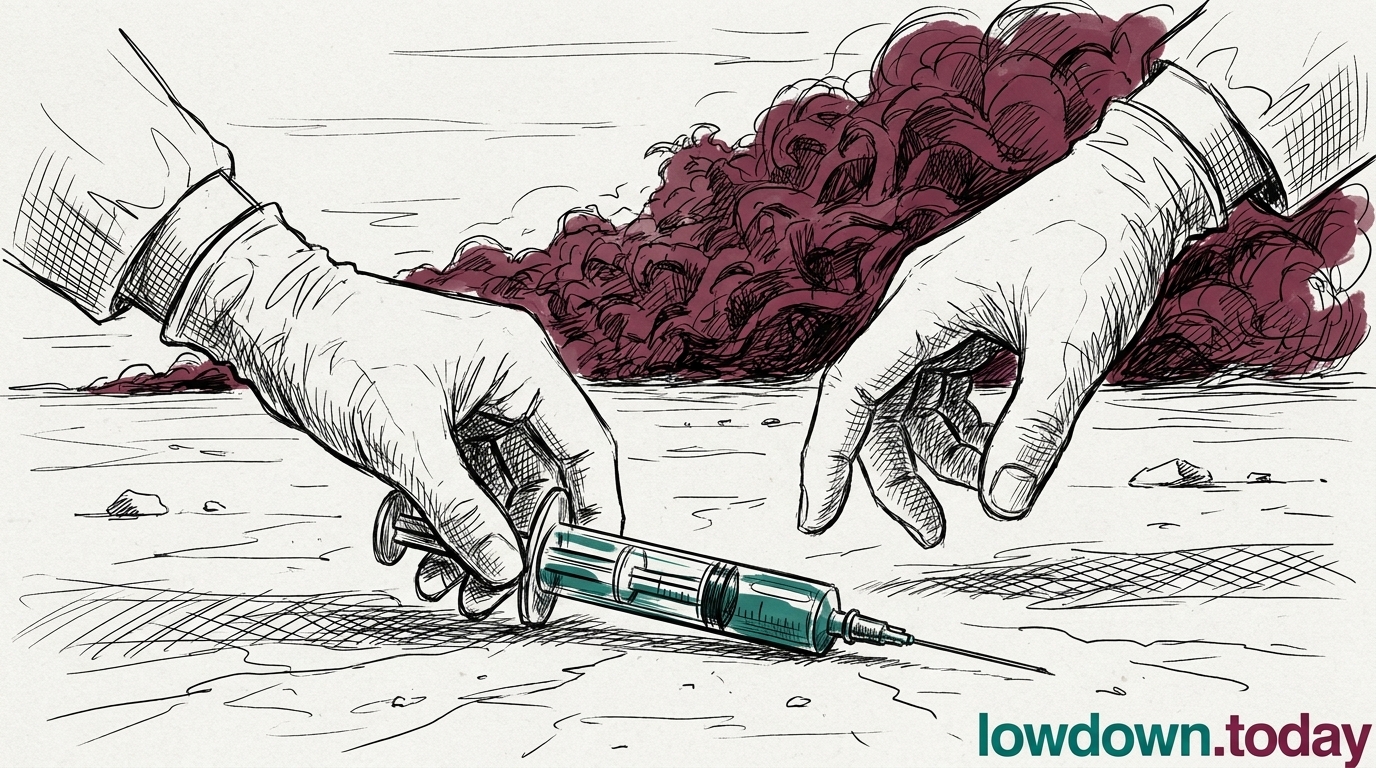
CEPI awarded Public Health Vaccines LLC 1.9 million dollars on 9 June for a fourth Bundibugyo candidate, bringing the portfolio to four across three platforms. Africa CDC still flags the missing bedside test.

ScienceDeveloping
Key takeaway

CEPI now funds four Bundibugyo vaccine candidates, yet no rapid diagnostic test for the virus exists.

CEPI, the Coalition for Epidemic Preparedness Innovations, awarded Public Health Vaccines LLC 1.9 million dollars on 9 June to generate master viral seed stock for a fourth Bundibugyo vaccine candidate on the rVSV platform 1. CEPI is the Oslo-based public-private coalition that funds early-stage pandemic vaccine development. The rVSV platform takes a harmless virus and engineers it to carry the pathogen's immune markers, the same approach behind the licensed Zaire Ebola vaccine.

The award brings CEPI's Bundibugyo portfolio to four candidates across three platforms, roughly 63.7 million dollars in total, advancing on the three-platform commitment of early June . Master seed stock sits at the front of the bottleneck most vaccine timelines hide. The rVSV process depends on specialised cell-culture inputs that take months to establish, which is why funding the seed stock now, rather than when a candidate is ready for human testing, shortens the path to a Phase 1 trial later.

Africa CDC flags the gap underneath all of it. No Bundibugyo-specific rapid diagnostic test exists, so every suspected case still waits on a PCR laboratory assay, the polymerase chain reaction method that amplifies viral genetic material, rather than a bedside test that returns an answer in minutes. In Ituri's insecure health zones, the lag between swab and result is the same lag that keeps patients out of isolation and prolongs every transmission chain.

Deep Analysis

In plain English

Vaccines work by training the immune system to recognise a pathogen before it causes illness. Four organisations are now working on four different experimental vaccines against Bundibugyo Ebola, using three different biological platforms, different technical approaches to triggering immunity. This week, CEPI (the Coalition for Epidemic Preparedness Innovations) gave a US company $1.9 million to create a starter batch of viral material needed to begin one of those vaccine programmes. None of these vaccines will be ready to dose people during this outbreak. Vaccine development takes at least 12 to 18 months to reach first human trials. The investment now is for the next outbreak of this pathogen, not the one happening today. There is also still no rapid bedside test to confirm Bundibugyo Ebola infection; every diagnosis currently requires a specialised laboratory.

What could happen next?
  • Opportunity

    A four-platform portfolio across rVSV, mRNA and ChAdOx1 gives at least one candidate a reasonable probability of reaching Phase 1 human trials within 12 months, providing safety data that was entirely absent when this outbreak began.

    Medium term · Reported
  • Risk

    Without a Bundibugyo-specific rapid diagnostic test, vaccine trial enrolment will remain PCR-gated, constraining the speed at which Phase 1 and Phase 2 enrolment can proceed once a candidate reaches human trials.

    Medium term · Assessed
  • Precedent

    CEPI activating a four-platform portfolio during an active PHEIC, rather than after containment, establishes a new operational tempo for the 100 Days Mission framework.

    Long term · Assessed
First Reported In

Update #7 · Bundibugyo's fork stays open

CEPI· 16 Jun 2026
Read original
Causes and effects
This Event
CEPI funds a fourth Ebola vaccine
The vaccine bench is filling out, but every Bundibugyo case still waits on a laboratory PCR result because no rapid diagnostic exists.
Different Perspectives
Germany (evacuation recipient)
Germany received the Bundibugyo outbreak's third international medical evacuation on 13 July, a US humanitarian worker infected in Bunia on 10 July. The evacuation, following a French doctor's 24 June departure and May's first US case, tests whether isolation and biocontainment protocols scale beyond DR Congo's own borders.
Pennsylvania Department of Public Health
PDPH retested and retracted a false-positive measles wastewater signal on 6 July, then confirmed and publicised a real airport exposure from 4 July, with commissioner Palak Raval-Nelson stressing there is no broad threat to the general public. The national count, 2,231 cases across 42 states by 9 July, is on pace to beat 2025's 2,289-case record before September.
World Health Organization
WHO published its first dedicated Blueprint on fungal disease and antifungal resistance on 1 July, estimating more than 300 million people suffer serious fungal disease annually. The Blueprint names the gap in WHO's own AMR strategy rather than waiting for an external audit to force the admission.
Africa CDC
Africa CDC
Africa CDC issued a formal 11 July appeal for responder protection, training and psychosocial support after health-worker infections tripled from 34 to 112 in a month. The appeal repeats June's unmet call for a rapid Bundibugyo diagnostic test, showing the ask has shifted from tools to basic safety and pay.
Front-line health workers, Ituri Province
Health workers in Ituri Province walked off the job or threatened to strike over unpaid hazard pay and delayed salaries, even as responder infections tripled to 112 with 35 dead. Their absence narrows the isolation workforce the CDC's model says must reach 70% coverage to avoid a 20,000-case worst case.
ECDC
ECDC
ECDC co-published the isolation and contact-tracing figures behind WHO's DON612, tracking Ituri's isolation rate rising from 35 to 44 percent while still rating EU/EEA import risk as very low. Brussels backs the WHO line against travel restrictions, the position France's own contact-tracing response, not the US entry ban, actually validated.
