Skip to content
You can now search across every topic, entity and event.What's new
Pandemics and Biosecurity
21JUL

Isolation slips as Ebola funding arrives

2 min read
09:12UTC

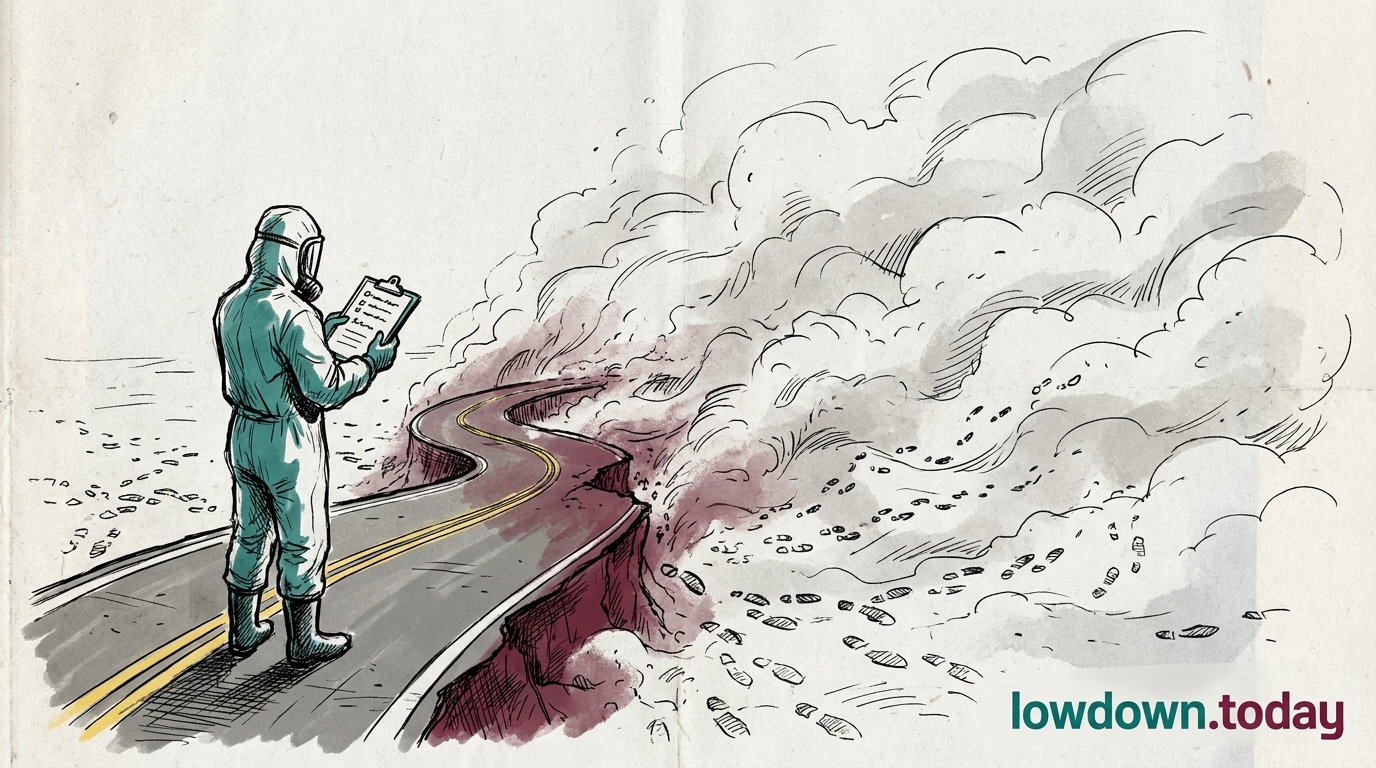
Patient isolation in DR Congo's Bundibugyo outbreak fell to roughly 39% by 13 July, sliding away from the 70% mark the CDC's model says decides the epidemic.

ScienceAssessed
Key takeaway

The Bundibugyo response has more money, trials and tests than ever, yet the measure that decides its course keeps slipping.

Patient isolation in the DR Congo Bundibugyo outbreak fell to roughly 39%, with 753 of 1,926 confirmed patients hospitalised in isolation as of 13 July, on the European Centre for Disease Prevention and Control (ECDC) tracker 1. The World Health Organization (WHO) had put the rate at 44% on 3 July, in its Disease Outbreak News bulletin DON612 . Between those two dates the figure fell rather than rose.

The US Centers for Disease Control and Prevention (CDC) modelled the outbreak in June at a reproduction number of 2.51, the average number of people each case infects, and named a single fork: at 70% patient isolation the epidemic collapses, and below it the worst-case runs reach 20,000 cases . The rate at which patients reach isolation decides the trajectory, because every unisolated patient can seed the next chain of infection while a hospitalised one cannot.

Every input money can buy has moved forward this month: vaccine financing, the first treatment-trial doses, and the first Bundibugyo diagnostic cleared onto WHO's Emergency Use Listing, its fast-track route for unlicensed products in an emergency. The one logistics variable the model said would decide the outcome has gone backwards instead.

A falling isolation percentage partly tracks faster case-finding, a swelling denominator, rather than any pure loss of ward capacity. The workforce strain running alongside it, the responder infections and the unpaid front-line staff, argues that the deterioration is real rather than a statistical artefact.

Deep Analysis

In plain English

Isolating a sick patient, keeping them apart from others so they cannot spread the virus, is one of the most powerful tools against Ebola. Health officials have modelled that if 70% of confirmed patients are properly isolated, the outbreak's worst-case scenarios mostly disappear. Right now, only about 39% of confirmed patients in DR Congo's outbreak are isolated, down from 44% a week and a half earlier, even as international donors have pledged large sums of money. This matters because isolation capacity, not funding alone, still determines whether the outbreak keeps growing.

Deep Analysis
Root Causes

Isolation fell to 39% even as donor funding accelerated because pledged money takes months to become physical isolation beds, staffed wards and functioning ambulance routes, while the caseload it must serve keeps growing in real time; DR Congo's Bundibugyo count has now passed 1,481 confirmed cases.

Ituri's security terrain compounds the lag: the same ADF and CODECO militia activity that limited contact tracing to roughly 71% at DON607 in June continues to restrict which villages responders can safely reach to isolate patients at all.

What could happen next?
  • Risk

    Continued slippage below 44% isolation raises the probability, per the CDC's own simulation runs, of the outbreak reaching 20,000 cases.

First Reported In

Update #10 · Ebola's responders are now the casualties

ECDC· 14 Jul 2026
Read original
Different Perspectives
UK Government
UK Government
The Biological Security Strategy implementation report published 14 July commits the UK to deciding within twelve months whether to make DNA-synthesis screening mandatory, backed by GBP 1.83bn for biosecurity centres. It is a preemptive move on a threat that has not yet produced a UK incident.
Cambodia's Ministry of Health
Cambodia confirmed a nine-month-old girl in Phnom Penh as its fourth 2026 H5N1 case on 11 July, the country supplying four of the world's seven new human cases since February. The ministry's confirmed-case cadence is running well ahead of a US surveillance system that has recorded nothing new since March.
Knowledge Ecology International
KEI published proposed annex text on the day IGWG7 opened that would attach benefit-sharing duties to a product's market registration, regardless of whether the manufacturer used shared samples or only downloaded sequence data. It is the Africa Group's fallback position if the sample-based bargain fails to bind.
European Union
European Union
The EU and other industrialised states backed a hybrid model built on centralised infrastructure with more flexible access terms, the opposite design choice from the Africa Group's. Brussels wants conditions handled contractually once samples reach shared facilities, not attached to national custody of the material itself.
Africa Group / Algeria
Algeria, speaking for the Africa Group at IGWG7, backed distributed national and regional laboratories under binding access conditions, arguing that supplying states must keep legal control of samples rather than surrender them into shared infrastructure.
Uganda's Ministry of Health
Uganda discharged its last confirmed patient on 16 July and opened a 42-day countdown to declaring its own outbreak over, closing at 20 cases and 2 deaths with no new case since 21 June. This is a closing chapter running alongside DR Congo's still-worsening one, contingent on a border DRC can no longer see across.
