Skip to content
You can now search across every topic, entity and event.What's new
Pandemics and Biosecurity
21JUL

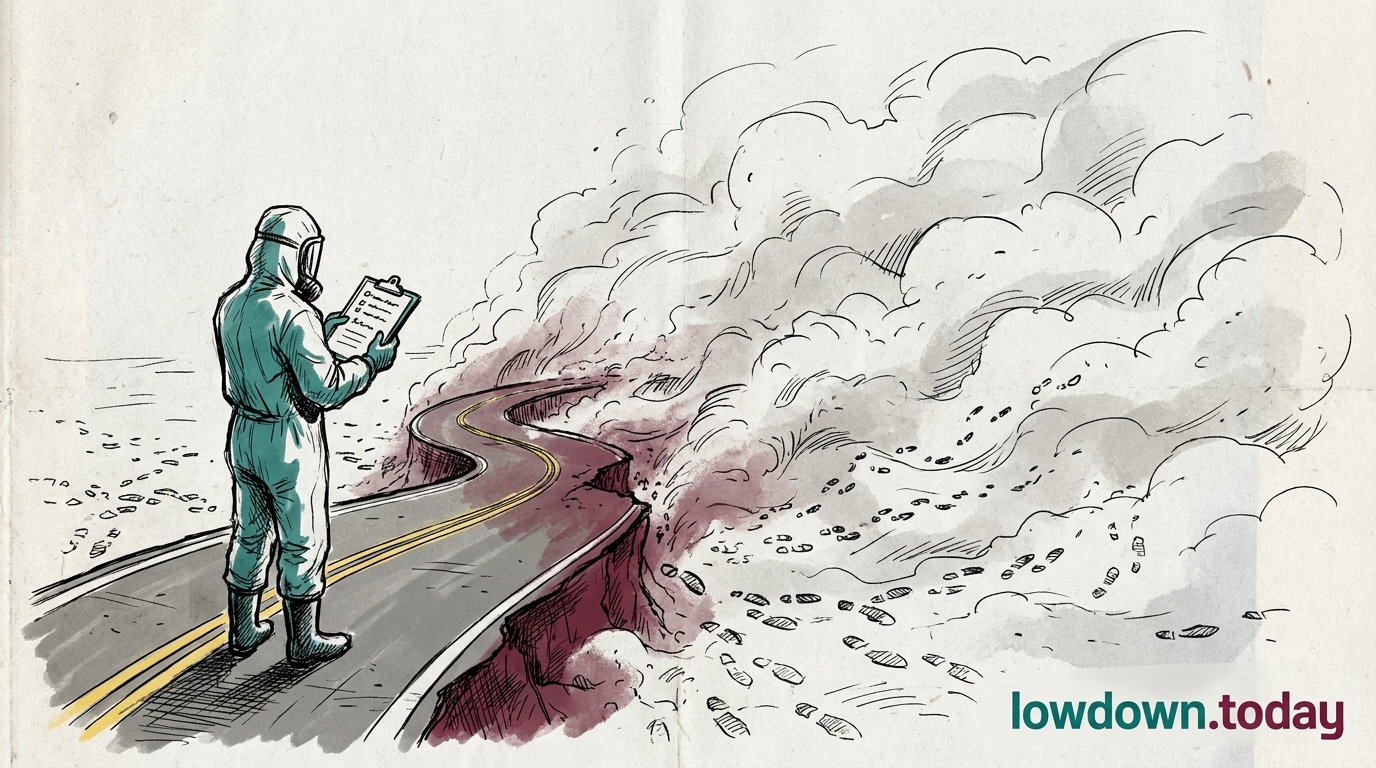
Ebola's responders are dying in Ituri

2 min read
09:12UTC

Africa CDC issued a formal responder-protection appeal on 11 July after health-worker infections in the Bundibugyo response tripled to 112, with 35 dead.

ScienceAssessed
Key takeaway

Bundibugyo has no vaccine, so responder safety rests on equipment and training, and both are failing as infections triple.

Africa CDC, the African Union's Africa Centres for Disease Control and Prevention, issued a formal appeal for responder protection on Saturday 11 July, its first move from quiet monitoring to a public demand for protective equipment, training and psychosocial support. Health-worker infections in the response to Bundibugyo, a rare Ebola species first identified in Uganda in 2007, had tripled from 34 in mid-June to 112, of whom 35 have died 1.

Bundibugyo has no licensed vaccine, so responder safety rests entirely on protective equipment, training and infection control, the exact inputs Africa CDC named as failing. In a filovirus outbreak a rising staff-infection count doubles as a warning: each hospital-acquired case marks a ward where the virus is amplifying rather than being contained. The appeal asks donors and deploying agencies to close that gap before the toll climbs again.

Deep Analysis

In plain English

Ebola causes severe bleeding and organ failure, and it spreads through direct contact with the bodily fluids of someone who is sick or has died from it. The people most exposed are the nurses, doctors and burial teams who treat patients every day. In DR Congo's Ituri Province, the number of these health workers who have caught the virus themselves has more than tripled in a month, and 35 of them have died. Africa CDC, the African Union's public health agency, is now formally asking for better protective gear, training and mental health support for the staff still working the wards.

Deep Analysis
Root Causes

Testing capacity in the affected provinces only rose from 200-400 to over 2,000 samples a day on 2 July, after WHO's Emergency Use Listing cleared the first Bundibugyo molecular diagnostic. Before that upgrade, health workers were routinely exposed to patients still awaiting results rather than confirmed cases, extending the window in which infection-control precautions were relaxed.

Ituri's health zones also draw staff from the same communities they treat, so an infected worker often continues informal caregiving contact with family after a shift ends, a transmission route no training programme currently covers.

What could happen next?
  • Risk

    If health-worker infections keep rising, treatment centres may lose enough trained staff to force ward closures independent of bed capacity.

First Reported In

Update #10 · Ebola's responders are now the casualties

Africa CDC· 14 Jul 2026
Read original
Different Perspectives
UK Government
UK Government
The Biological Security Strategy implementation report published 14 July commits the UK to deciding within twelve months whether to make DNA-synthesis screening mandatory, backed by GBP 1.83bn for biosecurity centres. It is a preemptive move on a threat that has not yet produced a UK incident.
Cambodia's Ministry of Health
Cambodia confirmed a nine-month-old girl in Phnom Penh as its fourth 2026 H5N1 case on 11 July, the country supplying four of the world's seven new human cases since February. The ministry's confirmed-case cadence is running well ahead of a US surveillance system that has recorded nothing new since March.
Knowledge Ecology International
KEI published proposed annex text on the day IGWG7 opened that would attach benefit-sharing duties to a product's market registration, regardless of whether the manufacturer used shared samples or only downloaded sequence data. It is the Africa Group's fallback position if the sample-based bargain fails to bind.
European Union
European Union
The EU and other industrialised states backed a hybrid model built on centralised infrastructure with more flexible access terms, the opposite design choice from the Africa Group's. Brussels wants conditions handled contractually once samples reach shared facilities, not attached to national custody of the material itself.
Africa Group / Algeria
Algeria, speaking for the Africa Group at IGWG7, backed distributed national and regional laboratories under binding access conditions, arguing that supplying states must keep legal control of samples rather than surrender them into shared infrastructure.
Uganda's Ministry of Health
Uganda discharged its last confirmed patient on 16 July and opened a 42-day countdown to declaring its own outbreak over, closing at 20 cases and 2 deaths with no new case since 21 June. This is a closing chapter running alongside DR Congo's still-worsening one, contingent on a border DRC can no longer see across.
