Skip to content
You can now search across every topic, entity and event.What's new
Pandemics and Biosecurity
14JUL

34 staff infected, four nurses walk out

3 min read
08:46UTC

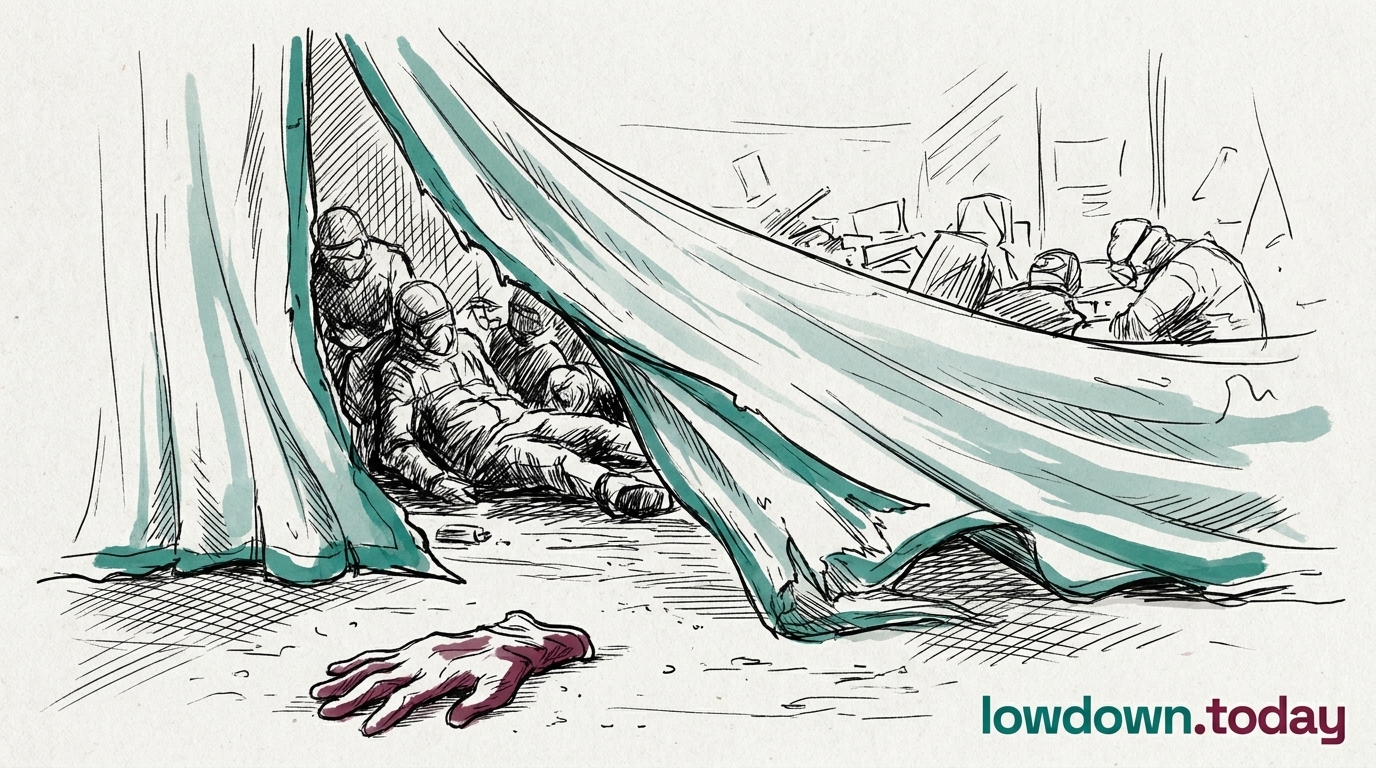
Africa CDC counted 34 infected healthcare workers as of 10 June. Four nurses treated at Bunia hospital recovered and were discharged, the first named recoveries from a DRC facility this outbreak.

ScienceDeveloping
Key takeaway

Four recovered nurses left Bunia hospital, the first named Bundibugyo Ebola recoveries from a DRC facility.

34 healthcare workers had been infected with Bundibugyo Ebola as of 10 June, the Africa CDC Advisory and Technical Council reported after an extraordinary session on 12 June 1. The Africa CDC is the African Union's continental public health agency, and its Advisory and Technical Council is the senior expert body steering the response. The figure is the first specific aggregate count since four healthcare worker deaths at Mongbwalu Hospital in May.

That burden falls on a frontline treating a haemorrhagic fever without species-specific protective protocols, because no licensed countermeasure for Bundibugyo exists. There was also a first in the other direction: four nurses treated for Ebola at Bunia hospital in Ituri recovered and were discharged, the earliest named recoveries from a DRC facility in this outbreak 2. The same wards that take the heaviest exposure are now producing survivors, and WHO expects more, because patients diagnosed early survive more often.

Uganda's confirmed total has risen to 19 cases, up from nine a fortnight earlier , with 14 imported and five from onward transmission, still concentrated in Kampala and neighbouring Wakiso. Onward transmission means the virus is now passing person to person inside Uganda rather than arriving only with travellers, the threshold that turns an imported cluster into a domestic outbreak.

Deep Analysis

In plain English

Healthcare workers treating Ebola patients face a much higher infection risk than the general public, because they handle patients directly, often in facilities where protective equipment is limited. Thirty-four healthcare workers have been confirmed infected in this outbreak as of 10 June. Four nurses recovered and left Bunia hospital, proving two things at once: patients can survive Bundibugyo Ebola even without an approved treatment, and the hospital reached these four early enough to give them that chance. Survivor testimony from named staff matters for the community trust that keeps patients coming in.

Deep Analysis
Escalation

Healthcare worker infections at 4.4 to 4.9 percent of confirmed cases exceed accepted thresholds for IPC adequacy. Each HCW infection simultaneously removes a response capacity asset and signals ongoing transmission risk within facilities. If not reversed, this trajectory risks treatment-unit closures analogous to those seen in the 2000 Gulu outbreak.

What could happen next?
  • Risk

    A second wave of healthcare worker infections concentrated at under-equipped facilities could force treatment unit closures, which would sharply reduce patient isolation capacity and push the outbreak toward the CDC model's worst-case scenario.

  • Opportunity

    Four named nurse recoveries from Bunia hospital provide verifiable survivor testimony for community trust-building, which CIDRAP identifies as a key lever for reducing care-seeking delay, the main factor distinguishing survivors from fatalities in the absence of licensed treatment.

First Reported In

Update #7 · Bundibugyo's fork stays open

Africa CDC· 16 Jun 2026
Read original
Different Perspectives
Germany (evacuation recipient)
Germany received the Bundibugyo outbreak's third international medical evacuation on 13 July, a US humanitarian worker infected in Bunia on 10 July. The evacuation, following a French doctor's 24 June departure and May's first US case, tests whether isolation and biocontainment protocols scale beyond DR Congo's own borders.
Pennsylvania Department of Public Health
PDPH retested and retracted a false-positive measles wastewater signal on 6 July, then confirmed and publicised a real airport exposure from 4 July, with commissioner Palak Raval-Nelson stressing there is no broad threat to the general public. The national count, 2,231 cases across 42 states by 9 July, is on pace to beat 2025's 2,289-case record before September.
World Health Organization
WHO published its first dedicated Blueprint on fungal disease and antifungal resistance on 1 July, estimating more than 300 million people suffer serious fungal disease annually. The Blueprint names the gap in WHO's own AMR strategy rather than waiting for an external audit to force the admission.
Africa CDC
Africa CDC
Africa CDC issued a formal 11 July appeal for responder protection, training and psychosocial support after health-worker infections tripled from 34 to 112 in a month. The appeal repeats June's unmet call for a rapid Bundibugyo diagnostic test, showing the ask has shifted from tools to basic safety and pay.
Front-line health workers, Ituri Province
Health workers in Ituri Province walked off the job or threatened to strike over unpaid hazard pay and delayed salaries, even as responder infections tripled to 112 with 35 dead. Their absence narrows the isolation workforce the CDC's model says must reach 70% coverage to avoid a 20,000-case worst case.
ECDC
ECDC
ECDC co-published the isolation and contact-tracing figures behind WHO's DON612, tracking Ituri's isolation rate rising from 35 to 44 percent while still rating EU/EEA import risk as very low. Brussels backs the WHO line against travel restrictions, the position France's own contact-tracing response, not the US entry ban, actually validated.
