Skip to content
Welcome, thoughtbot's Giant Robots listeners!Start here
Nomads & Communities
3OCT

Italy ships CIN, tax tiers, Milan key-box ban

4 min read
13:31UTC

Italy's CIN-to-BDSR pipeline, built since January 2025, fed straight into the SDEP today. The 2026 Budget Law's tiered STR tax, Milan's key-box ban and the Olympic tourist levy all activated alongside.

SocietyDeveloping
Key takeaway

Italy built the CIN-to-BDSR pipe sixteen months early; the tax and key-box layers ride it from day one.

Italy carried the most complete national stack into 20 May. Every Italian short-term rental has displayed a CIN (Codice Identificativo Nazionale, the National Identification Code) since January 2025. The CIN feeds the BDSR (Banca Dati Strutture Ricettive, the National Database of Accommodation Establishments), which is Italy's pre-built SDEP layer⁠1. Italy built the CIN-to-BDSR pipe sixteen months before the deadline trailed in Update #3, not against it.

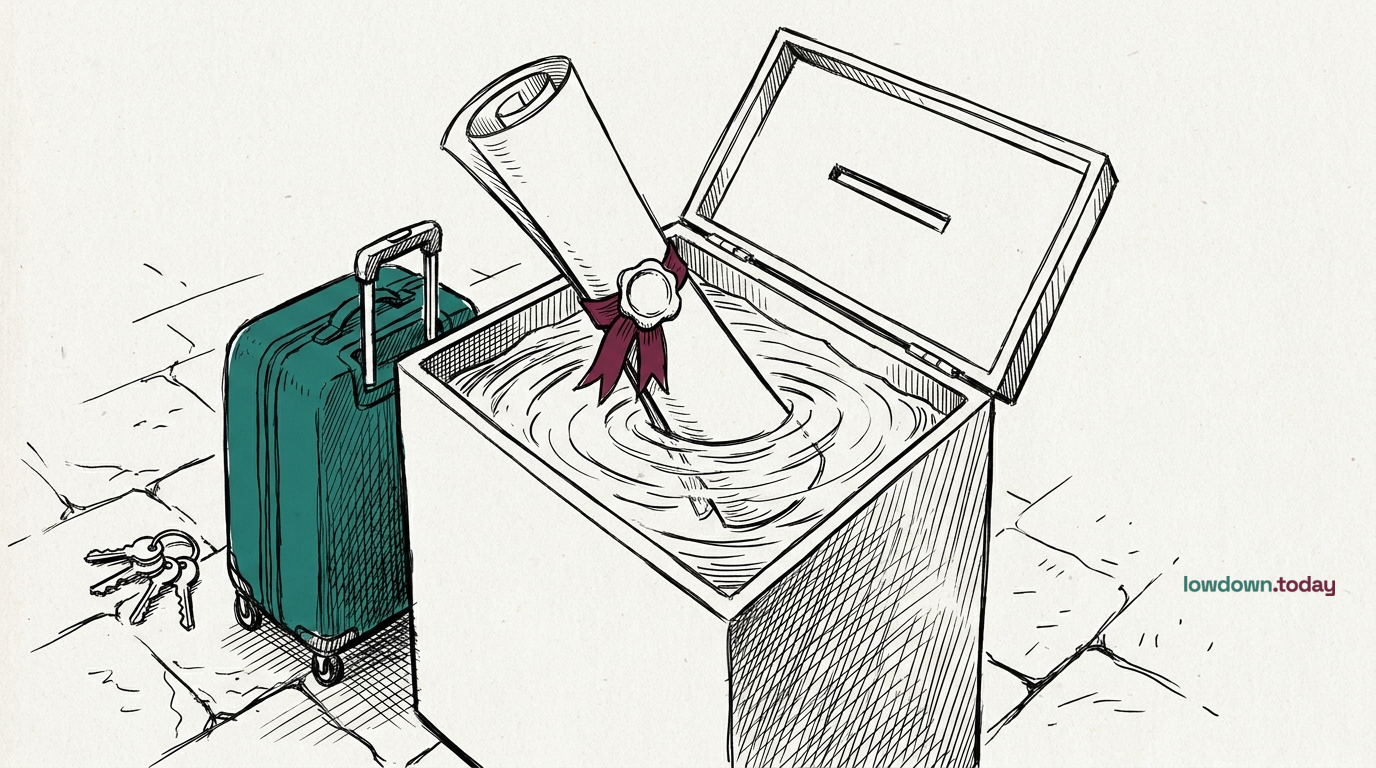
Milan banned self-check-in key boxes from January, with fines of €100 to €400 per offence, joining Florence, Bologna, Rome and Venice⁠2. Italy's 2026 Budget Law sets a 21% flat tax on a first STR property and 26% on additional properties. Anyone running three or more units exclusively for short-let trips the threshold to business classification: corporate accounting, VAT registration, the full flip.

The Milan Olympic tourist tax adds €9.50 per person per night within 30 km of Winter Games venues, applicable for 2026 only. A family of four staying a week pays €266 in tax alone on top of the room rate. Florence's UNESCO historic centre ban on new tourist-rental registrations, in force since May 2025, is being absorbed into the SDEP feed today.

Rome is layering fiscal and physical-access controls on top of the data-sharing layer rather than catching up to the regulation. The 21/26 tax split is calibrated to push three-property hosts into the formal-business net without forcing a single-flat owner out of the market. The Milan tax is the time-bound revenue grab the Winter Games window enables. Both will outlast 2026 in the registry pipework, even where the rates themselves do not.

Deep Analysis

In plain English

Italy has had a national code, called a CIN (Codice Identificativo Nazionale), on every short-term rental listing since January 2025. That code feeds into a national database called the BDSR, which became Italy's official EU data portal on 20 May. Other countries are scrambling to build that infrastructure now; Italy built it 16 months ago. On top of that data system, Italy activated a tiered tax today. If you rent out one flat short-term, you pay a 21% flat tax on the income. If you have two or more additional properties, you pay 26% on those. If you run three or more properties exclusively as a short-let business, the law reclassifies you as a commercial operator, meaning you need business accounting and VAT registration. Milan also banned the self-check-in key boxes that many rental hosts attach to their buildings, with fines of €100 to €400. During the Winter Olympics, a tourist tax of €9.50 per person per night applies to any rental within 30 km of the Games venues. A family of four staying a week in the Olympic zone pays €266 in tax alone, on top of the room rate.

Deep Analysis
Root Causes

Italy's readiness has two structural roots. The first is the political economy of the 2024-2025 tourism recovery: with overnight stays recovering to pre-pandemic levels and tourist-tax revenues forming a meaningful share of municipal budgets in Rome, Venice and Florence, the fiscal case for formalising STR income was unambiguously positive for government revenues.

The 21%/26% tax split is projected to capture approximately €800 million annually if compliance reaches 75%, per Budget Law fiscal projections.

Florence's UNESCO World Heritage obligations since 2021 required the city to demonstrate active management of tourism density in its historic centre. The May 2025 ban on new tourist-rental registrations in the Florence UNESCO zone, now absorbed into the SDEP feed, gave the Italian government a dateable enforcement event it could point to as evidence of active management. The EU deadline provided the political cover to extend the same logic nationally.

What could happen next?
  • Consequence

    Multi-property STR operators in Italy face business reclassification costs of €3,000 to €5,000 annually from the three-unit trigger; corporate restructuring to avoid the threshold will likely follow within 12 months.

    Short term · 0.72
  • Opportunity

    Italy's CIN-to-BDSR model is the most replicable in the EU; member states without SDEP infrastructure can adopt the Italian sequencing of data-layer first, fiscal-layer second, as a blueprint.

    Medium term · 0.8
  • Risk

    Banca d'Italia's projected portfolio-splitting response could erode the 26% tier's fiscal yield; if operators split portfolios into corporate entities, Budget Law revenue projections of €800 million may not materialise.

    Medium term · 0.65
  • Florence's UNESCO zone ban absorption into the SDEP feed sets a legal precedent for other Italian cities with cultural heritage designations to use the SDEP as an enforcement trigger for local registration restrictions.

    Medium term · 0.75
First Reported In

Update #4 · Day zero, regulator silent

The Local Italy· 20 May 2026
Read original →
Causes and effects
This Event
Italy ships CIN, tax tiers, Milan key-box ban
Italy is using the EU deadline as cover to push the tax structure two steps further than the framework requires. Rome built the pipe sixteen months before the regulation arrived; the deadline is the political enabler for the rest of the package.
Different Perspectives
UK Culture Secretary Lisa Nandy
Nandy told MPs around 3 September that England's register of short lets will be fully operational by March 2027. Wales opened compulsory registration for every paid stay on 1 October, with a deadline of 31 March 2027.
Venice budget assessor Michele Zuin
Zuin told Il Gazzettino on 21 September that a charge of about €30 on peak days from 2027 would be the most concrete solution. He added that the city must set new rules together with government and Parliament.
Saudi Premium Residency Center
The Center added 31 services on 22 September, according to the newspaper Okaz. Primary holders now register employment contracts through the Qiwa platform, and no Saudi Press Agency release confirms the package.
Greek prime minister Kyriakos Mitsotakis
Mitsotakis announced at the Thessaloniki International Fair on 5 September that new short-let registrations in central Athens and Thessaloniki stay suspended to 31 December 2027. No ministerial decision has been found, and golden-visa applications fell 39% from January to July.
Cape Town housing group Ndifuna Ukwazi
Ndifuna Ukwazi backs the city's draft by-law, which rates lets available over 183 nights a year as commercial from 1 July 2027. Finance mayco member Siseko Mbandezi said it ensures fairness in the commercial accommodation sector.
Klungkung Regency and KPK
Klungkung took 2.7bn rupiah on Nusa Penida from 1 to 9 September against 1.1bn in the first ten days of August. The Corruption Eradication Commission (KPK) sent files on eight suspects in a residence-permit extortion case to prosecutors on 30 September, alleging 145.5bn rupiah was taken.