Skip to content
You can now search across every topic, entity and event.What's new
Media's AI Pivot
15JUL

DOJ clears the $110bn Paramount-WBD deal

3 min read
13:12UTC

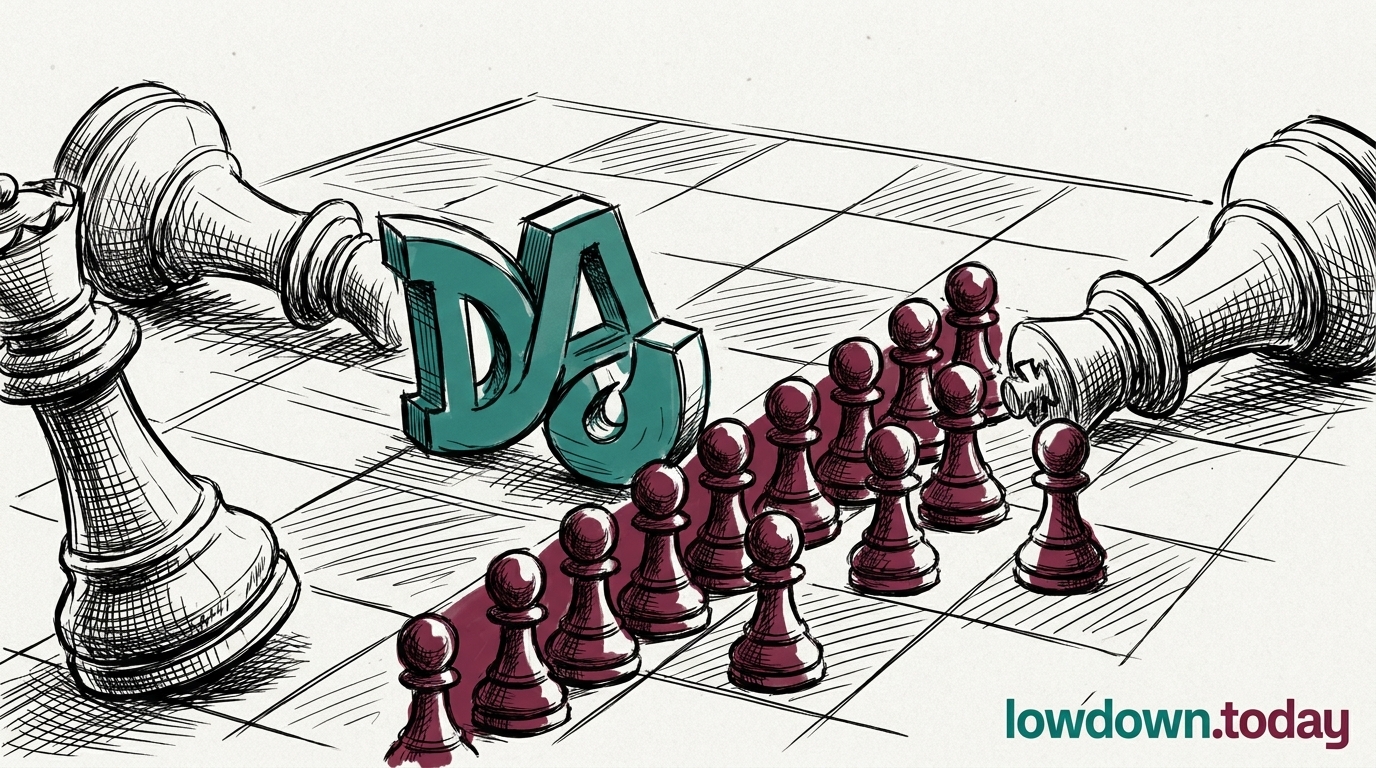
The US Justice Department cleared Paramount Skydance's roughly $110bn purchase of Warner Bros. Discovery on 12 June, the first of several gates the deal still has to pass.

IndustryDeveloping
Key takeaway

DOJ clearance advances the Paramount-WBD merger but FCC, EU and state hurdles still stand before completion.

The US Department of Justice (DOJ) antitrust division cleared Paramount Skydance's roughly $110bn acquisition of Warner Bros. Discovery (WBD) on Friday 12 June, finding it not likely to harm competition or American consumers 1. Paramount Skydance is the entity formed by Skydance Media's takeover of Paramount Global; WBD holds CNN, TBS, the Warner Bros. studio and HBO Max. The price works out to about $31 per WBD share, putting a single owner in control of a news network, two cable channels, a major film studio and a streaming platform.

The DOJ cleared only one gate. Paramount would be 49.5 per cent foreign-owned after close, which matters because US law caps foreign ownership of broadcast licences, so the US Federal Communications Commission (FCC) holds a separate veto and its sign-off is still pending. The EU's review runs to a 14 July deadline, and state attorneys general could still sue 2. No AI strategy has been announced for the merged company, and saying so plainly is better than inventing one.

Paramount-WBD runs on the same logic as the Fox-Roku deal. In an AI-era media business, scale is the precondition for affording the production and data infrastructure, and consolidation is how a studio buys that scale. Paramount is already mid-spree, having taken The Free Press for $150m in May and installed Bari Weiss at CBS News . The WBD clearance advances the same posture: assemble the assets first, then decide what AI does with them. The sequencing is deliberate, because a buyer that named AI as the rationale would invite the data-concentration questions the deal is structured to avoid.


Deep Analysis

In plain English

The US Department of Justice on 12 June cleared the merger of Paramount (which makes the Paramount+ streaming service and owns CBS) with Warner Bros. Discovery (which owns CNN, HBO and the Warner Bros. film studio). The deal values the combined company at roughly $110 billion. The US broadcast regulator, the FCC, must still approve the deal because the merged company would be nearly half owned by foreign investors, approaching the legal limit for US broadcast licence holders. The European Union is also reviewing it, with a deadline of 14 July. State attorneys general in several US states could also sue to block it.

Deep Analysis
Root Causes

Warner Bros. Discovery's $43bn debt load, inherited from AT&T's spin-off of WarnerMedia in 2022, structurally constrained WBD's ability to fund streaming competition while servicing debt. Paramount Global faced a parallel but smaller problem: insufficient scale to negotiate favourable content deals or carriage agreements.

The consolidation logic is defensive rather than strategic: two companies in slow structural decline combining to slow the rate of decline, not to create a new growth business. No AI strategy has been announced for the combined entity, which contrasts directly with Fox's Roku acquisition and the FoxNXT build, where AI is the stated rationale for consolidation.

The FCC foreign-ownership question arises from Skydance Media's backing structure, which includes Saudi Arabian sovereign wealth fund PIF and other non-US investors. The 49.5% figure sits against a statutory 25% foreign-ownership ceiling for broadcast licensees, requiring waiver applications that the FCC has previously granted in similar circumstances but has discretion to deny.

What could happen next?
  • Risk

    FCC foreign-ownership waiver review and EU structural-remedy risk could delay or condition the deal beyond the Q3 2026 target close date.

    Short term · Assessed
  • Consequence

    The combined entity's $43bn-plus debt load constrains AI investment capacity; the absence of an announced AI strategy at close leaves it structurally behind Fox and Netflix in generative-media deployment.

    Medium term · Reported
  • Precedent

    DOJ clearance without remedies signals the current US antitrust framework does not treat horizontal content consolidation as anti-competitive, potentially accelerating further studio mergers.

    Medium term · Assessed
First Reported In

Update #6 · Fox buys Roku's data layer for $22bn

Deadline· 17 Jun 2026
Read original
Different Perspectives
Media buy-vs-build strategists
IBC's nominee list and FOX's producer-level FoxNXT hiring show rights-holders choosing between buying agentic tools from named vendors or building them in-house. They read Fox's quiet hiring and the IBC pairings as the reference signals that will shape their own procurement decisions this quarter.
Eurovision Sport and European Athletics
Eurovision Sport and European Athletics ran every AI commentary stream at the U18 Championships labelled as AI-generated from 16 July, ahead of Article 50's 2 August requirement. They expect the model to extend to the senior Birmingham championships in August, pending operational sign-off.
Camb.AI and WSC Sports
Camb.AI supplied labelled AI commentary for Eurovision Sport's Rieti championships, while WSC Sports packaged its Magicrop clip-cutting into a TikTok distribution deal on 10 July. Both vendors gain reference customers and pricing power precisely while incumbent broadcasters stay unsigned on EU labelling and undecided on build-versus-buy.
European Commission and Paramount Skydance
The European Commission cleared the deal's $24bn Gulf financing under the Foreign Subsidies Regulation on 14 July, while Paramount pressed its case that the state suit is a flawed application of antitrust law. Both expect the merger to close once the 22 July competition ruling and any US injunction resolve.
Rob Bonta and the twelve-state coalition
Twelve Democratic state attorneys general, led by California's Rob Bonta, sued in San Francisco on 13 July seeking a TRO to block the Paramount-WBD merger, arguing federal clearance does not resolve state-level antitrust claims. They expect the suit to bite even without a final win, by holding the deal shut past Brussels' 22 July ruling.
Red Bull Ventures
Red Bull Ventures
Red Bull Ventures joined TwelveLabs' $100m Series B on 1 July to back its sports-video vertical, the one capital move that shipped on schedule this fortnight. Investing in the vendor layer rather than waiting on regulators lets it back the tooling broadcasters queue behind Brussels and the FCC to use.
