Skip to content
Briefings are running a touch slower this week while we rebuild the foundations.See roadmap
Media's AI Pivot
3JUN

Lenovo runs football's biggest AI broadcast

2 min read
08:55UTC

Lenovo announced the full AI broadcast stack for the FIFA World Cup, which the rights-holders inherit without building any of it. Artlist launched an all-AI streaming channel on $300m of recurring revenue. Netflix is renting Runway and building its own tools at once. The capability now sits in the vendor layer.

IndustryM6Avid
Key takeaway

Vendors moved up the stack and became the media layer; media companies are now renting their own infrastructure back.

This briefing mapped
Loading map…
Infrastructure
Competitive
Economic

Lenovo announced the full AI broadcast stack for the FIFA World Cup 2026 on 2 June, and the rights-holders inherit a 17,000-device baseline none of them built.

Sources profile:This story draws on neutral-leaning sources

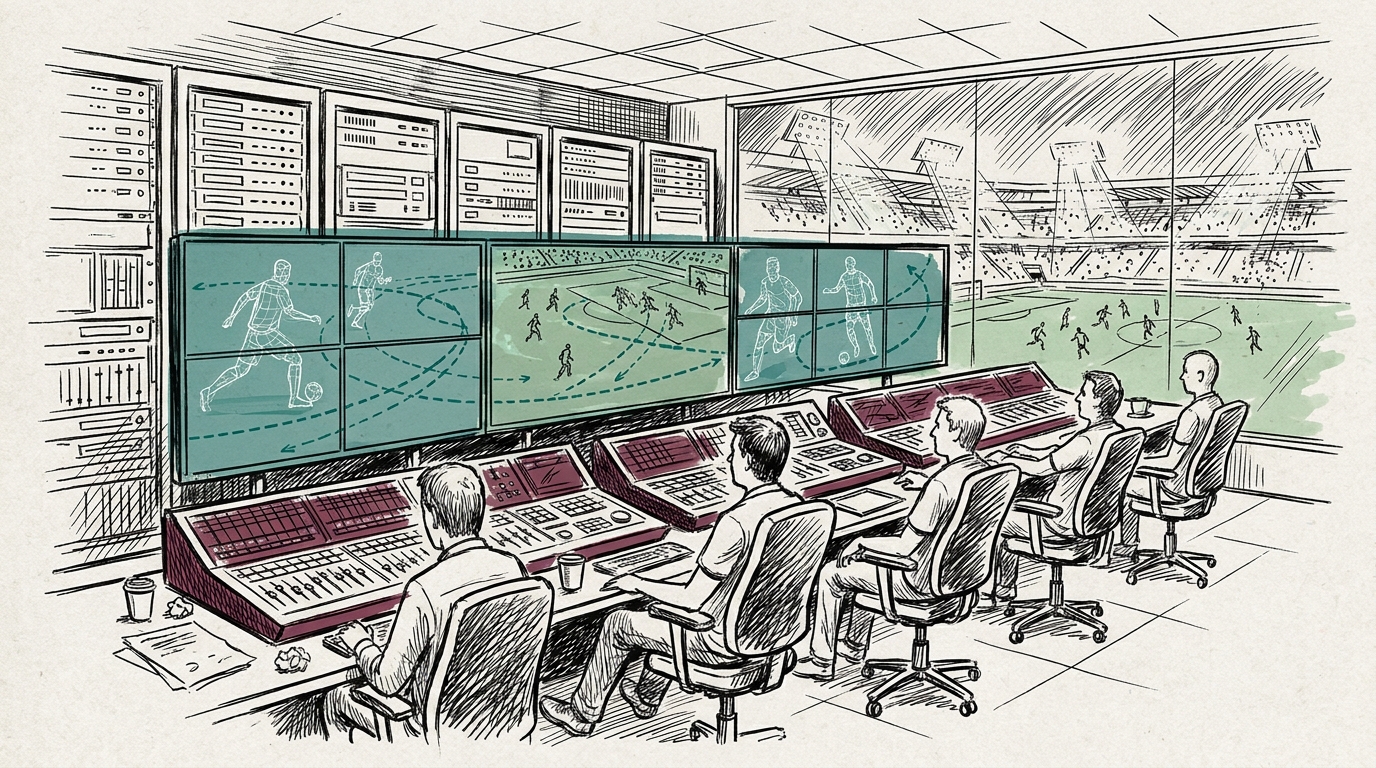
Lenovo deployed its AI broadcast stack for the FIFA (football's global governing body) World Cup 2026 on 2 June. The deployment covers 17,000+ devices, offside-visualisation avatars, and referee camera stabilisation across 10 channels.

Fox, DAZN (the global sports streamer), and NBCUniversal inherit the AI world feed without a separate deal. The single-vendor lock-in logic Avid and Adobe set at the edit suite now reaches the live broadcast. 

Artlist launched an all-AI streaming channel on 1 June and disclosed $300m in recurring revenue, and the creators it sells to want it gone.

Sources profile:This story draws on neutral-leaning sources

Artlist launched Artlist TV on 1 June 2026: an all-AI streaming channel. The company also disclosed $300m in annual recurring revenue, up from $260m at end-2025, across 50 million users.

Filmmaker Jakob Owens said he hoped it 'fails miserably'. Artlist now competes against the creators who pay for its tools, the same customer-conflict that ended Getty Images' content push within 18 months

Ted Sarandos confirmed AI-generated VFX in The Eternaut while Netflix advertised a $545,000 role to build the tools in-house, the buy-and-build posture in one week.

Sources profile:This story draws on neutral-leaning sources

Meta launched Meta One AI subscription tiers globally on 27 May at $7.99 and $19.99, ending the pure ad-funded model media companies plan against.

Sources profile:This story draws on neutral-leaning sources

Meta launched Meta One globally on 27 May 2026. Pricing runs from $7.99 per month (Plus) to $19.99 (Premium), with creator tiers from $14.99 to $49.99 in test markets.

Meta's pure ad-funded model ends here. Creator tiers appear in Saudi Arabia, Morocco, Thailand, and Bangladesh first, ahead of the EU AI Act transparency deadline in August 2026. 

Harmonic deployed AI EyeQ encoding at Swiss public broadcaster Canal Alpha on 28 May, cutting bitrate by up to 50% on every channel it streams.

Sources profile:This story draws on neutral-leaning sources

Harmonic deployed AI EyeQ content-aware encoding at Canal Alpha, the French-speaking Swiss public broadcaster, announced 28 May 2026. The software replaces hardware playout and cuts delivery bitrate by up to 50%.

AI efficiency tooling has now reached regional European public broadcasters. Canal Alpha's deployment follows BBC Studios' AI Creative Lab , moving the same software-defined stack from production into delivery. 

Sources:VideoWeek
Closing comments

Up, with the World Cup as an accelerant. If Fox, NBCUniversal, and DAZN broadcast the World Cup on Lenovo's AI baseline without issuing their own AI-production disclosures, the vendor-built-and-inherited model becomes the documented template for the IOC Los Angeles 2028 procurement cycle. The specific decision point is whether any named rights-holder issues a counter-bid before 11 June, when the tournament opens. On the Runway axis, escalation depends on Netflix's $545k hire: if the role is filled and in-house tooling ships before Runway's world-model repositioning produces a dependency deeper than per-project licensing, Netflix escapes the lock-in; if Runway's Lionsgate model demonstrates custom-library advantages that Netflix's in-house pipeline cannot replicate within 18 months, the dependency compounds.

Different Perspectives
Lenovo
Lenovo
Lenovo's 2 June World Cup announcement is its most direct public claim to being a media-layer company rather than a hardware supplier: the 17,000-device, three-AI-layer deployment positions it as the entity that sets the broadcast standard FIFA's rights-holders inherit. The Official Technology Partner designation converts marketing spend into structural control of the largest live AI broadcast ever staged.
Artlist
Artlist
Artlist launched Artlist TV, an all-AI streaming channel built on its own tools, alongside disclosing $300m in annual recurring revenue, crossing from selling creative tools into self-distributing finished shows. That move puts the Israeli vendor in direct competition for attention with the 50 million filmmakers and creators who pay for its products.
Jakob Owens and the creator community
Artlist's launch of an all-AI streaming channel on $300m of recurring revenue from the very filmmakers it serves drew the week's sharpest reaction: Owens said publicly he hoped it fails. The backlash is the signal that creator-tool vendors crossing into self-distribution face a customer-conflict dynamic that Getty Images' 2021 Unsplash play already documented.
European public broadcasters and regulators
Canal Alpha's Harmonic EyeQ deployment and Meta One's non-EU market sequencing both land with 60 days until the EU AI Act Article 50 transparency obligations take effect on 2 August. No major EU broadcaster has signed the Code of Practice; regional public broadcasters face a compressing window to disclose AI-encoding postures that may fall within or outside synthetic-content obligations.
DAZN
DAZN
DAZN inherits Lenovo's entire FIFA World Cup 2026 AI broadcast stack without a procurement decision, repeating the vendor-dependency pattern from its TikTok Serie A livestream. Its own Delta Protocol moved to a funded IBC 2026 Accelerator proof-of-concept in the same week, the build-side response to that structural exposure.
