Skip to content
Welcome, thoughtbot's Giant Robots listeners!Start here
Iran Conflict 2026
15MAY

EU's 21st sanctions package stalls again

1 min read
13:51UTC

The EU's 21st Russia sanctions package failed to clear Coreper on 15 July. Greece wants LNG re-export rights preserved; Austria wants a Deripaska-linked firm delisted.

ConflictDeveloping
Key takeaway

Watch which carve-outs make the final text, not whether the twenty-first package clears.

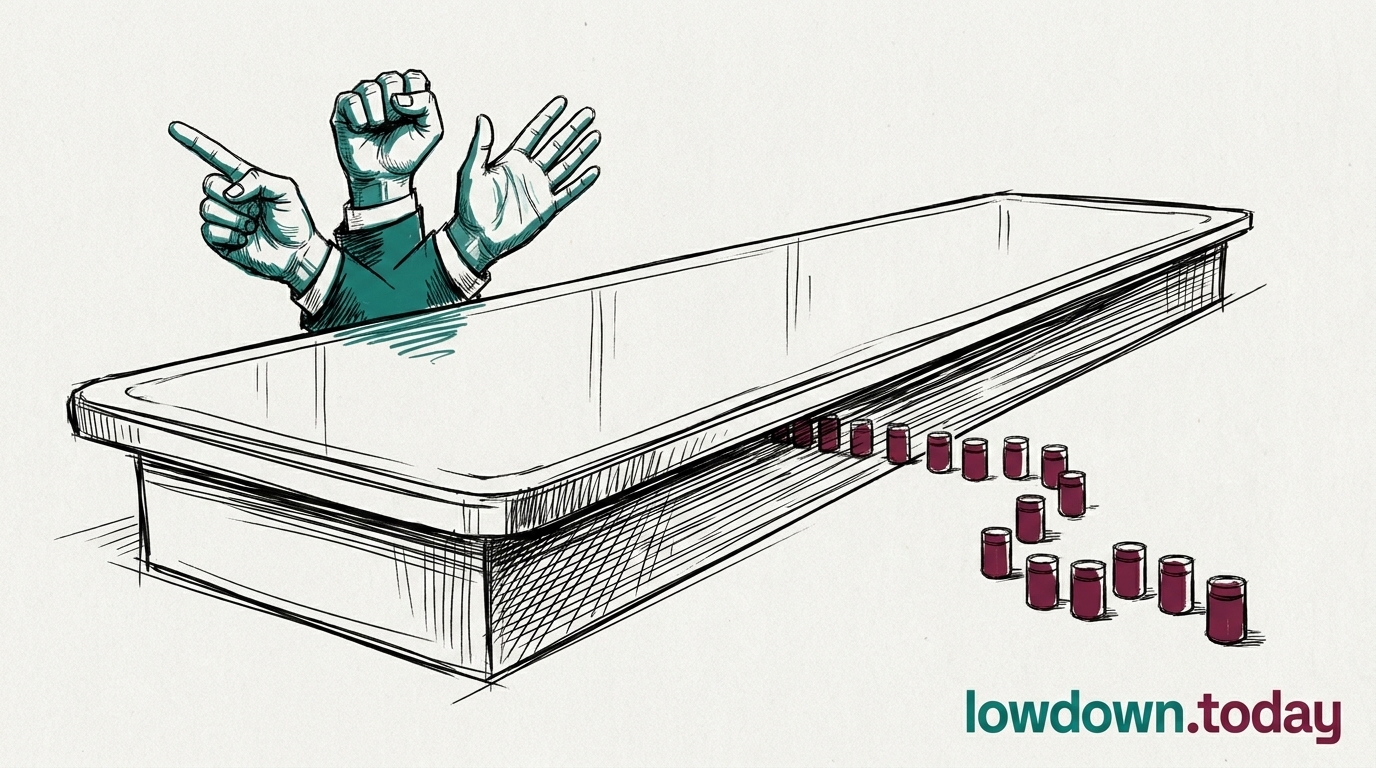
The European Union's 21st Russia sanctions package failed to clear Coreper, the committee of member states' permanent representatives in Brussels, on 15 July, with negotiators setting a new target of 22 July rather than letting it slip to autumn⁠1. Greece wants to preserve re-export rights for Russian liquefied natural gas. Austria wants Rasperia, an investment firm linked to the sanctioned aluminium magnate Oleg Deripaska, removed from the list so that frozen assets can be used to compensate Raiffeisen Bank International.

Neither objection is an argument about whether to pressure Moscow. Both are domestic commercial interests: Greek shipping's role in moving cargoes that pass through Europe rather than remaining in it, and Raiffeisen's search for compensation against its Russian exposure. Sanctions packages pass by unanimity, so a commercial interest in one member state carries the same stopping power as a strategic objection in another.

Each round of unanimity leaves its mark on the text. Holdouts extract a carve-out, the carve-out persists into later packages because reopening settled wording costs another round of unanimity, and the enforcement surface narrows even as the number on the package climbs. Brussels has been tightening on paper while Washington has been loosening in practice, most recently by letting its crude oil waiver lapse unrenewed. Whether Greece's LNG exemption and Austria's Rasperia demand survive into the final wording is the part worth watching on 22 July, not whether the package passes.

Deep Analysis

In plain English

The European Union tries to pass new rounds of sanctions against Russia as a package, and this one, the 21st since the war began, failed to get the votes it needed at a meeting in Brussels on 15 July. Two countries are blocking it for different reasons: Greece wants to keep the right to re-export Russian liquefied natural gas to other countries, and Austria wants a specific investment firm removed from the sanctions list so its frozen assets can be used to compensate an Austrian bank that lost money doing business with it. EU sanctions need every member country to agree, so either objection alone is enough to stop the whole package. A new vote is set for 22 July.

Deep Analysis
Root Causes

The package's two holdouts trace to different national exposures rather than a shared objection: Greece's shipping industry depends on revenue from re-exporting Russian LNG to third countries, while Austria's block is a compensation mechanism for Raiffeisen Bank International's frozen Russian exposure via Rasperia. Clearing the package therefore requires satisfying two unrelated national balance-sheet problems, not resolving one disputed principle.

Each objection is solvable in isolation (a carve-out for Greek re-export rights, a delisting tied to specific compensation terms for Austria), but EU sanctions require unanimity, so either holdout alone is enough to stall the whole 21st package regardless of how narrow its underlying demand is.

First Reported In

Update #24 · Fedorov sacked as the front stands still

Ukrainska Pravda· 19 Jul 2026
Read original →
Causes and effects
This Event
EU's 21st sanctions package stalls again
Two national carve-outs, neither about Russia policy, are holding an entire package.
Different Perspectives
International Energy Agency
G7 members agreed on 2 October to release up to 100 million barrels through the IEA over four months, front-loading diesel.
China
China
China signed the 15 October text reaffirming the Resolution 2216 arms embargo on the Houthis. The Wall Street Journal reported that Conflict Armament Research found Chinese parts in a Houthi copy of Iran's Kheibarshekan missile.
Russia
Russia
Russia joined the 15 October consensus condemning the Houthis, a month after vetoing a mandate for a UN panel of experts on Iran sanctions on 17 September. One Western official told Bloomberg that Moscow is providing Iran with missiles, and the White House rejected the assessment.
India
India
National Security Adviser Ajit Doval raised seafarer safety with Mohsen Rezaei on 12 October, after a drone hit the Petro Dolphin with 11 Indians aboard at Sohar. External Affairs Minister S. Jaishankar urged that attacks on commercial shipping and seafarers be avoided.
Lebanon
Lebanon
President Joseph Aoun met UN peacekeeping chief Jean-Pierre Lacroix in Beirut on 14 October as UNIFIL winds down before its mandate ends on 31 December. Two days later Qatar's prime minister pledged in Beirut to fund a solar plant for Lebanon.
Kataib Hezbollah
Kataib Hezbollah
The militia announced a halt to operations except against "hostile aircraft" and denied any disarmament deal with Prime Minister Ali al-Zaidi. A day later Quds Force chief Esmail Qaani urged eliminating "remaining traces of the US presence in other arenas".

Written with AI from Lowdown's published reporting. Not individually reviewed by an editor. Editorial standards.