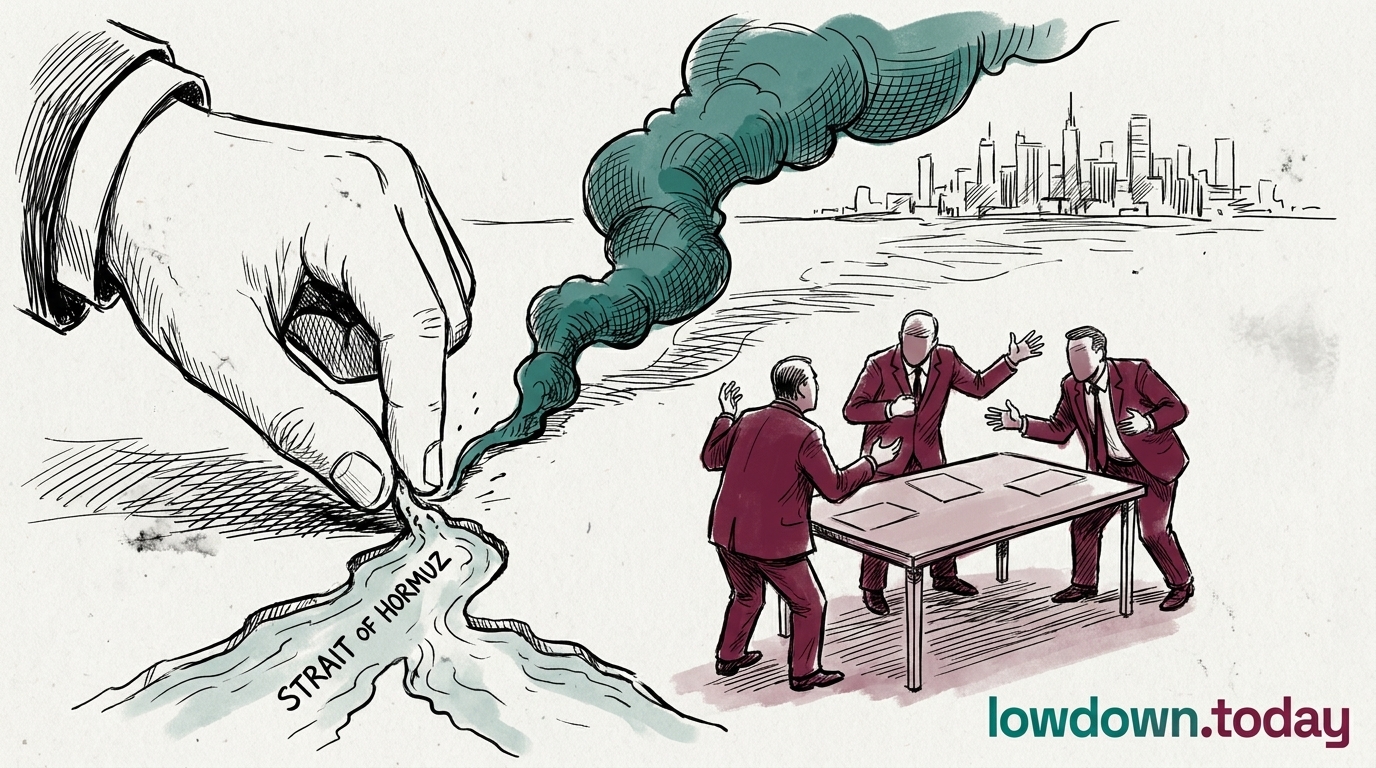
Hormuz transits collapsed from 55 ships on 20 June to 12 on 22 June, a 78 per cent drop between those two days, with five of eight inbound vessels running with their automatic identification systems switched off1. AIS transponders broadcast a ship's identity and position; switching them off hides the vessel. The maritime intelligence firm Windward called the pattern a "late-blockade baseline," closer to wartime dark-fleet running than a functioning open strait2. The collapse fell on the very day General License X authorised the oil to move.
The larger 20 June traffic had run through Oman's territorial waters, the bypass route that has carried Gulf crude since the closure, and markets have consistently priced that Oman route over Iran's words. Brent Crude fell to about $78 a barrel on 22 June, its lowest since early March, pricing the 60-day relief rather than delivery: a permit to sell oil that only 12 ships actually moved.
The freight and spread economics of a dark, fee-charged corridor are the European oil desk's beat. A 78 per cent fall on the exact day the licence issued is the cleanest evidence that the bottleneck is mines and war-risk, not sanctions, so lifting the sanctions moved nothing on the water. GL X authorised a trade the strait cannot physically carry yet.


