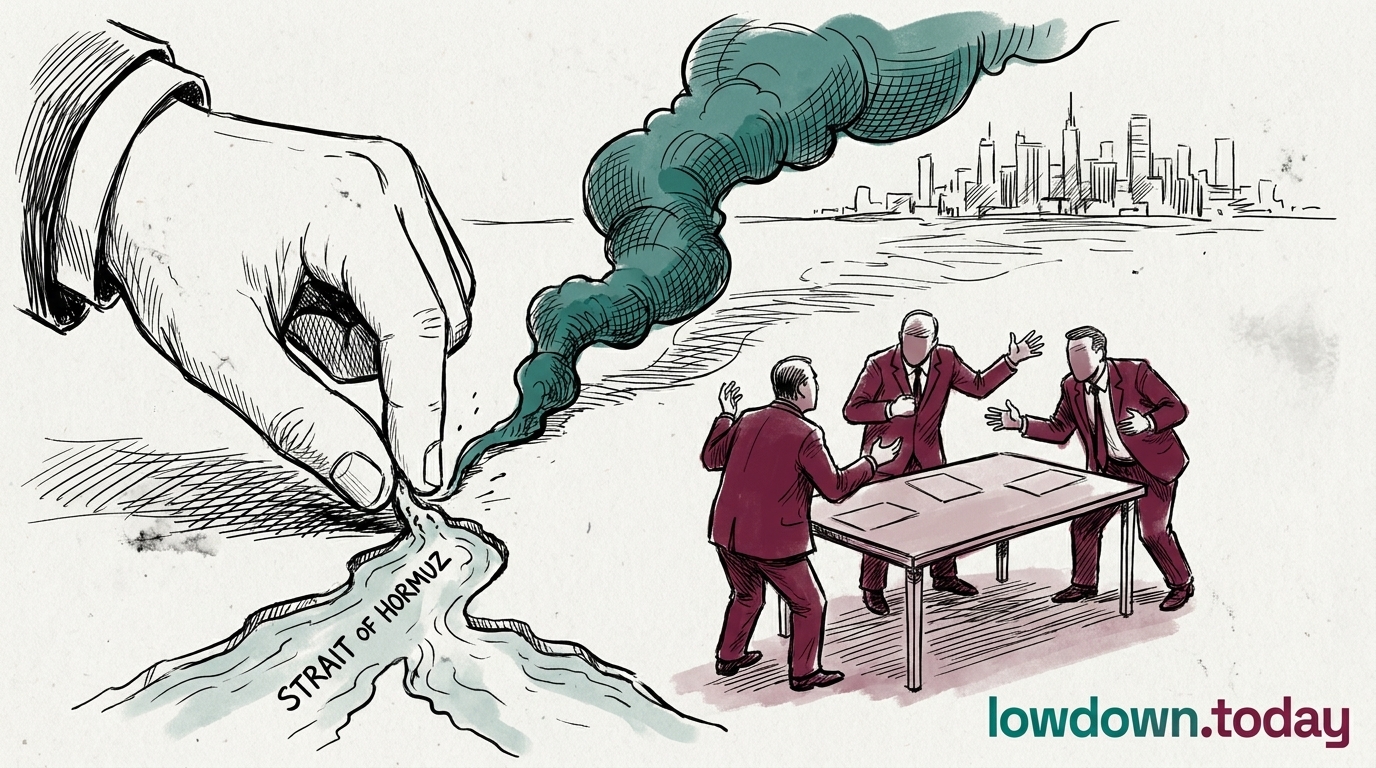
The House of Representatives passed a war-powers resolution 215-208 on Wednesday 3 June, directing Donald Trump to wind down US involvement in hostilities with Iran absent a declaration of war or an authorisation for the use of military force1. The War Powers Resolution is a 1973 law meant to stop presidents fighting undeclared wars indefinitely.
The House had voted on Iran war powers before; on 3 June the count changed. The same chamber had deadlocked 212-212 on 14 May, and the resolution's 30-day wind-down clock had lapsed unvoted a third time on Day 93. On 3 June the tied, dead measure became a carried one, supplied by four Republicans who crossed the floor: Thomas Massie, Brian Fitzpatrick, Tom Barrett and Warren Davidson. 'You either follow the law or you change the law. You can't violate the law,' Fitzpatrick said2.
The resolution is non-binding and cannot compel Trump to stop, and The White House had issued no veto threat by 4 June. The resolution carries precedential weight rather than physical force. For 96 days the executive has run this war without a single signed instrument, and the vote converts the war-powers question from a lapsing-clock procedural gap into an affirmative on-record chamber position the executive must now argue against in any later court challenge or appropriations fight over funding the deployment.





