Skip to content
You can now search across every topic, entity and event.What's new
Iran Conflict 2026
7MAY

Commission awards sovereign cloud slot to Google joint venture

5 min read
12:43UTC

The European Commission's €180m six-year sovereign cloud framework, named between 17 and 20 April, handed one of four provider slots to S3NS, a Thales-Google joint venture that cleared only the minimum SEAL-2 threshold.

ConflictDeveloping
Key takeaway

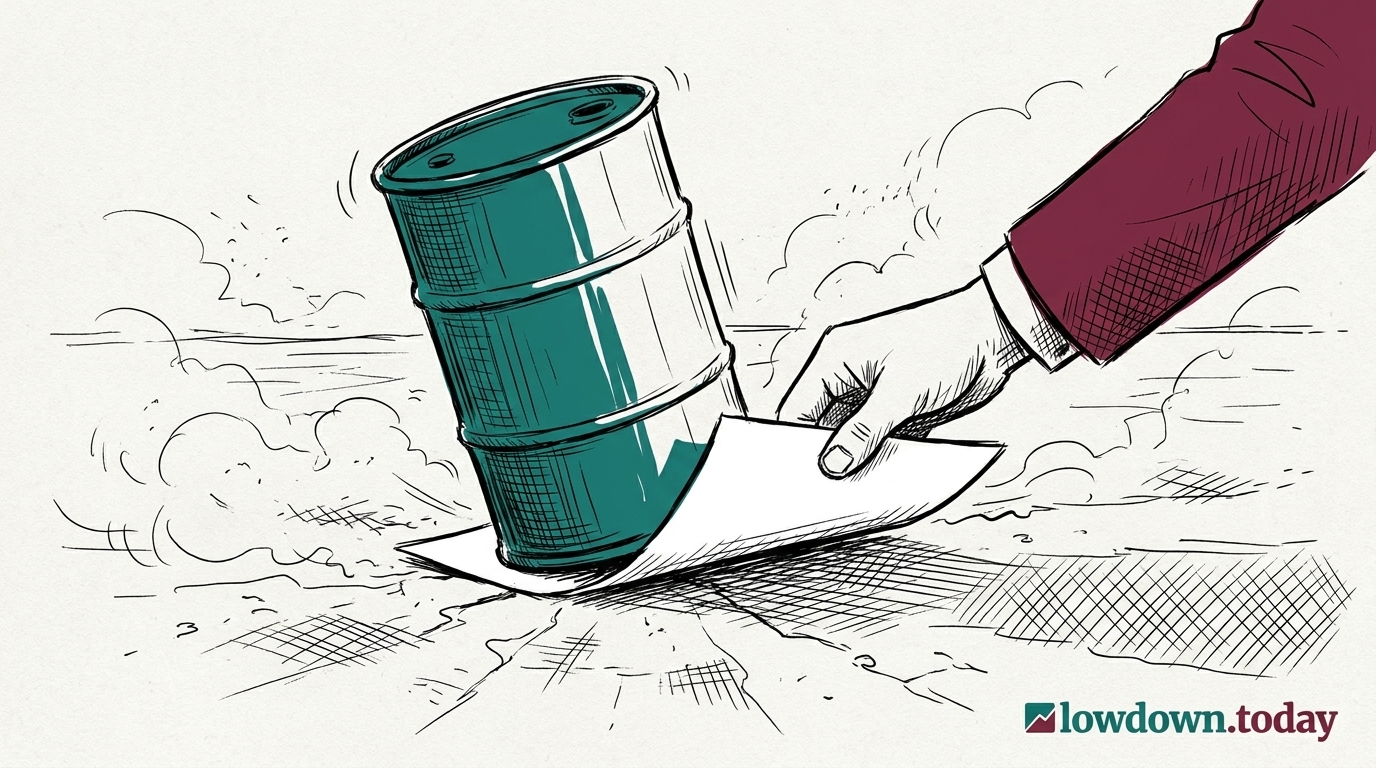
A sovereignty framework that treats SEAL-2 and SEAL-3 as interchangeable has collapsed its own distinction.

Between 17 and 20 April 2026 the European Commission named the four provider groupings selected for its €180m, six-year sovereign cloud framework . Post Telecom leads a Luxembourg consortium with CleverCloud and OVHcloud at SEAL-3; STACKIT, owned by the Schwarz Group, represents Germany at SEAL-3; Scaleway represents France at SEAL-3; and Proximus leads a Belgian consortium that includes S3NS, Clarence and Mistral AI, with S3NS rated at SEAL-2. The Commission's Sovereignty European Assurance Level framework grades contracts from SEAL-1 to SEAL-3, and SEAL-3 requires the operator to run the service without foreign technical dependencies. SEAL-2 requires only data-sovereignty minima. Three awardees cleared the higher bar; one did not.

CISPE's Francisco Mingorance told The Register the award was "clearly an own goal" and called the S3NS inclusion "sovereignty washing" . The objection is specific: S3NS is a joint venture between French defence group Thales and Google Cloud, and workloads running on Google infrastructure sit within reach of the US CLOUD Act, the 2018 law that lets American authorities compel disclosure of cloud data held anywhere in the world. Microsoft told the French Senate last year that it could not guarantee French customer data would never be disclosed under US legal orders; the same exposure attaches structurally to any Google-hosted workload regardless of where the data physically sits.

EU-native providers hold roughly 15 per cent of the European cloud market against around 70 per cent for the three US hyperscalers combined , and The Commission's counter-case rests on that arithmetic. Excluding every provider with any US linkage would have narrowed the tender to a field too small to be competitive, and the sovereign cloud market is forecast to triple to $23bn by 2027; a procurement logic that restricts the supplier base risks producing either no viable bidder or a single one. Hedged inclusion of S3NS at SEAL-2, alongside three SEAL-3 awardees, reads on that defence as a deliberate widening of the competitive field rather than a concession on sovereignty.

A €180m framework becomes the citation benchmark for every national cloud tender that follows, and member-state procurement Teams tend to cite The Commission's own designation as prima facie evidence of sovereignty compliance. Over six years the downstream contracts will be valued well above €180m, and a SEAL-2 provider sitting inside the same slot as a SEAL-3 one collapses two categories the framework was designed to separate. CISPE has the foundation for a legal challenge; Mingorance's keynote in Brussels this week on "Making Sovereignty Verifiable" suggests the challenge will come through an auditability argument rather than a tender-rules one.

Deep Analysis

In plain English

The EU runs its own computer systems on rented cloud infrastructure. This contract decides which companies can bid to provide that infrastructure for the next six years, with rules about how 'European' those providers must be. The controversy is that one of the four winners, S3NS, is a joint venture between French defence company Thales and Google. Critics say that because Google is an American company, EU data running on S3NS infrastructure could legally be accessed by US courts under a 2018 US law called the CLOUD Act. The Commission's response is that S3NS met the minimum sovereignty standard, and excluding it would have left too few suppliers in the competition.

Deep Analysis
Root Causes

Three structural factors make hyperscaler dependency difficult to escape. The managed services gap is the first: EU-native providers can match hyperscalers on raw compute and storage pricing but cannot yet replicate the depth of managed database, machine learning, networking and observability services that enterprise workloads depend on.

Migrating from Azure to OVHcloud or Scaleway requires rebuilding application dependencies against a shallower service catalogue, and the engineering cost is a real barrier for large organisations.

Network effects in procurement compound the problem: once a ministry or large enterprise runs on a hyperscaler, its staff develop platform-specific skills, its vendors integrate through that platform's APIs, and switching costs compound over time. Third, hyperscalers can cross-subsidise European market share from US revenue bases at a scale no European provider can match.

What could happen next?
  • Meaning

    The first consequence is precedential: member-state procurement agencies will cite the Commission's own SEAL-2 award as justification for purchasing from S3NS and structurally similar Thales-Microsoft or Thales-Amazon joint ventures. If those downstream contracts follow, the practical effect of the EU's sovereign cloud framework over six years will be to channel public money toward hybrid US-European structures rather than toward EU-native providers. The second consequence is political: CISPE's public challenge delegitimises the framework before it has generated a single call-off contract. If the Commission does not respond with a published SEAL audit methodology, the 'sovereignty washing' framing will become the dominant description of the award in procurement guidance discussions across Europe.

First Reported In

Update #3 · Sovereignty summit, minus the sovereigns

The Register· 23 Apr 2026
Read original
Different Perspectives
Oil market and P&I insurers
Brent cleared $87 intraday only once CENTCOM's blockade became physical rather than declared, even though P&I Clubs had already excluded Hormuz war risk a week earlier on 7 July: capital hedged ahead of enforcement, but prices moved only after it.
UAE reporting
UAE reporting
UAE reporting placed the Omani tanker deaths at one seafarer against the International Maritime Agency's count of two, the first time in this war that a Gulf state's casualty figures have diverged from an international monitor's.
Jordan
Jordan
Iranian strikes reached Jordan again on 14 July as part of the Gulf-wide retaliation for the Hormuz blockade, extending the conflict's geographic footprint to a state with no direct stake in the strait itself.
Bahrain
Bahrain
Bahrain sounded air-raid sirens on 14 July during Iran's Gulf-wide retaliation, the same day CENTCOM's blockade order and fourth night of strikes pushed the conflict's physical reach into the wider Gulf littoral.
Kuwait
Kuwait
Kuwait intercepted Iranian missiles and drones on 14 July as Tehran's blockade retaliation reached Gulf states beyond Iran's immediate shoreline, confirming Kuwaiti airspace now sits inside Iran's retaliatory envelope.
Oman
Oman
Oman absorbed the war's first tanker casualties in its own waters on 14 July, with two supertankers disabled and seafarers killed, putting the sultanate's shipping lanes directly in the path of the blockade fight for the first time.