Skip to content
Briefings are running a touch slower this week while we rebuild the foundations.See roadmap
Iran Conflict 2026
4MAY

Royal Navy to board sanctioned tankers

2 min read
10:21UTC

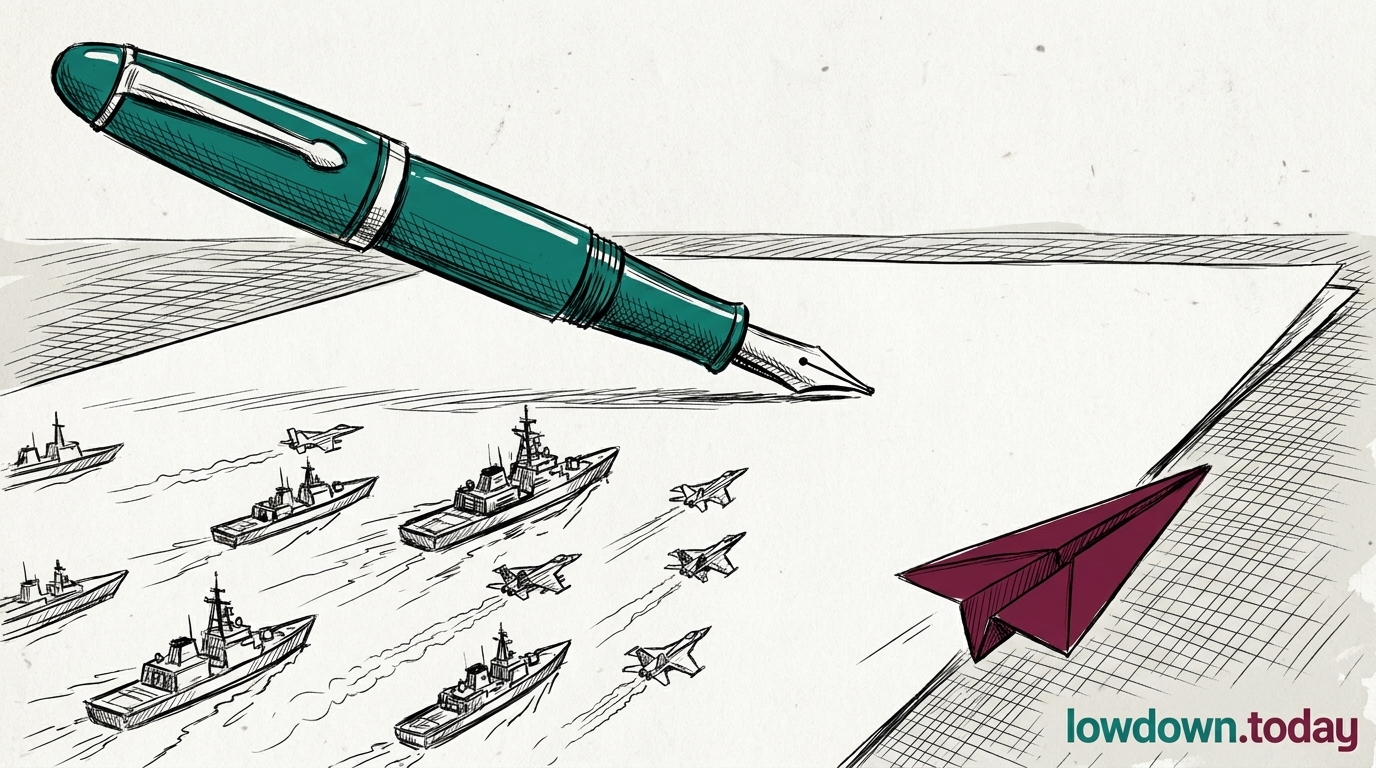
Britain authorised naval interdiction of sanctioned Russian tankers in UK waters, converting a 34-kilometre strait into the most enforceable maritime sanction of the war.

ConflictAssessed
Key takeaway

Britain converted a geographic chokepoint into the most enforceable maritime sanction of the war.

Keir Starmer announced at the JEF summit in Helsinki on 26 March that the Royal Navy is authorised to board and interdict sanctioned shadow fleet vessels in British territorial waters 1. The English Channel is now effectively closed to the more than 600 tankers sanctioned by the EU, UK, and US combined 2.

This is the most aggressive European enforcement action against Russia's oil revenue infrastructure since the war began. Previous seizures of individual vessels, the Ethera in Belgian waters , the Caffa and Sea Owl I off Sweden , , were opportunistic. Channel interdiction is structural: it forces sanctioned tankers to circumnavigate Britain, adding over 2,000 nautical miles and several days to each voyage.

For shadow fleet operators, that means tens of thousands of dollars in extra fuel and crew costs per trip, eroding the margin between sanctioned-price oil and market price. The Channel's shallow, narrow waters (34 kilometres at Dover) make boarding operationally straightforward compared to open-ocean enforcement. Shadow fleet vessels are typically older, under-insured, and crewed by mariners with limited consular protection. Geography and legal vulnerability combine to make this chokepoint uniquely enforceable.

The EU had already signalled a shift from chasing individual ships to targeting operators, brokers, and registries . Britain's naval enforcement adds a physical barrier to that administrative squeeze. Denmark controls the only alternative short route through the Danish Straits; if Copenhagen follows London's lead, the last short northern European passage for shadow fleet traffic closes.


Deep Analysis

In plain English

Russia earns billions selling oil to fund its war. It uses a 'shadow fleet' of ageing, poorly insured tankers — over 600 ships — to move oil around Western sanctions. The English Channel at Dover is only 34 kilometres wide. Britain has now told its navy to stop and board any sanctioned Russian tankers using that route. This forces those ships to sail around Britain instead, adding several days and thousands of pounds per trip. The goal is to make sanctions evasion unprofitable, not just inconvenient.

Deep Analysis
Root Causes

The shadow fleet problem has three structural roots.

Western sanctions created a price cap mechanism but not an enforcement mechanism. Ships can lie about cargo origins, use ship-to-ship transfers, and reflag to evade detection. Windward's data shows Sovcomflot has reflagged 56% of its fleet to Russia's own registry, removing Lloyd's oversight.

Insurance markets withdrew from shadow fleet vessels after sanctions, but the vessels found alternative cover in India, the UAE, and Russia itself — degraded but functional.

The Channel interdiction addresses the geography but not the ownership structure. Until flag state accountability is enforced globally — including on India and the UAE — the shadow fleet can route around European chokepoints.

First Reported In

Update #8 · Pentagon diverts funds; 948 drones fired

UK Government· 27 Mar 2026
Read original
Different Perspectives
Oil markets
Oil markets
Brent fell $1.05 to $106.0 on summit Day 1 but remains $5-7 above the post-ceasefire equilibrium analysts modelled in March; the market is pricing a holding pattern, not a breakthrough. OilPrice.com and Aramco CEO Nasser converge on buffer-exhaustion before Hormuz reopens if the blockade extends past mid-June.
Iranian dissidents and human rights monitors
Hengaw documented a five-prison simultaneous execution cluster on 13 May, with Gorgan appearing for the first time in the wartime register. Espionage charges framed as Israel-linked moharebeh now extend across Mashhad, Karaj, and Gorgan, using the war as judicial cover for protest-era detainees.
BRICS / Global South
Araghchi's Delhi appearance positioned Iran as a victim of US aggression before non-Western foreign ministers, with Deputy FM Bagheri Kani calling on BRICS to act against US aggression. India, as the largest non-Chinese user of Iranian-routed crude, faces pressure to balance bloc solidarity against its own shipping and sanctions exposure.
China
China
Beijing accepted the Nvidia chip clearance on summit Day 1 and gave Rubio verbal acknowledgement of Iran as an Asian stability concern, having already put Pakistan on paper as the mediatory channel on 13 May (ID:3253), deflecting the US ask for direct Chinese action without refusing it.
Iran (government and civilian diplomatic track)
Araghchi denied any Hormuz obstruction at BRICS Delhi on 14 May while Iran's SNSC had finalised a Hormuz security plan the day before. Israel Hayom's single-sourced 15-year freeze offer gives Tehran a deployable figure in non-Western forums regardless of corroboration; the state attributed 3,468 wartime deaths with no independent verification.
United States (Trump administration and Senate moderates)
Trump signed a chip clearance for 10 Chinese firms on summit Day 1 and zero Iran instruments across 76 days; Rubio and Vance made verbal Iran asks without paper. Murkowski voted yes on the 49-50 war-powers resolution after Hegseth told the Senate that Article 2 makes an AUMF unnecessary.



