Skip to content
Briefings are running a touch slower this week while we rebuild the foundations.See roadmap
Iran Conflict 2026
4MAY

EU bars Hungary from €16bn arms fund

2 min read
10:21UTC

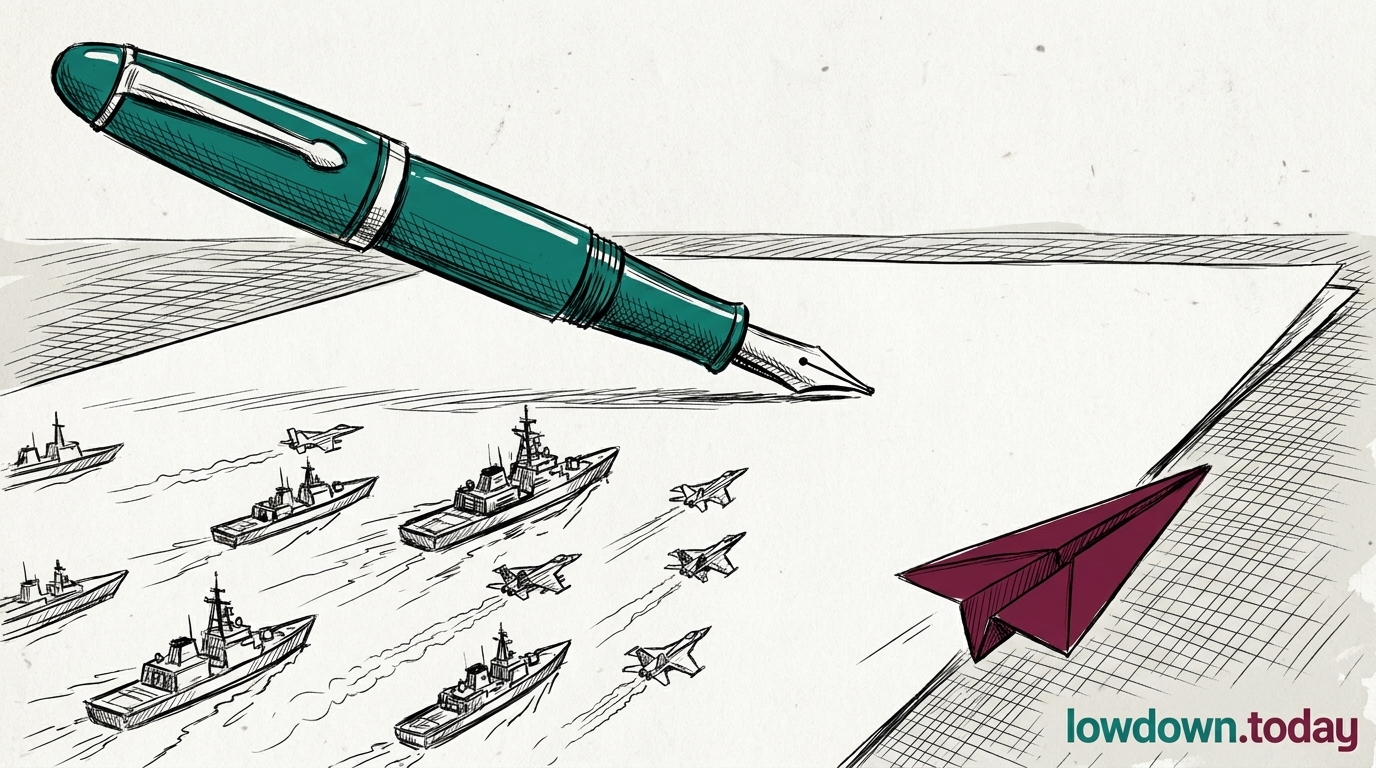
The European Commission withheld Budapest's €16.2 billion SAFE allocation while approving France and Czechia the same day, the first use of EU defence spending as punishment against a member state.

ConflictAssessed
Key takeaway

The EU used its own defence budget as punishment against a member state for the first time.

The European Commission froze Hungary's access to €16.2 billion under the SAFE programme (Security Action for Europe) on 25 March 1. France and Czechia had their SAFE plans approved the same day. Hungary is the sole country frozen among 19 participants.

The trigger is Budapest's continued blockade of the €90 billion Ukraine loan . Orbán nominally dropped his objection in exchange for Zelenskyy's commitment to repair the Druzhba pipeline within 1 to 1.5 months, but Hungary re-blocked the loan at the EU summit on 19 March. An EU diplomat told Euronews it is "difficult to agree billions for Orbán when he violates loyal cooperation" 2.

SAFE was designed to incentivise collective European defence spending, not to punish dissent. By freezing a member state's allocation for political non-cooperation rather than technical non-compliance, the Commission has created an enforcement tool outside the Article 7 procedure. This approach is faster and more financially painful than rule-of-law conditionality, which took years to produce results against Hungary.

EU treaty structures require unanimity for foreign policy decisions, giving any single state veto power. The SAFE freeze bypasses this by using Commission-level programme administration, which operates by qualified majority, to punish behaviour that unanimity rules protect. Whether this accelerated coercion produces compliance or hardens Budapest's resistance will shape EU governance for years.


Deep Analysis

In plain English

The EU set up a shared defence spending pot to help member states rearm. Hungary is the only one of 19 participants whose €16.2 billion allocation has been frozen. Why? Hungary keeps blocking an EU loan to Ukraine that the other 26 members agreed on. The EU is using its defence fund as a bargaining chip: comply with the bloc's Ukraine policy, or lose your share of the rearmament money. It matters because it sets a precedent: for the first time, the EU is using its own defence budget as a punishment rather than a reward.

Deep Analysis
Root Causes

Hungary's position stems from Orbán's domestic political economy, not ideological sympathy with Moscow.

Hungary's energy sector is structurally dependent on Russian gas and oil via the Druzhba and Brotherhood pipelines. Orbán has used this dependence as leverage within the EU, trading his veto on Ukraine support for energy exemptions and funding concessions since 2022.

The April 12 Hungarian elections create a short-term incentive for Orbán to appear sovereign against EU pressure, even at the cost of €16.2 billion in frozen rearmament funds. The freeze may harden rather than soften his position in the near term.

The deeper structural issue is that EU treaty design gives any single state veto power over foreign policy, a feature designed for small-scale disagreements that becomes a systemic vulnerability when one member state actively undermines the bloc's security consensus.

First Reported In

Update #8 · Pentagon diverts funds; 948 drones fired

Euronews· 27 Mar 2026
Read original
Different Perspectives
Oil markets
Oil markets
Brent fell $1.05 to $106.0 on summit Day 1 but remains $5-7 above the post-ceasefire equilibrium analysts modelled in March; the market is pricing a holding pattern, not a breakthrough. OilPrice.com and Aramco CEO Nasser converge on buffer-exhaustion before Hormuz reopens if the blockade extends past mid-June.
Iranian dissidents and human rights monitors
Hengaw documented a five-prison simultaneous execution cluster on 13 May, with Gorgan appearing for the first time in the wartime register. Espionage charges framed as Israel-linked moharebeh now extend across Mashhad, Karaj, and Gorgan, using the war as judicial cover for protest-era detainees.
BRICS / Global South
Araghchi's Delhi appearance positioned Iran as a victim of US aggression before non-Western foreign ministers, with Deputy FM Bagheri Kani calling on BRICS to act against US aggression. India, as the largest non-Chinese user of Iranian-routed crude, faces pressure to balance bloc solidarity against its own shipping and sanctions exposure.
China
China
Beijing accepted the Nvidia chip clearance on summit Day 1 and gave Rubio verbal acknowledgement of Iran as an Asian stability concern, having already put Pakistan on paper as the mediatory channel on 13 May (ID:3253), deflecting the US ask for direct Chinese action without refusing it.
Iran (government and civilian diplomatic track)
Araghchi denied any Hormuz obstruction at BRICS Delhi on 14 May while Iran's SNSC had finalised a Hormuz security plan the day before. Israel Hayom's single-sourced 15-year freeze offer gives Tehran a deployable figure in non-Western forums regardless of corroboration; the state attributed 3,468 wartime deaths with no independent verification.
United States (Trump administration and Senate moderates)
Trump signed a chip clearance for 10 Chinese firms on summit Day 1 and zero Iran instruments across 76 days; Rubio and Vance made verbal Iran asks without paper. Murkowski voted yes on the 49-50 war-powers resolution after Hegseth told the Senate that Article 2 makes an AUMF unnecessary.



