Skip to content
Briefings are running a touch slower this week while we rebuild the foundations.See roadmap
Iran Conflict 2026
3MAY

Turkey braces for 1m Iranian refugees

4 min read
10:26UTC

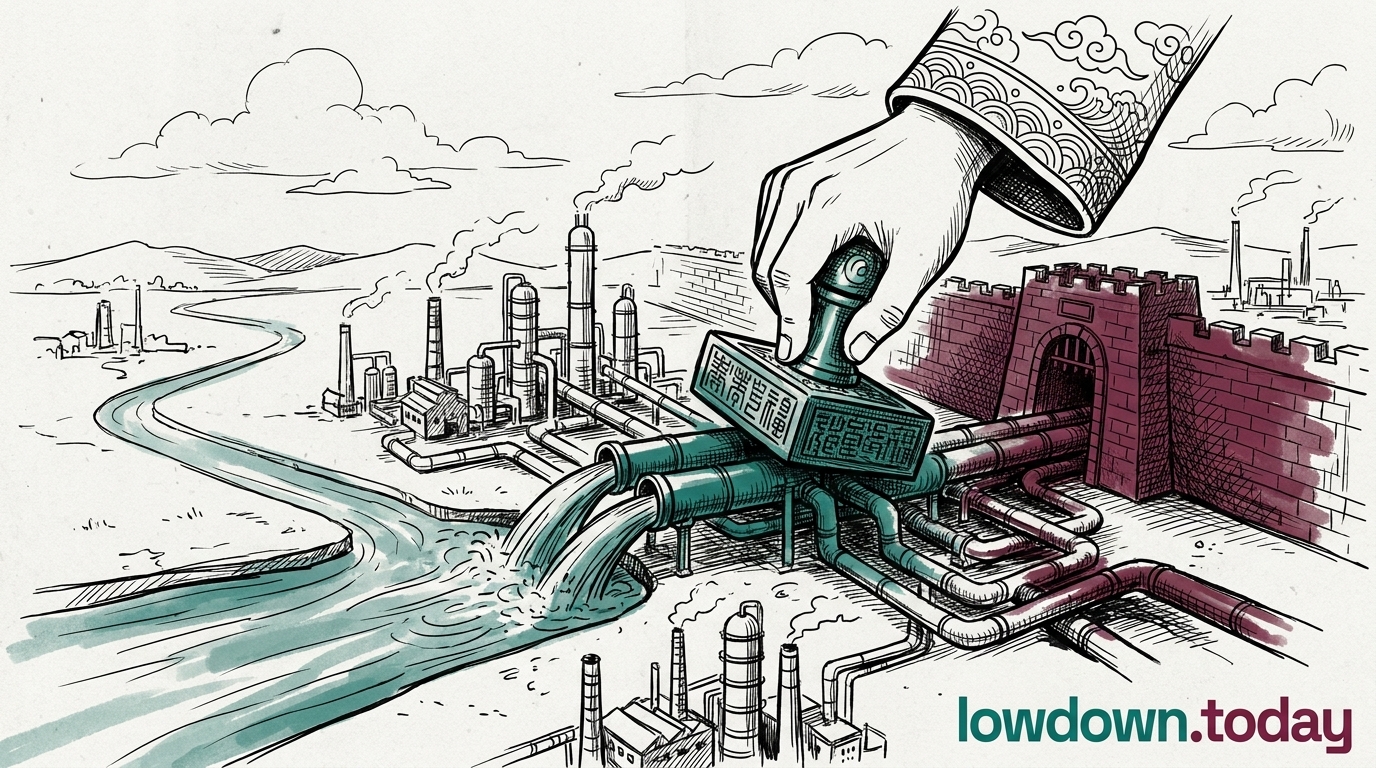
Ankara is building border infrastructure for mass displacement from a war it condemned but cannot stop — while still importing Iranian oil.

ConflictDeveloping
Key takeaway

Turkey is reprising its Ukraine-war dual-track formula — absorbing humanitarian consequences while protecting economic interests — positioning itself as the indispensable neutral broker that all parties will eventually need.

Turkey is building border infrastructure to receive up to one million Iranian refugees, the most operationally concrete response from any neighbouring state to the conflict. While governments issue statements, Ankara is pouring concrete. The preparation acknowledges what diplomatic language has not: this war will displace people on a scale that reshapes the region's demographics.

Turkey shares a 534-kilometre border with Iran, running through predominantly Kurdish regions on both sides — a dimension that adds complexity given Ankara's own unresolved Kurdish conflict. President Erdogan has condemned both the US-Israeli strikes and Iran's retaliatory attacks , a both-sides position consistent with Turkey's structural contradictions as a NATO member state that maintains deep economic ties with Tehran. Turkey continues to import Iranian oil during the conflict, a direct tension with its alliance obligations to a country prosecuting a military campaign against the oil's source.

The refugee burden would land on an already strained system. Turkey hosts approximately 3.6 million Syrian refugees — the largest refugee population of any country worldwide. The political cost has been severe: anti-refugee sentiment contributed to opposition gains in Turkey's 2024 local elections, and Erdogan's coalition partners have pushed for accelerated returns to Syria. Adding a million Iranians would test infrastructure that is overstretched and a public mood that is hostile. Iranian Kurdish refugees arriving in Turkey's Kurdish-majority southeast would intersect directly with the PKK conflict that has cost over 40,000 lives since 1984.

The preparation also creates leverage. Ankara used Syrian refugee flows as a bargaining instrument with the European Union, securing a €6 billion agreement in 2016 and later threatening to "open the gates" when disbursements slowed. A parallel dynamic with Iranian refugees — directed at Washington rather than Brussels — is already taking shape. Turkey absorbs the humanitarian consequences of a war it did not choose. That position has a price, and Ankara has demonstrated before that it knows how to name it.

Deep Analysis

In plain English

Turkey shares a long border with Iran and is preparing to receive up to one million refugees fleeing the conflict. At the same time, Turkey is continuing to buy oil from Iran — which puts it in an awkward position with its NATO allies who would prefer to economically isolate Tehran. Turkey is essentially doing what it did during the Russia-Ukraine war: managing the humanitarian fallout, staying economically connected to the sanctioned party, and keeping lines of communication open with everyone. This makes Turkey uncomfortable for Western allies but potentially very valuable as a future mediator or negotiating channel.

Deep Analysis
Synthesis

Turkey's dual posture is the clearest operational expression of the post-Ukraine world order's key feature: NATO membership no longer implies full alignment with US policy choices. Turkey has now established — across Syria, Ukraine, and now Iran — that it can maintain economic relationships with states under active Western military or sanctions pressure without suffering alliance consequences. If the conflict prolongs, Turkey's unique positioning will make it the natural back-channel for any negotiated pause or ceasefire: it has working relationships with Iran (energy), Israel (restored diplomatic ties post-2022), the US (NATO), and Russia (Syria and Ukraine precedent). The one-million-refugee estimate, if realised, would be a generational demographic event for Turkey — transforming its internal politics as profoundly as the Syrian refugee crisis did, and potentially regenerating domestic pressure for rapid conflict resolution.

Root Causes

Turkey's posture is overdetermined by geography, economics, and domestic politics. The Iran-Turkey border cannot be sealed; refugee flows will arrive regardless of policy, making infrastructure preparation prudent and politically costless. Iranian oil provides supply security and price advantage at a moment of global energy shock — halting imports would add directly to Turkey's current account deficit and fuel inflation. NATO membership prevents Turkey from active military support for Iran, but does not require it to impose sanctions; Ankara exploits this gap deliberately. Domestically, Erdogan's political coalition benefits from a humanitarian narrative — Turkey as the regional protector and Muslim solidarity actor — while the economic benefits of Iranian oil require no justification in a high-price environment. Turkey has also calculated, based on the Syrian experience, that refugee hosting generates international aid flows (the EU provided over €6bn during the Syrian crisis) that partially offset domestic costs.

Escalation

Turkey's preparations signal Ankara's assessment that the conflict will be prolonged, not brief. A one-million-refugee planning estimate implies Turkish intelligence or military analysis anticipates sustained hostilities generating large-scale population displacement — which aligns with the US defence official's 'weeks, not days' assessment. Turkey's continued Iranian oil imports create a modest but real tension with US and Israeli pressure to economically isolate Tehran. However, the Ukraine precedent — where Hungary's continued Russian energy imports generated rhetoric but no formal NATO sanctions — suggests Washington will tolerate Turkey's Iranian purchases rather than trigger an Article 5 crisis. Turkey's posture is net de-escalatory at the conflict level (no military involvement) but economically sustaining to Iran.

What could happen next?
1 consequence1 opportunity2 risk1 precedent
  • Consequence

    Turkey becomes the primary humanitarian transit and refuge point for Iranians fleeing the conflict, potentially absorbing a refugee population that dwarfs the Syrian influx in speed if not ultimate scale.

    Short term · Assessed
  • Opportunity

    Turkey's dual-track posture positions it as the indispensable back-channel for eventual ceasefire or negotiated pause negotiations, extracting geopolitical leverage from its neutral-broker role.

    Medium term · Assessed
  • Risk

    Continued Iranian oil imports risk US secondary sanctions pressure; if Washington chooses to enforce, Turkey faces a structural dilemma between energy security and alliance standing.

    Short term · Suggested
  • Precedent

    Turkey's posture reinforces the post-Ukraine precedent that NATO membership does not require economic alignment with alliance policy on non-Article 5 conflicts, weakening the alliance's economic coercion toolkit.

    Long term · Assessed
  • Risk

    A one-million-refugee influx, if realised, would reshape Turkish domestic politics and strain infrastructure built for smaller-scale Syrian flows, with unpredictable political consequences for Erdogan's coalition.

    Medium term · Suggested
First Reported In

Update #6 · Pentagon produced no evidence for Iran war

Globe and Mail· 1 Mar 2026
Read original
Causes and effects
This Event
Turkey braces for 1m Iranian refugees
Turkey's refugee preparation is the most operationally concrete response from any neighbouring state, acknowledging that the air campaign will produce mass displacement. It also creates future leverage over Washington, replicating how Ankara used Syrian refugee flows as a bargaining instrument with the EU.
Different Perspectives
Israel
Israel
Israeli strikes on Hezbollah positions in Lebanon continued through the weekend, maintaining the secondary front. The IDF has publicly named Mojtaba Khamenei as an assassination target; his courier-governance mode complicates targeting but does not remove him from the order.
Russia
Russia
Putin told a Moscow press conference that Washington, not Tehran or Moscow, killed the Russia-custody uranium arrangement by demanding US-territory-only storage. Neither Tehran nor Washington has corroborated the account, which appeared in second-tier outlets only, consistent with a trial balloon rather than a formal position.
United Kingdom
United Kingdom
HMS Dragon was redeployed from the Eastern Mediterranean to the Middle East on 9 May, the first physical European platform commitment to the Gulf. The Ministry of Defence called it "prudent planning" while publishing no rules of engagement, no tasking order, and no vessel name, committing a named asset to a conflict zone before the political instrument authorising it exists.
United Arab Emirates
UAE air defences intercepted two Iranian drones over its territory on 10 May, a kinetic escalation six days after the Fujairah oil terminal strike that drew no formal protest. The three-state simultaneous operation, not the severity of individual strikes, appears to have crossed the threshold at which the GCC states collectively began responding.
Saudi Arabia
Saudi Arabia
Riyadh issued the first formal Gulf-state protest of the conflict on 10 May, demanding an "immediate halt to blatant attacks on territories and territorial waters of Gulf states", ending 10 weeks of channelling displeasure through OPEC+ quota discussions. The protest forecloses Saudi Arabia's preferred quiet-channel role and reduces the functioning back-channel architecture to Pakistan alone.
Qatar
Qatar
Doha is simultaneously a strike target, the site of the Safesea Neha attack 23 nautical miles offshore, and an active MOU mediator: Qatar's prime minister met Rubio and Vance in Washington the same weekend. Whether Qatar issues its own formal protest or maintains its dual role is the critical escalation indicator for the week of 11 May.