Skip to content
Briefings are running a touch slower this week while we rebuild the foundations.See roadmap
Iran Conflict 2026
23APR

COSCO ships pay IRGC toll at Hormuz

3 min read
08:02UTC

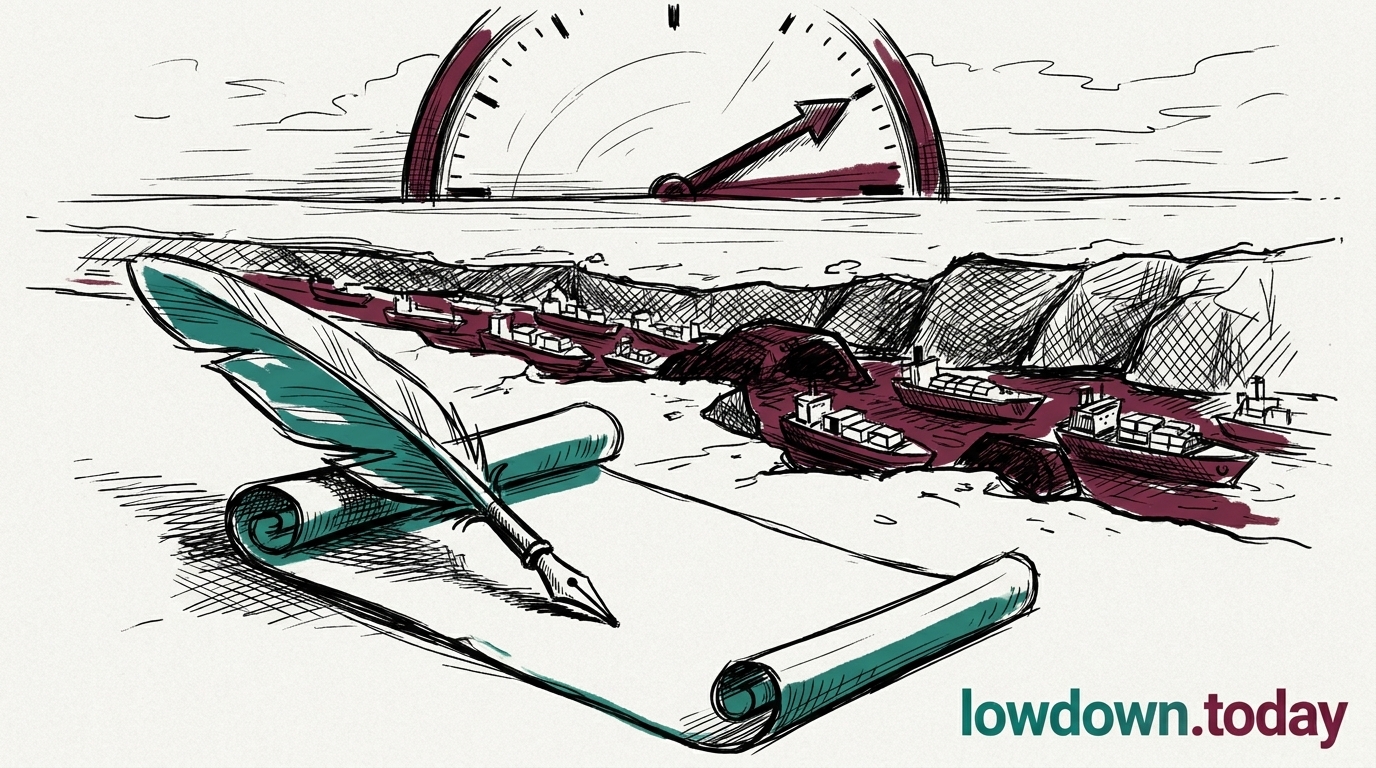
Two COSCO container vessels completed the Strait transit on their second attempt, normalising Iran's toll corridor at the container shipping level.

ConflictDeveloping
Key takeaway

China is helping normalise Iran's Hormuz toll by paying it with state-backed ships.

Two COSCO container ships, the CSCL Indian Ocean and CSCL Arctic Ocean, transited the Strait of Hormuz on 30 March. 1 They are the first container vessels operated by a major state-backed Chinese company to cross since the war began. An earlier attempt on 27 March was aborted with a U-turn near Iranian waters; the successful crossing took roughly 12 hours via Larak and Qeshm islands.

Container traffic matters differently from tanker traffic. Tankers moved through Hormuz under shadow-fleet arrangements and favoured-nation exemptions. Container ships carry manufactured goods, consumer products, and supply chain inputs. Their passage signals the IRGC's toll corridor is expanding beyond crude oil into general commerce. NBC News and Lloyd's List confirmed at least two vessels paid the IRGC approximately $2 million each to transit. 2 More than 20 vessels have used the tolled corridor since it opened.

The aborted 27 March attempt followed by success three days later suggests terms were negotiated in the interval, likely between Beijing and the IRGC directly. China is operationalising the toll at the container level, a step beyond tanker exemptions. For consumers beyond The Gulf, the toll will eventually surface not just in petrol prices but in the cost of electronics, clothing, and anything else that crosses the Indian Ocean.

Deep Analysis

In plain English

The Strait of Hormuz is the world's most important oil passage. Since the war began, Iran has been charging ships a toll to cross it, roughly $2 million per vessel. Two large Chinese state-owned ships crossed on 30 March after paying the toll. This matters because China is the world's largest trading nation. When Chinese state companies pay the toll, they signal to every other country that the toll is legitimate and here to stay. Iran's parliament is now drafting a law to make the toll permanent. The Strait went from a free international waterway to a paid checkpoint in 32 days. That cost eventually reaches consumers as higher prices on petrol, electronics, and imported goods.

Deep Analysis
Root Causes

China's supply chains depend on cross-Hormuz shipping for oil imports and Indian Ocean container transit. The two COSCO ships represent a pragmatic decision that the cost of continued blockage exceeds the political cost of paying the toll.

Beijing has leveraged its position as Iran's largest trading partner and diplomatic backer to secure transit. The aborted 27 March attempt followed by success three days later suggests direct negotiation between Chinese officials and the IRGC in the intervening period. China is operationalising its neutrality as commercial access, not political endorsement.

What could happen next?
  • Consequence

    China's state-backed commercial participation legitimises the toll system, making it far harder for any future administration to demand its removal as a non-negotiable condition.

    Immediate · 0.85
  • Consequence

    The toll corridor expanding from tankers to container shipping embeds the cost into consumer goods prices globally within weeks.

    Short term · 0.8
  • Precedent

    First instance of a major state-backed shipping operator paying an IRGC-operated toll, establishing the system as commercially viable and diplomatically tolerated.

    Medium term · 0.9
  • Risk

    Once codified in Iranian domestic law, reversing the toll requires a sovereignty concession no Iranian government can make without domestic political destruction.

    Long term · 0.8
First Reported In

Update #53 · Trump drops Hormuz goal; toll becomes law

gCaptain / Bloomberg· 31 Mar 2026
Read original
Different Perspectives
International human rights monitors (NetBlocks, IHR, Hengaw)
NetBlocks recorded 1,704 cumulative hours of near-total internet blackout for roughly 90 million Iranians on Day 74, while IHR documented ongoing executions under emergency provisions. These organisations are the only active monitoring windows into a civilian population cut off from the global internet for 71 consecutive days.
UK / France coalition
The Royal Navy confirmed HMS Dragon's Hormuz deployment on its own website on 11 May, converting a press-reported presence into declared force posture; UK and French defence ministers hosted a coalition meeting the same day. Britain and France are now the only named contributors to a Hormuz escort mission all five allies Trump originally asked had declined.
Saudi Aramco / Gulf producers
Saudi Aramco CEO Amin Nasser warned on 11 May that a Hormuz closure could remove 100 million barrels of weekly supply from global markets (roughly 15 million barrels per day for a week), a figure that dwarfs any OPEC+ swing capacity. The warning functions as both a price-floor signal and a public pressure on Washington to protect transit.
Beijing / Chinese Government
China has not publicly acknowledged the four Hong Kong-registered entities designated on 11 May or extended MOFCOM's Blocking Rules cover to HK-domiciled firms. Xi Jinping hosts Trump on 14–15 May having already de-risked state-bank balance sheets via NFRA's quiet loan halt, entering the summit partially compliant before any negotiation.
Tehran / Iranian Government
Foreign Minister Araghchi described Iran's 10-point counter-proposal as 'reasonable and responsible' via spokesman Baqaei on 11 May, and widened the mediator pool by meeting Turkish, Egyptian, and Dutch counterparts in a single day. Tehran is buying procedural runway while Trump's verbal rejection went unmatched by any written US counter.
Trump White House
Trump White House
Trump called the ceasefire 'on massive life support' and dismissed Iran's 10-point counter-proposal as 'a piece of garbage' on 11 May, while departing for Beijing two days later with no signed Iran instrument to show Congress. The verbal maximum and the paper void coexist: the administration is running a legal pressure campaign through Treasury while the president free-lances the rhetoric.