Skip to content
Iran Conflict 2026
18APR

148 girls killed at Minab school strike

3 min read
14:57UTC

One hundred and forty-eight girls aged seven to twelve were killed in a single strike on a primary school in Minab, southern Iran — an atrocity whose attribution remains disputed but whose consequences for global diplomatic positioning do not.

ConflictDeveloping
Key takeaway

148 children killed in disputed circumstances will define the conflict's global image for years, regardless of who eventually bears legal responsibility.

One hundred and forty-eight girls. The youngest seven years old. This is the number that governments from Ankara to Brasília to Jakarta are calculating their diplomatic positions around, on the basis of incomplete information about who fired the weapon.

In the first hours, neither the US nor Israel commented. Iran's state media reported the deaths without identifying the weapon's origin. The absence of attribution is itself a diplomatic calculation: claiming the strike would be politically devastating; denying it without evidence creates legal exposure.

Under Additional Protocol I of the 1977 Geneva Conventions, attacks must not cause civilian losses disproportionate to anticipated military advantage; a strike on a school based on faulty intelligence raises a proportionality question that international law is equipped to assess, even if political will to do so is absent.

The political half-life of 148 dead children is measured in years, not news cycles. Every government that has stayed silent on strikes against military targets faces domestic constituencies — in Muslim-majority countries especially — who will not accept silence on a primary school. The Minab deaths are the single development most likely to fracture the de facto Western coalition of silence around the operation.

Deep Analysis

In plain English

A primary school in southern Iran was struck in the opening hours of the conflict, killing 148 girls between the ages of 7 and 12. Neither the US nor Israel has said they did it. Iran hasn't identified the weapon. Later analysis by Western journalists suggests it was a US airstrike that hit the wrong building. In international law, hitting civilians by mistake rather than deliberately is a different crime — but for most of the world's population, 148 dead children is 148 dead children.

Deep Analysis
Synthesis

The Minab school deaths are the Minab school deaths. There is no analytical frame that makes 148 dead children between seven and twelve years old into anything other than the most devastating humanitarian fact of the conflict's first day. The question of attribution matters for legal culpability and for the reputations of the states involved. It does not change what 148 families in southern Iran lost in the first hours of March 2026.

Root Causes

The root cause is the use of intelligence-derived targeting in an urban environment where IRGC forces routinely operate from civilian structures. Whether the Minab school was genuinely misidentified civilian infrastructure or a building with verified IRGC presence remains the contested factual question on which all legal and political accountability ultimately depends.

Escalation

The Minab deaths do not directly escalate the military conflict. Their escalatory effect is diplomatic: they narrow the space for neutral states to remain passive, increase pressure for UN Security Council action, and constrain US diplomatic manoeuvre in the Global South. If attribution is resolved against the US, the diplomatic cost will be severe and durable.

What could happen next?
  • Consequence

    Governments in Muslim-majority countries that might have remained neutral face domestic pressure to condemn the strikes, potentially reducing diplomatic cover for the US-Israeli operation in UN forums.

    Short term · Assessed
  • Risk

    If satellite analysis confirming a US strike on a misidentified target is independently corroborated, the US faces war crimes exposure under Additional Protocol I of the Geneva Conventions regardless of intent.

    Medium term · Suggested
  • Consequence

    Arabic-language and Global South media will use the Minab deaths as the primary frame for the conflict for months, shaping diplomatic positions of countries whose populations are mobilised by civilian casualties.

    Short term · Assessed
  • Precedent

    The non-attribution pattern — no party claiming, no party officially denying — establishes a template of non-accountability for civilian deaths that may recur throughout the conflict.

    Long term · Assessed
First Reported In

Update #3 · Khamenei killed; Iran fires on 7 countries

Middle East Eye· 1 Mar 2026
Read original
How this affects the world
  • Muslim-majority governments in Southeast Asia and Africa

    Governments in Indonesia, Malaysia, Nigeria, and Senegal — all with large Muslim populations and significant diplomatic relationships with the US — face domestic constituencies that will demand condemnation. Staying silent on military targets is politically manageable; staying silent on 148 dead schoolgirls is not. Expect formal condemnations that stop short of concrete action but increase diplomatic pressure on Washington in multilateral forums.

  • Latin American governments (Brazil, Argentina, Mexico)

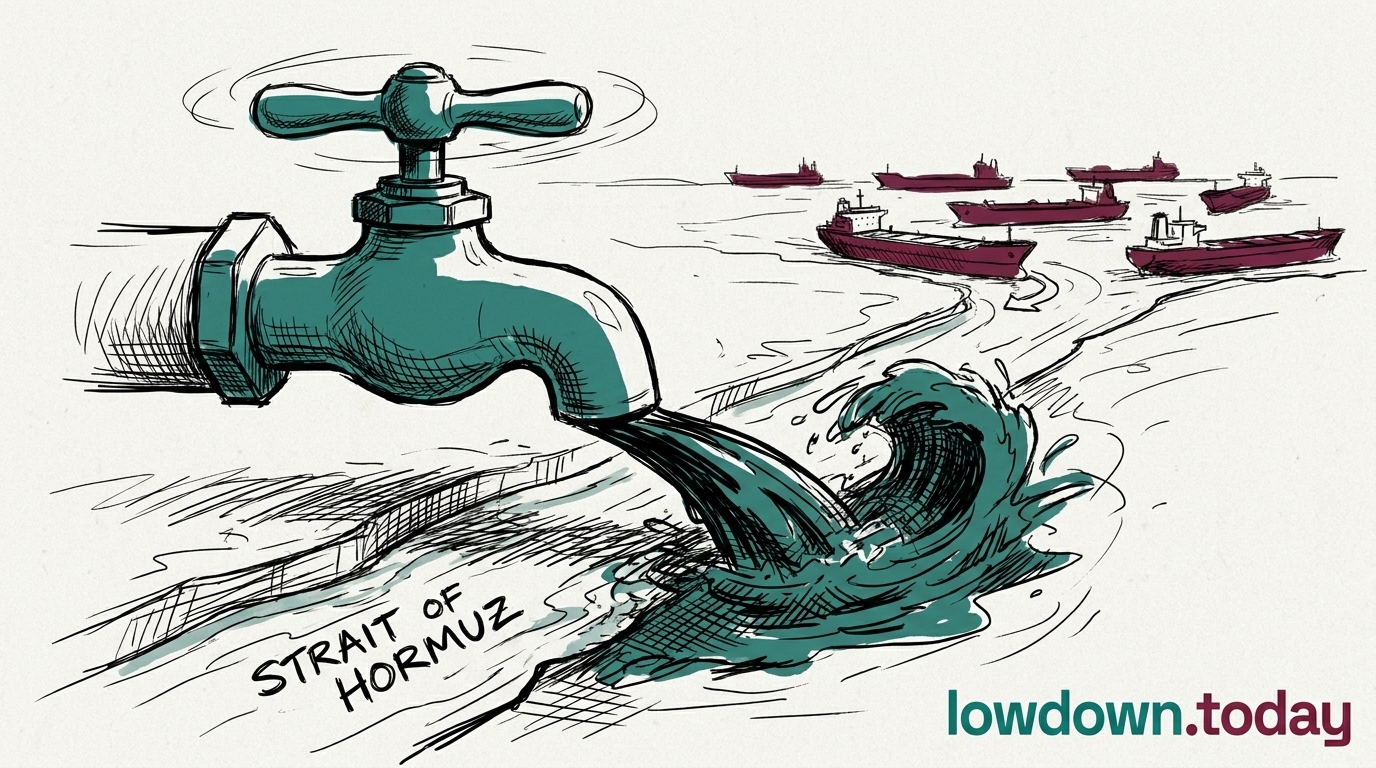
    The Minab deaths arrived in the same 24-hour window as the Hormuz closure and Brent crude's 26% spike. Brazilian and Argentine policymakers face a combination of rising fuel costs and civilian casualty imagery that triggers domestic accountability pressure. This will translate into UN Security Council pressure for ceasefire resolutions — constrained by the US veto but symbolically significant.

  • International humanitarian law bodies and ICC

    The disputed attribution creates a specific legal challenge: accountability requires establishing which country's weapon struck the school. Satellite imagery analysis, weapons fragment forensics, and flight path data will be sought by investigators. The Al-Ahli Baptist Hospital precedent from October 2023 — where competing attribution claims persisted for years despite multiple investigations — suggests definitive legal attribution may never arrive, but political attribution will be settled much faster and with far less evidentiary rigour.

Causes and effects
Different Perspectives
Global South governments (Indonesia, Brazil, South Africa)
Neutrality was possible when the targets were military. 148 dead schoolgirls made it impossible — no government can explain that away to its own citizens.
Trump administration
Oscillating between claiming diplomatic progress and threatening escalation, while deploying additional ground forces to the Gulf.
Israeli security establishment
Fears a rapid, vague US-Iran agreement that freezes military operations before the IDF achieves what it considers full strategic objectives. A senior military official assessed the campaign is 'halfway there' and needs several more weeks.
Iraqi government
Iraqi government
Iraq's force majeure is the position of a non-belligerent whose entire petroleum economy has been paralysed by a war between others — storage full, exports blocked, production being cut with no timeline for resumption.
Russia — Ambassador Vassily Nebenzia
Moscow calibrated its position between Gulf states and Iran: abstaining on Resolution 2817 rather than vetoing it, signalling it would not block protection for Gulf states, while refusing to endorse a text that ignores the US-Israeli campaign it regards as the conflict's proximate cause. Russia proposed its own ceasefire text — which failed 4-2-9 — allowing Moscow to claim the peacemaker role while providing Iran with satellite targeting intelligence, a duality consistent with its approach in Syria.
France — President Macron
France absorbed its first combat death in a conflict it has publicly declined to join. The killing of Chief Warrant Officer Frion in Erbil forces Macron to choose between escalating involvement and accepting casualties from the margins.