Skip to content
You can now search across every topic, entity and event.What's new
Iran Conflict 2026
18APR

Sovereignty package slips to 27 May

3 min read
14:57UTC

Digital Watch Observatory's tracking confirms the EU Tech Sovereignty Package has slipped twice; the Commission is now logged for adoption on Wednesday 27 May, with no official giving a public reason for either of the earlier misses.

ConflictDeveloping
Key takeaway

Two missed deadlines have let CISPE and OpenForum Europe shape the sovereignty agenda the Commission was meant to lead.

Digital Watch Observatory's tracking confirms the Tech Sovereignty Package has slipped twice 1. It was scheduled for March, pushed to April, and is now logged for Commission adoption on Wednesday 27 May. No Commission official has publicly explained either delay. The package, when it lands, is meant to carry the Cloud and AI Development Act (CAIDA), Chips Act 2, an open-source strategy and an artificial-intelligence-in-energy roadmap.

Forum Europe's Policy Signal, published on 23 April under an explicit AI-assisted-transcription disclaimer, named three "clearest forward commitments" from the Brussels stage : the package itself, an auditable sovereignty framework with a catalogue, and a pilot European Union-level open-source fund. Two of the three did not come from The Commission. The cloud trade body CISPE shipped its rival framework the next day , and the fund remains a proposal by OpenForum Europe, the European University Institute and Fraunhofer ISI, asking for €350 million and modelled on Germany's existing Sovereign Tech Fund 2. Michal Kobosko MEP hosted a Parliament breakfast for it on 28 January 2026. No commissioner has named it as a priority. No host institution has been designated.

The Commission has been quiet on its own targets too. Brussels has stopped restating the Chips Act goal of 20 percent global semiconductor market share in any post-Magdeburg communication , and the Magdeburg cancellation itself is the unanswered absence the package was meant to address. The European Parliament had assigned no rapporteur to CAIDA as of 20 April, leaving the Council and Commission without a Parliament counterparty in the run-up to adoption. Each missed deadline extends the window in which non-Commission actors set the de facto sovereignty standard the legislation was supposed to establish.

Deep Analysis

In plain English

The EU's Tech Sovereignty Package is a set of laws and strategies aimed at reducing Europe's dependence on US and Chinese technology companies. It covers things like AI infrastructure, chip manufacturing, and rules for using open-source software in government. The European Commission, which drafts EU laws, was supposed to approve this package in March 2026, then April, but has now pushed the date to 27 May 2026 without publicly explaining why. This matters because other EU rules, including new AI regulations, are already coming into force in August 2026. If the support measures for European tech companies are still stuck in draft form when those obligations kick in, European firms face the costs of compliance without receiving the subsidies or advantages the package was meant to provide.

Deep Analysis
Root Causes

The CAIDA component introduces state-aid-adjacent preferential procurement provisions that require DG COMP sign-off. DG COMP's current commissioner has publicly resisted industrial-policy carve-outs that conflict with competition rules. Until that interservice conflict is resolved, the whole package stalls.

The Chips Act 2 component depends on funding commitments from member states. Germany, France, and the Netherlands have not confirmed their matched-funding shares for the proposed €10bn Chips Manufacturing Fund. Without those national commitments, the Commission cannot legally table state-aid amounts in the draft text.

The AI-in-energy roadmap is effectively a hostage: it is the least controversial component but it is bundled with the most controversial, meaning it cannot advance independently.

What could happen next?
  • Risk

    If CAIDA's procurement-preference clause is dropped to clear the 27 May deadline, European cloud and AI vendors lose the most commercially significant provision in the package, effectively making it a roadmap document rather than actionable industrial policy.

    Short term · 0.76
  • Consequence

    A third consecutive missed deadline would damage the Commission's credibility with European tech industry stakeholders who built 2026 investment and hiring plans around the package's original March timeline.

    Immediate · 0.82
  • Risk

    The interservice conflict between DG COMP and DG GROW over CAIDA procurement preferences will resurface in Council negotiations even if resolved at Commission level, extending the legislative timeline by six to twelve months beyond any adoption date.

    Medium term · 0.73
First Reported In

Update #4 · CISPE moves first; Brussels misses again

OpenForum Europe· 7 May 2026
Read original
Different Perspectives
Jordan
Jordan
Jordan has not addressed the IRGC's claim that Jordanian civilians and soldiers supplied targeting intelligence for the 20 July Aqaba strike, even as its deputy prime minister received a condemnation call over Iran's earlier missile fire. The base has now produced the war's first confirmed American deaths on Jordanian soil.
CENTCOM
CENTCOM
CENTCOM confirmed a third American service member died in northern Iraq on 19 July clearing unexploded ordnance from a downed Iranian drone, and recovered unidentified remains at Muwaffaq Salti Air Base in Jordan. The Pentagon has framed its Khuzestan strikes as degrading IRGC capacity, a rationale that stretches to explain a reactor foundation with no nuclear material in it.
Kuwait
Kuwait
Kuwait's military said it was confronting Iranian attacks after the Shuaiba power and desalination complex burned for the second time in two days on 19 July, following an earlier ministry request that households ration water. Roughly 90 per cent of Kuwait's drinking water depends on the same generating units Iran keeps hitting.
IRGC
IRGC
The IRGC claimed a 21st wave of Operation Nasr-2 struck Aqaba Airport and Azraq on 20 July, destroying hangars and aircraft, and thanked Jordanians for supplying intelligence. No US, Jordanian or Kuwaiti source has confirmed any part of the claim, which Press TV alone carried.
IAEA
IAEA
The IAEA said it is looking into reports of a 19 July strike on the Darkhovin nuclear plant construction site, confirming inspectors found no nuclear material there on their last visit. Grossi again called for restraint near nuclear sites, a faster response than the four months of silence that followed the disputed Bushehr strike.
Shipping and war-risk insurers
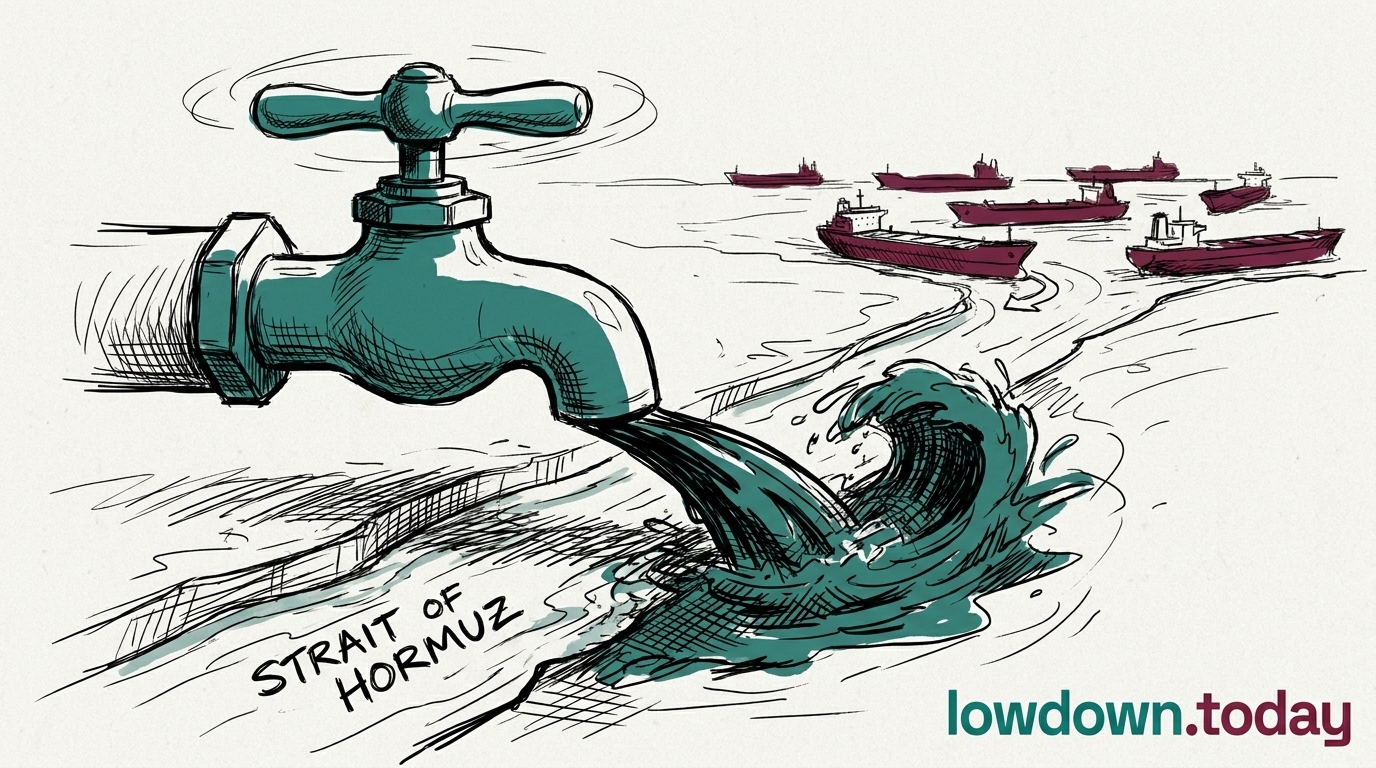
War-risk premiums for Hormuz transits reached 3 to 10 per cent of hull value on 17 July, against 0.25 per cent before the war, as Brent cleared $87 and daily transits fell to eight vessels. Underwriters are pricing the confirmed UKMTO mine near the Traffic Separation Scheme, not the IRGC's unconfirmed 18 July mining claim, which CENTCOM called false.