Skip to content
Briefings are running a touch slower this week while we rebuild the foundations.See roadmap
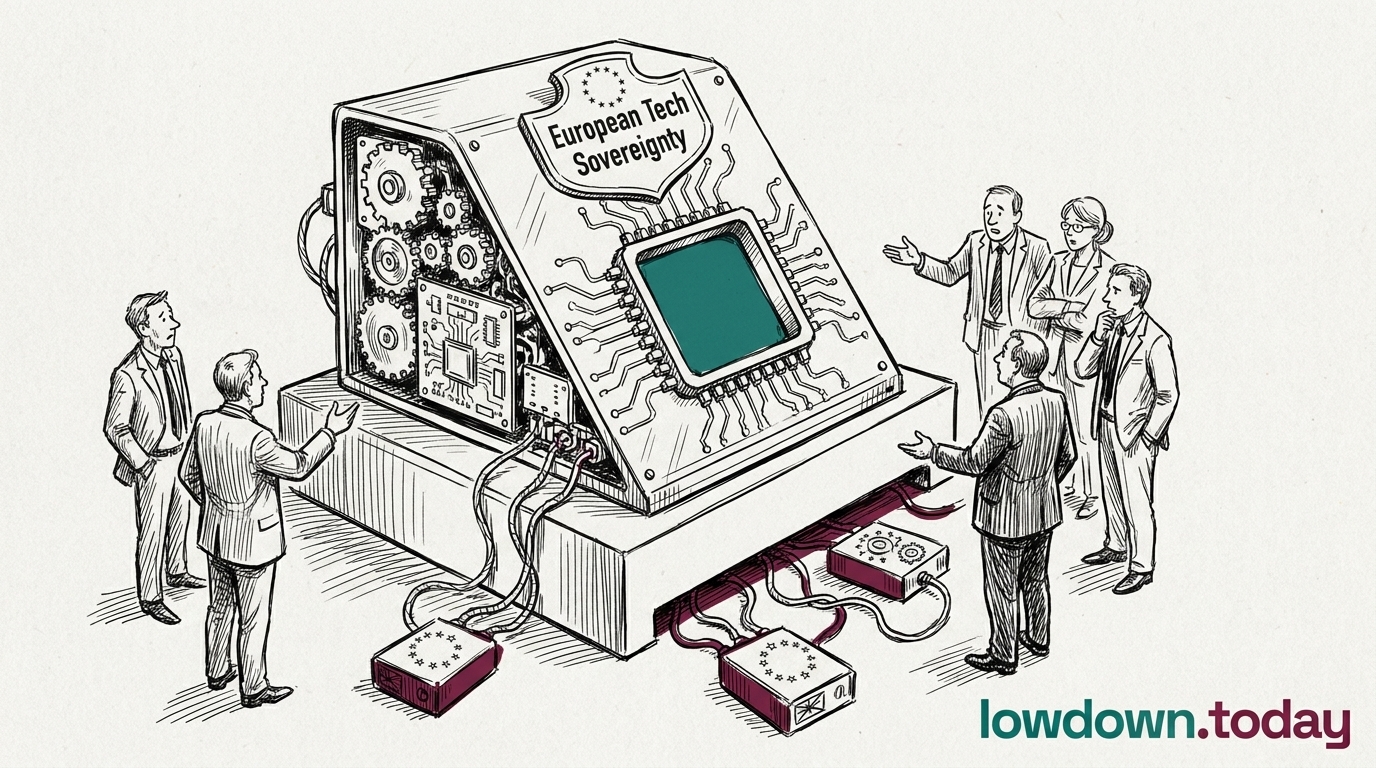
European Tech Sovereignty
23APR

Commission opens €63.2m Digital Europe calls on application AI

3 min read
09:21UTC

The European Commission opened seven Digital Europe Programme calls totalling €63.2m on 21 April 2026, with the largest single call at €24m for European Health Data Space services.

TechnologyDeveloping
Key takeaway

Digital Europe funds applied AI in health and safety, not the model layer sovereignty rhetoric names.

DG CNECT opened seven Digital Europe Programme calls on 21 April 2026 with a combined budget of €63.2m. The breakdown is €24m for European Health Data Space services, €12.5m for advanced digital skills training, €9m for AI-powered medical imaging, €8.5m for regulatory compliance digital solutions, €6m for online information integrity research, €1.8m for programme dissemination and €1m for the EDIC Support Hub. All seven calls close on 1 October 2026.

None of the seven calls addresses frontier model development, training-compute infrastructure or model-layer sovereignty; the thematic focus runs through applied AI in health and safety. That pattern mirrors the Commission's cloud award and Britain's DSIT fund cohort , both of which chose the infrastructure and deployment layer over frontier models. On the Commission's own logic the application-layer focus is defensible: health data governance, skills and regulatory tooling are the surfaces where AI meets EU public-interest obligations, and Digital Europe is a cohesion instrument rather than an industrial-policy one. The gap the seven calls do not fill is the model layer that European AI sovereignty rhetoric keeps naming, and the Cloud and AI Development Act, now before the Commission, is the vehicle that would have to carry that weight if it is carried at all.

Deep Analysis

In plain English

The EU's Digital Europe Programme is a funding pot designed to deploy digital technology across European public services and health systems, not to build the underlying AI models themselves. This week's 63.2 million euros in calls goes toward connecting European health databases, training public-sector workers in digital skills, and testing AI tools for reading medical scans. None of it funds the development of European AI models that could compete with ChatGPT or Gemini. The EU treats application funding and model-layer funding as separate questions, and the model layer has not yet found a comparable funding instrument.

What could happen next?
  • Meaning

    The 63.2 million euros in Digital Europe Programme calls represents EU application-layer investment running at approximately 250 million euros annually across the full programme, against a global AI VC market of 100-140 billion euros. European public health AI, regulatory compliance tooling and information integrity research will benefit; the model-layer sovereignty gap will widen each quarter until a different instrument fills it.

First Reported In

Update #3 · Sovereignty summit, minus the sovereigns

European Commission DG CNECT· 23 Apr 2026
Read original
Different Perspectives
OpenForum Europe / EUI-Fraunhofer consortium
The consortium (OpenForum Europe, European University Institute, Fraunhofer ISI) is lobbying for a €350m EU Sovereign Tech Fund modelled on Germany's existing sovereign tech fund; Michal Kobosko MEP hosted a Parliament breakfast for it on 28 January 2026. No commissioner has named it as a priority and no host institution has been designated.
Chi Onwurah MP / UK SIT Committee
Onwurah wrote to DSIT minister Narayan that his sovereignty letter "fails to set out a coherent strategy for achieving technology sovereignty". Narayan cited the £500m Sovereign AI Unit and a proposed advanced market commitment for AI hardware; Onwurah's challenge signals that Parliament will press DSIT to move beyond an infrastructure-only first cohort.
US Trade Representative (USTR)
USTR confirmed 24 July as the final determination date for its Section 301 investigation into EU digital rules; public hearings began in May. A USTR tariff threat published before the 27 July DMA Google ruling places direct political pressure on DG COMP to moderate its first cloud-AI enforcement decision.
ASML (Christophe Fouquet)
Fouquet told analysts that ASML's 2026 guidance already "accommodates potential outcomes of ongoing discussions around export controls", after China fell to 19% of system sales in Q1 2026 from 36%. ASML co-signed the CEO deregulation letter; the MATCH Act would remove its remaining DUV China revenue.
Mistral AI / seven European CEOs
Arthur Mensch co-signed a 5 May joint op-ed in Handelsblatt and Corriere della Sera after meeting von der Leyen, calling for simplified AI rules and looser merger control. Mistral's signature is the politically significant one: it is the company Brussels most often cites as evidence that European AI sovereignty is viable.
Schwarz Group / StackIT
Schwarz Group anchored the Cohere-Aleph Alpha merger with $600m and already holds StackIT at SEAL-3 in the Commission's €180m framework. Chief Digital Officer Karsten Wildberger called Berlin's backing of the deal "a very strong signal"; Berlin attached conditions that development services remain in Germany and infrastructure deployment remain sovereign.
