Skip to content
You can now search across every topic, entity and event.What's new
Iran Conflict 2026
18APR

Brent-WTI gaps to $5.13 on Hormuz

2 min read
14:57UTC

Brent settled $84.73 against WTI at $79.60 on 15 July, stretching the Brent-WTI spread to about $5.13 on the Brent leg alone.

ConflictAssessed
Key takeaway

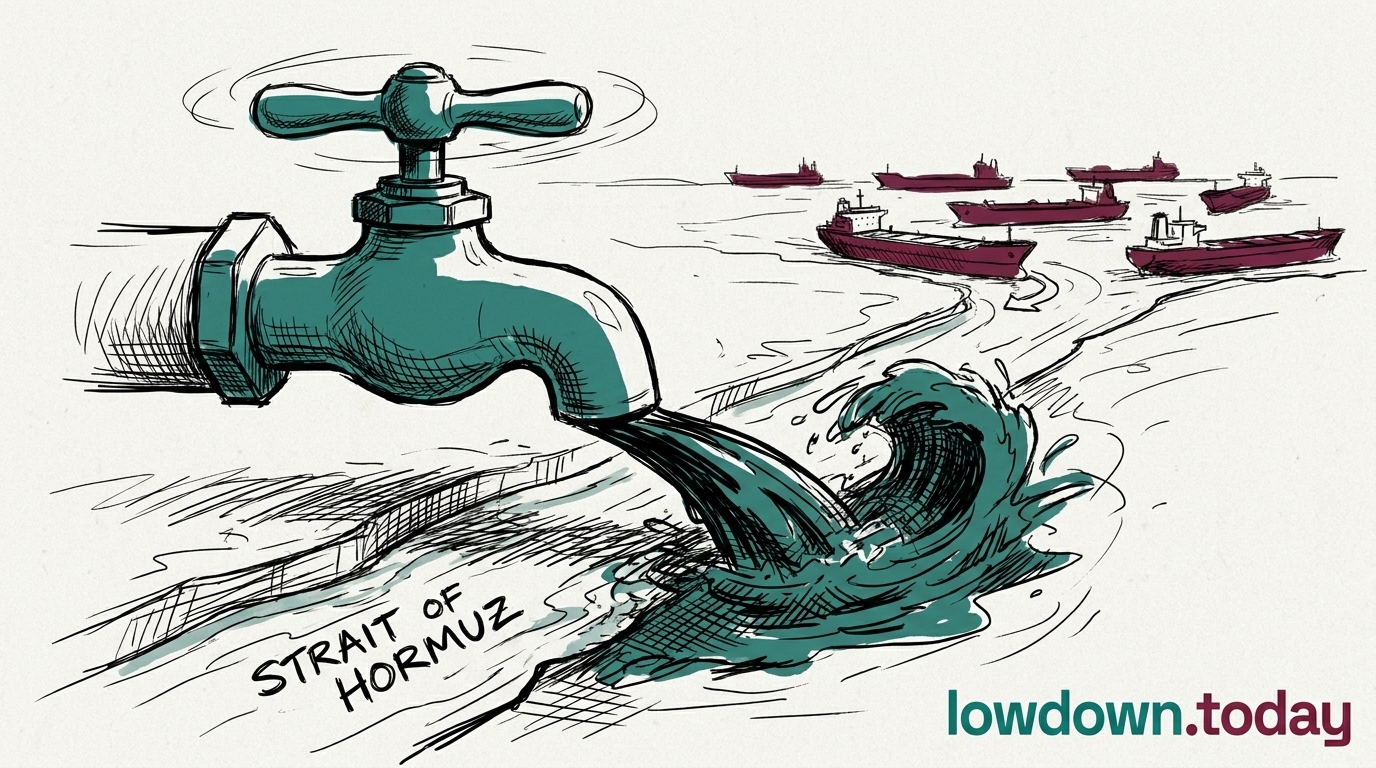
A $5.13 Brent-WTI gap sitting on the Brent leg prices a Hormuz shock, not weak demand.

Brent settled $84.73 on 15 July against WTI at $79.60, widening the Brent-WTI spread to about $5.13 from $3.26 on 6 July 1. Brent is the Atlantic-facing global benchmark; WTI, the US grade priced inland at Cushing, sits behind American pipeline geography and away from strait risk. The move sat almost entirely on the Brent leg, and WTI lagged by design.

A spread this wide on a crude-specific shock rather than a demand pull tells the desk where the dislocation sits. It widened even as the US distillate build argued for softer product-led buying, which points the driver at grade and location, not at the barrel count. A demand-led move would drag both legs together; this one did not.

The counter deserves a hearing. If Hormuz cargoes genuinely cannot move, the premium reflects real tightness rather than positioning froth, and the gap holds until the strait clears. Either way the trade lives in the spread, not the flat price, which is the read this desk carries while the strike geopolitics stay with Iran-conflict-2026.

Deep Analysis

In plain English

Brent and WTI are the two most-quoted oil prices in the world. Brent tracks oil shipped by sea from the North Sea and Gulf region; WTI tracks oil priced inland in Oklahoma, USA. On 15 July, Brent closed at $84.73 and WTI at $79.60, a gap of $5.13, wider than the $3.26 gap recorded on 6 July. Because Brent is exposed to Middle East shipping risk and WTI is not, this kind of widening usually means seaborne routes look riskier than land-based US supply, not that oil itself is scarcer everywhere.

Deep Analysis
Root Causes

Brent settles against seaborne cargoes loaded near the Strait of Hormuz and the North Sea, so any rise in perceived shipping risk through Hormuz feeds directly into the benchmark. WTI settles at Cushing, Oklahoma, a landlocked pipeline hub with no direct exposure to Gulf tanker risk, so the same risk event reaches WTI only indirectly, through refined-product flows and freight arbitrage, not through the crude price itself.

The spread widened almost entirely on Brent's leg rather than through a WTI decline, confirming the driver sits in seaborne risk pricing rather than a broad shift in physical crude balances that would move both benchmarks together.

What could happen next?
  • Meaning

    The spread's widening sits almost entirely on Brent's side, indicating the driver is a seaborne risk premium rather than a broad-based supply shortage

First Reported In

Update #17 · EU freezes the cap a week; Brent-WTI gaps to $5.13

CNBC· 16 Jul 2026
Read original
Different Perspectives
Shipping and war-risk insurers
War-risk premiums for Hormuz transits reached 3 to 10 per cent of hull value on 17 July, against 0.25 per cent before the war, as Brent cleared $87 and daily transits fell to eight vessels. Underwriters are pricing the confirmed UKMTO mine near the Traffic Separation Scheme, not the IRGC's unconfirmed 18 July mining claim, which CENTCOM called false.
Oman
Oman
Abbas Araghchi led an Iranian delegation to Oman-hosted talks in Muscat on 18 July, an agenda confined to reopening the Strait of Hormuz and nothing else. Oman's decades of studied neutrality make it the one channel neither Washington nor Tehran needs to be seen initiating, and that narrowness is what lets it survive the bombing.
Kuwait
Kuwait
Kuwait's electricity ministry asked residents to ration water and power after the IRGC set Shuaiba's generating units alight on 17 July, the second Kuwaiti site struck in two days. The country draws 90 per cent of its drinking water from plants sharing power infrastructure, so one strike reaches every tap in the hottest weeks of the year.
Jordan
Jordan
Amman still reports no casualties or damage of its own from the 17 July attack even as CENTCOM confirmed two American dead on the same runway, a line it has not amended since. Hosting the base that produced the war's first US fatalities puts Jordan's decades-old defence arrangement with Washington under a domestic scrutiny it has not faced before.
Tehran / Artesh and AEOI
Iran's Atomic Energy Organisation called the alleged Darkhovin strike a violation of international law, while the Artesh put Operation Saeqeh, its campaign against Kuwait, Jordan and Bahrain, at phases 14 and 15 by 18 July. Domestic outlets Fars and Tabnak claim 16 Americans dead since February, a toll no source outside Iran supports.
CENTCOM / Washington
CENTCOM confirmed two dead and one missing at Muwaffaq Salti on 17 July, when Jordan says its air defences intercepted eight of ten incoming missiles, against five of five stopped on 10 June. Its own strikes stay aimed at Iran's coast, interior and navy, not the Artesh campaign that killed them.