Skip to content
Iran Conflict 2026
18APR

Brent at $73: oil forecast of $150 fails

1 min read
14:57UTC

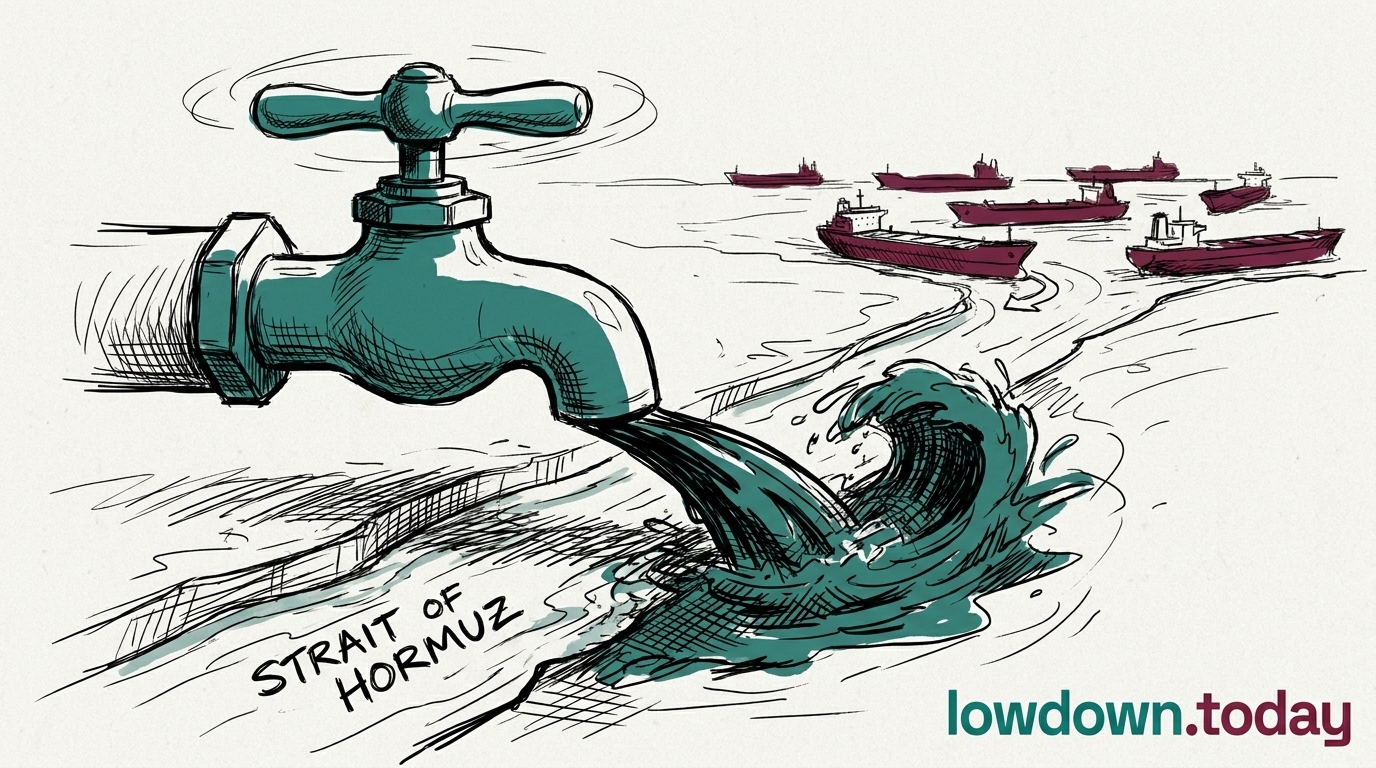
Brent crude stood at approximately $73 per barrel immediately before the 28 February 2026 strikes, with analysts forecasting a rise to $80–100 — well below the $150–200 predicted in earlier modelling — as markets priced partial, reversible Hormuz disruption rather than a formal blockade.

ConflictDeveloping
Key takeaway

Markets priced an $80–100 oil range on 28 February because they assessed Hormuz disruption as partial and reversible — the $150–200 scenario remains a live tail risk conditional on Iranian naval interdiction or prolonged conflict.

The pre-strike $150–200 oil price forecast rested on two assumptions: that Iran would execute a formal Hormuz blockade using mining and naval interdiction, and that the conflict would persist long enough for physical supply to be severely constrained. Neither condition materialised on 28 February. Iran's response comprised ballistic missile strikes, not naval interdiction; tanker avoidance is voluntary and reversible; and Saudi Arabia retains spare production capacity to partially offset any Gulf supply disruption.

A rise from $73 to $80 represents a 10% increase. At $100, the increase is 37% — still inflationary but below the recession-triggering threshold implied by $150–200 modelling. At $100, European economies already managing the energy cost legacy of the Russia-Ukraine war face additional pressure, as do emerging markets with dollar-denominated energy import bills. The Bloomberg tanker-avoidance reporting and Euronews analyst consensus both point to the $80–100 range as the February 28 baseline estimate.

The $150–200 scenario remains a live tail risk rather than a falsified prediction. It materialises if the conflict extends to include Iranian naval action in Hormuz, prolonged tanker avoidance beyond two to three weeks, or destruction of Saudi or UAE production infrastructure. Markets are pricing a shorter and more contained conflict than the worst-case scenario assumed — not ruling out further escalation.

What could happen next?
  • Meaning

  • Meaning

First Reported In

Update #2 · Five cities struck on opening night

CBS News· 28 Feb 2026
Read original
Causes and effects
This Event
Brent at $73: oil forecast of $150 fails
The more modest oil price forecast relative to pre-strike predictions suggests markets assessed Iranian oil infrastructure damage and Hormuz risk as manageable in the short term.
Different Perspectives
Global South governments (Indonesia, Brazil, South Africa)
Neutrality was possible when the targets were military. 148 dead schoolgirls made it impossible — no government can explain that away to its own citizens.
Trump administration
Oscillating between claiming diplomatic progress and threatening escalation, while deploying additional ground forces to the Gulf.
Israeli security establishment
Fears a rapid, vague US-Iran agreement that freezes military operations before the IDF achieves what it considers full strategic objectives. A senior military official assessed the campaign is 'halfway there' and needs several more weeks.
Iraqi government
Iraqi government
Iraq's force majeure is the position of a non-belligerent whose entire petroleum economy has been paralysed by a war between others — storage full, exports blocked, production being cut with no timeline for resumption.
Russia — Ambassador Vassily Nebenzia
Moscow calibrated its position between Gulf states and Iran: abstaining on Resolution 2817 rather than vetoing it, signalling it would not block protection for Gulf states, while refusing to endorse a text that ignores the US-Israeli campaign it regards as the conflict's proximate cause. Russia proposed its own ceasefire text — which failed 4-2-9 — allowing Moscow to claim the peacemaker role while providing Iran with satellite targeting intelligence, a duality consistent with its approach in Syria.
France — President Macron
France absorbed its first combat death in a conflict it has publicly declined to join. The killing of Chief Warrant Officer Frion in Erbil forces Macron to choose between escalating involvement and accepting casualties from the margins.