Skip to content
Briefings are running a touch slower this week while we rebuild the foundations.See roadmap
Iran Conflict 2026
14APR

Trump extends grid deadline to 6 April

2 min read
09:22UTC
ConflictDeveloping

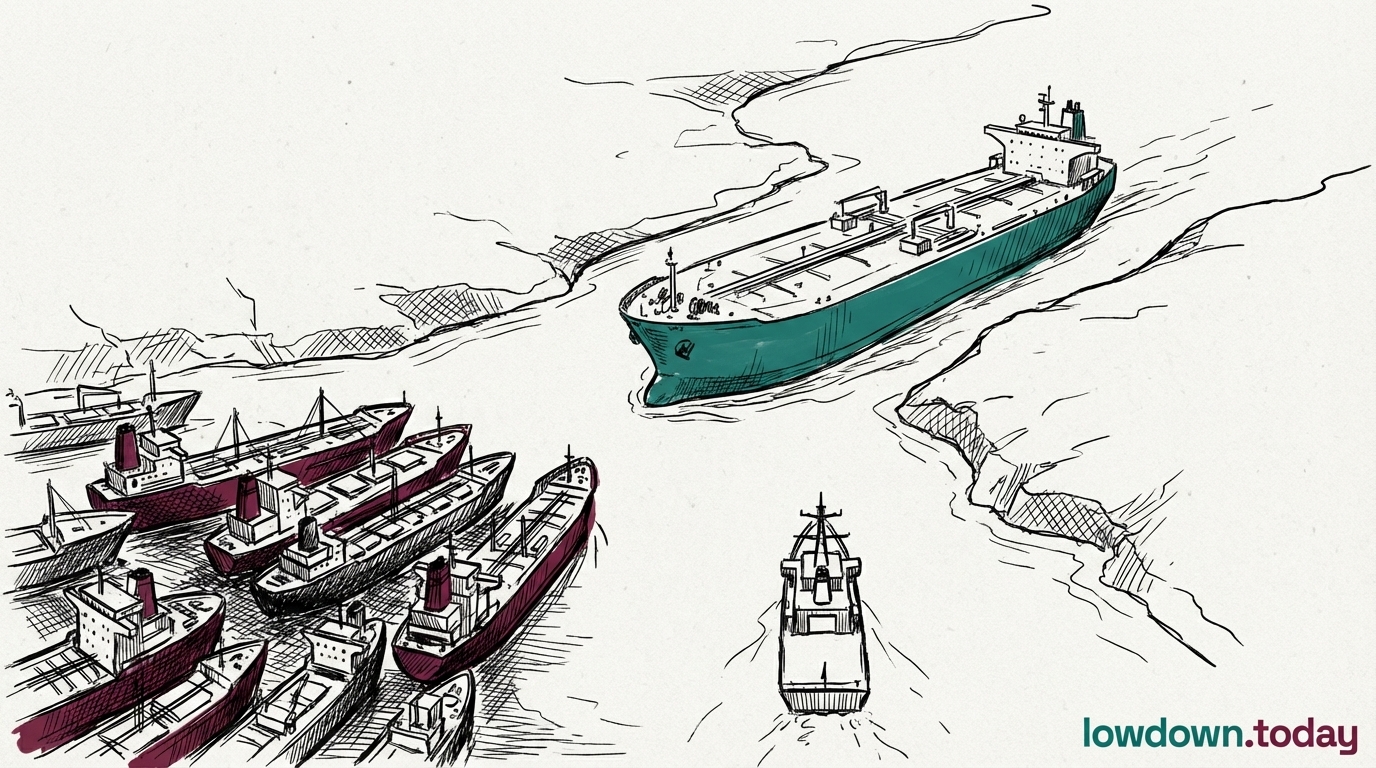
President Trump extended the deadline for strikes on Iran's power grid to 6 April, the third such extension since his original 48-hour ultimatum, according to Bloomberg. 1 Trump cited three reasons: an Iranian government request, 10 oil tankers allowed through Hormuz as a 'present,' and progress in Pakistan-mediated indirect talks. The original deadline of 25 March was extended once before reaching the current April 6 date.

The tanker claim requires scrutiny. The vessels Trump described as an Iranian diplomatic gesture appear to be Pakistani-flagged ships already in the 'friendly nation' category that Iran established under its own vetting system weeks earlier . Iran has neither confirmed nor denied granting any special concession to Trump. Earlier, Iran had declared Hormuz closed to US-linked vessels while allowing transit to countries including India, Pakistan, Iraq, Malaysia, and China . Pakistani-flagged ships transiting was not a new Iranian concession; it was Iran's existing policy applied to Pakistan's existing fleet.

After three postponements in five days, Iran has learned that deadlines are suggestions. The credibility of the threat deteriorates with each extension because the pattern has been demonstrated: Trump sets a deadline, claims an Iranian gesture whether or not Iran acknowledges making one, and extends. Markets have largely repriced this pattern: Brent Crude fell 10.9% on the first talks announcement but has since stabilised as each deadline passes without result. The April 6 deadline arrives against a backdrop of Bushehr nuclear construction suspended , the Philippines in national energy emergency , and US gasoline at $3.98 per gallon .

Deep Analysis

In plain English

Trump set a deadline to bomb Iran's power stations if it did not reopen the Strait of Hormuz. That deadline passed. He set a new one. That one passed too. Now there is a third deadline on 6 April. Each time he has credited Iran with making some kind of gesture, but Iran has not confirmed making any. The problem is that the more times you set a deadline and do not follow through, the less seriously anyone takes the next deadline. Iran has now seen three deadlines come and go, which gives it good reason to believe 6 April will also pass without the strike.

Deep Analysis
Root Causes

The structural dilemma is that power grid strikes would trigger Iranian retaliatory strikes on Gulf desalination and energy infrastructure, as explicitly threatened by the Khatam al-Anbiya Central Headquarters in March.

The administration cannot follow through without accepting consequences it is not positioned to absorb. But each extension teaches Iran that the threat has no teeth.

First Reported In

Update #49 · Hormuz toll into law; Tangsiri killed

NPR / Houston Public Media· 27 Mar 2026
Read original
Different Perspectives
Qatar
Qatar
Qatar holds approximately $12 billion in frozen Iranian assets that Tehran named as the precondition for any Hormuz reopening sequence; with Oman sidelined and no agreed HEU custodian, the asset-routing architecture that any deal requires has no operational channel and no neutral financial intermediary to run it through.
Hengaw and Iranian civilian population
Iranians face an internet capped at 40 per cent by hardware their president cannot dismantle, field killings that leave no court record, and judicial executions running in parallel; Hengaw, based in Norway, is the primary remaining monitor of a repression system the IRGC is deliberately moving beyond auditable records. The real toll is higher than any single monitor's count.
China
China
China supplied deep-packet-inspection hardware that caps Iran's internet at 40 per cent and enables an instant on-demand blackout, and was barred by Trump as a potential HEU custodian on 27 May. Beijing gains from Iran's continued non-alignment with the West while the DPI sale extends Chinese surveillance-technology exports as a geopolitical instrument.
Pakistan
Pakistan
Foreign Minister Ishaq Dar met Rubio in Washington on 29 May, formally inheriting the role of sole active mediator after Oman's forced withdrawal. Pakistan lacks Oman's banking infrastructure for frozen-asset routing and carries its own regional stakes, making it a less structurally neutral broker for the Qatar-held $12 billion sequencing.
Kuwait
Kuwait
Kuwait invoked Article 51 of the UN Charter after absorbing an Iranian ballistic-missile strike on Ali Al Salem Air Base on 28 May, becoming the first Gulf state to make a formal individual self-defence claim in the war. The invocation creates a legal record enabling a future bilateral defence-pact activation without yet triggering it.
Oman
Oman
Oman denied any Hormuz toll plan within hours of Bessent's 28 May threat, absorbing a sanctions warning from the country it has brokered for since 1981. The rapid capitulation preserved the channel formally, but Tehran now knows Washington will threaten its own mediator, which changes Muscat's calculus on how far it can lean into any joint-management architecture.