Skip to content
Briefings are running a touch slower this week while we rebuild the foundations.See roadmap
Iran Conflict 2026
10APR

Sovereignty package slips to 27 May

3 min read
08:05UTC

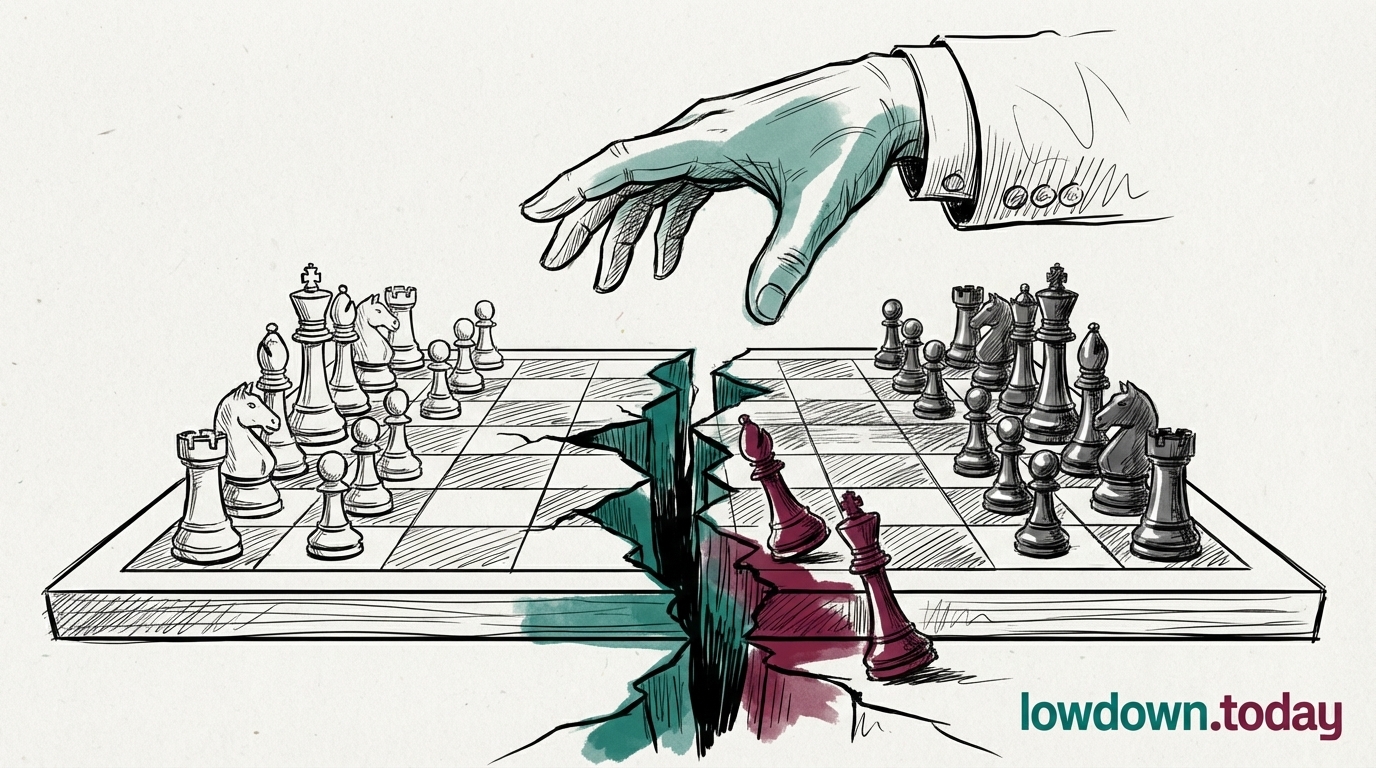
Digital Watch Observatory's tracking confirms the EU Tech Sovereignty Package has slipped twice; the Commission is now logged for adoption on Wednesday 27 May, with no official giving a public reason for either of the earlier misses.

ConflictDeveloping
Key takeaway

Two missed deadlines have let CISPE and OpenForum Europe shape the sovereignty agenda the Commission was meant to lead.

Digital Watch Observatory's tracking confirms the Tech Sovereignty Package has slipped twice 1. It was scheduled for March, pushed to April, and is now logged for Commission adoption on Wednesday 27 May. No Commission official has publicly explained either delay. The package, when it lands, is meant to carry the Cloud and AI Development Act (CAIDA), Chips Act 2, an open-source strategy and an artificial-intelligence-in-energy roadmap.

Forum Europe's Policy Signal, published on 23 April under an explicit AI-assisted-transcription disclaimer, named three "clearest forward commitments" from the Brussels stage : the package itself, an auditable sovereignty framework with a catalogue, and a pilot European Union-level open-source fund. Two of the three did not come from the Commission. The cloud trade body CISPE shipped its rival framework the next day , and the fund remains a proposal by OpenForum Europe, the European University Institute and Fraunhofer ISI, asking for €350 million and modelled on Germany's existing Sovereign Tech Fund 2. Michal Kobosko MEP hosted a Parliament breakfast for it on 28 January 2026. No commissioner has named it as a priority. No host institution has been designated.

the Commission has been quiet on its own targets too. Brussels has stopped restating the Chips Act goal of 20 percent global semiconductor market share in any post-Magdeburg communication , and the Magdeburg cancellation itself is the unanswered absence the package was meant to address. The European Parliament had assigned no rapporteur to CAIDA as of 20 April, leaving the Council and Commission without a Parliament counterparty in the run-up to adoption. Each missed deadline extends the window in which non-Commission actors set the de facto sovereignty standard the legislation was supposed to establish.

Deep Analysis

In plain English

The EU's Tech Sovereignty Package is a set of laws and strategies aimed at reducing Europe's dependence on US and Chinese technology companies. It covers things like AI infrastructure, chip manufacturing, and rules for using open-source software in government. The European Commission, which drafts EU laws, was supposed to approve this package in March 2026, then April, but has now pushed the date to 27 May 2026 without publicly explaining why. This matters because other EU rules, including new AI regulations, are already coming into force in August 2026. If the support measures for European tech companies are still stuck in draft form when those obligations kick in, European firms face the costs of compliance without receiving the subsidies or advantages the package was meant to provide.

Deep Analysis
Root Causes

The CAIDA component introduces state-aid-adjacent preferential procurement provisions that require DG COMP sign-off. DG COMP's current commissioner has publicly resisted industrial-policy carve-outs that conflict with competition rules. Until that interservice conflict is resolved, the whole package stalls.

The Chips Act 2 component depends on funding commitments from member states. Germany, France, and the Netherlands have not confirmed their matched-funding shares for the proposed €10bn Chips Manufacturing Fund. Without those national commitments, the Commission cannot legally table state-aid amounts in the draft text.

The AI-in-energy roadmap is effectively a hostage: it is the least controversial component but it is bundled with the most controversial, meaning it cannot advance independently.

What could happen next?
  • Risk

    If CAIDA's procurement-preference clause is dropped to clear the 27 May deadline, European cloud and AI vendors lose the most commercially significant provision in the package, effectively making it a roadmap document rather than actionable industrial policy.

    Short term · 0.76
  • Consequence

    A third consecutive missed deadline would damage the Commission's credibility with European tech industry stakeholders who built 2026 investment and hiring plans around the package's original March timeline.

    Immediate · 0.82
  • Risk

    The interservice conflict between DG COMP and DG GROW over CAIDA procurement preferences will resurface in Council negotiations even if resolved at Commission level, extending the legislative timeline by six to twelve months beyond any adoption date.

    Medium term · 0.73
First Reported In

Update #4 · CISPE moves first; Brussels misses again

OpenForum Europe· 7 May 2026
Read original
Different Perspectives
Lloyd's of London
Lloyd's of London
The Joint War Committee left Hormuz war-risk premiums at $10-14 million per voyage on 25 May, declining to move on Brent's 5% fall. The JWC's protocol requires a UN Security Council resolution or bilateral government certification letter before de-listing, and neither has arrived: a verbal understanding does not satisfy the formal condition the reinsurance market's treaty terms require.
Gulf Arab producers
Gulf Arab producers
Saudi Arabia and UAE depend on Hormuz for their own crude exports; Aramco CEO Nasser has warned no oil market recovery arrives until 2027 if the blockade continues past mid-June. Monday's $98.96 Brent settlement shortens nothing for Gulf producers without a signed instrument and a Pentagon mine-clearance timeline that runs up to six months post-ceasefire.
Qatar
Qatar
Qatar holds $12bn of frozen Iranian assets at the centre of the sequencing dispute but cannot release them without explicit US Treasury authorisation, given the original freeze was a US instrument. As the asset-holding state, Qatar's leverage is real but passive: it is the escrow holder, not the decision-maker, and any resolution requires US Treasury sign-off that Trump has withheld.
Pakistan
Pakistan
With both Prime Minister Sharif and army chief Munir simultaneously in Beijing on 25 May, Pakistan has for the first time consolidated its civilian and military mediation tracks under China's roof. Munir's direct Tehran-to-Beijing flight signals that the security and financial threads of the sequencing problem are now being worked in parallel rather than sequentially.
China
China
Beijing hosted Pakistan's principal mediators and Iran's China envoy Ghalibaf simultaneously on 25 May while its banking regulator capped new state-bank lending to five sanctioned refiners. China is simultaneously the most credible third-party underwriter of the $12bn sequencing and the state whose institutions face live OFAC secondary-sanctions exposure if the deadlock persists through GL V's expiry.
United States
United States
Trump posted on 24 May that the blockade holds until a deal is certified and signed, ruling out the informal MOU structure both sides had been building. The 'certified, and signed' condition is the first operational bar Trump has attached in 87 days, but it arrived without an executive instrument, maintaining the gap between posted ultimatum and signed US policy.