Skip to content
Briefings are running a touch slower this week while we rebuild the foundations.See roadmap
Iran Conflict 2026
10APR

House kills War Powers Resolution on Iran

1 min read
08:05UTC

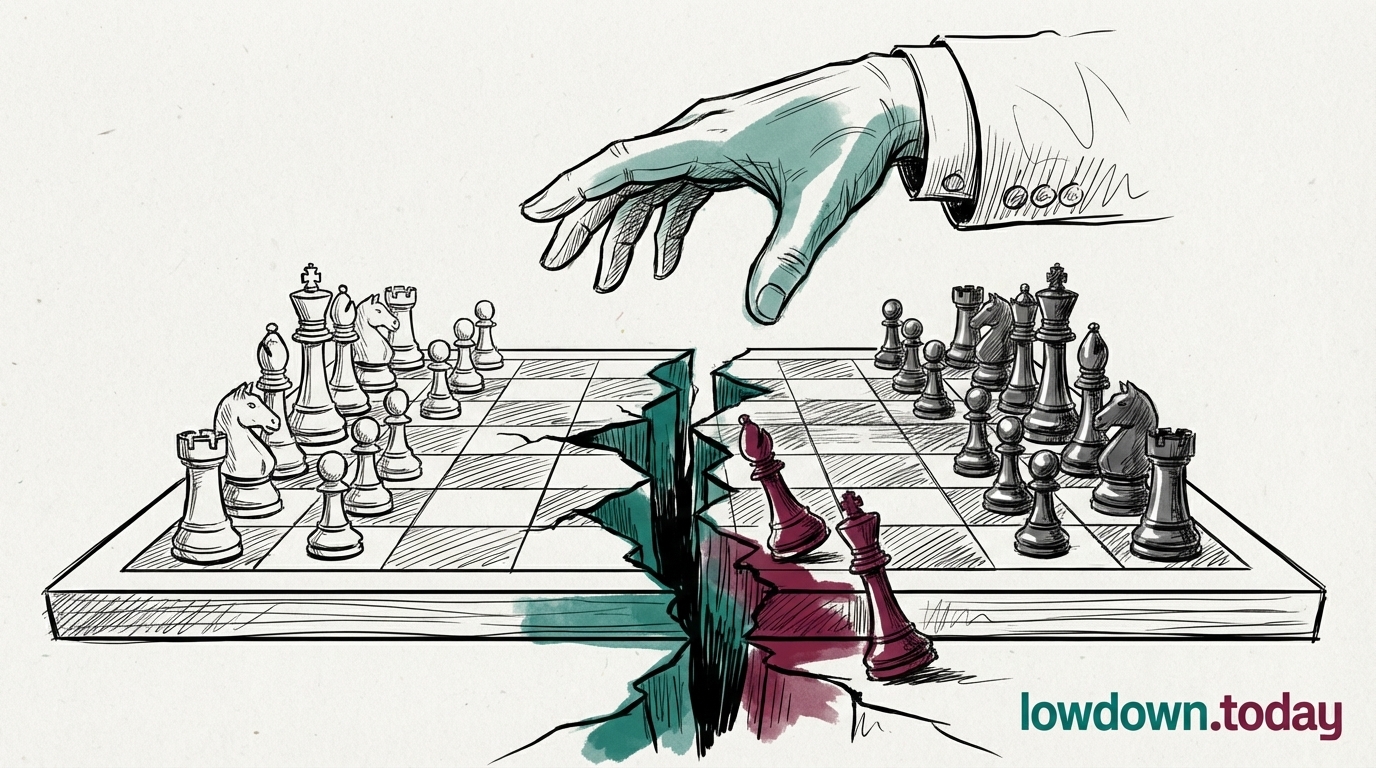
The House narrowly rejected a War Powers Resolution on Iran 219-212 on Saturday; Senate Democrats are forcing their own vote this week as the 60-day clock approaches 29 April.

ConflictDeveloping
Key takeaway

Three deadlines converge in 10 days with zero executive instruments behind them.

The House of Representatives rejected the War Powers Resolution (WPR) on Iran 219-212 on Saturday. Seven votes changed would have passed it. Senate Democrats, led by Mark Warner, announced they are forcing a vote this week. Even if the Senate passes a resolution, Trump would veto, and override requires two-thirds .

The blockade announcement on Sunday, which followed the House vote, adds a new question. A naval blockade is an act of war under international law. Whether it constitutes a fresh introduction of forces into hostilities, requiring separate congressional notification under the WPR, is a live legal question .

GL-U lapses this Saturday . The ceasefire window closes the following Wednesday. The WPR 60-day clock runs out around 29 April. All three fall within a 10-day window; none has a presidential instrument behind it.

Deep Analysis

In plain English

The War Powers Resolution is a law from 1973 that says the US president must get approval from Congress within 60 days of sending troops into combat, or withdraw them. It was passed after the Vietnam War, when Congress felt it had lost control of military decisions. The 60-day clock on the Iran war started on 28 February when strikes began. That means Congress's deadline to act falls around 29 April. On 12 April, the House of Representatives voted 219-212 to reject a resolution that would have required Trump to end the military action. That is a razor-thin margin: just four votes from passing. Senate Democrats are now forcing their own vote in the upper chamber this week. Even if the Senate passes it, Trump would almost certainly veto it, and overriding a veto requires two-thirds of Congress, which the Democrats do not have. The practical effect is political: Democrats are creating a public record of opposition without enough votes to stop the blockade.

What could happen next?
  • Precedent

    A 219-212 House vote on War Powers Resolution establishes the narrowest majority ever to reject WPR application to an active US combat operation, weakening the precedent for future congressional oversight.

    Long term · Assessed
  • Risk

    The blockade, announced after the House WPR vote, may constitute a new introduction of forces into hostilities, restarting the 48-hour notification clock and creating separate legal exposure.

    Immediate · Medium
  • Consequence

    Three converging deadlines, GL-U expiry 19 April, ceasefire 22 April, WPR clock 29 April, give Congress and allies a compressed window before the legal architecture collapses simultaneously.

    Short term · Assessed
First Reported In

Update #67 · Trump blockades Iran on a tweet

NBC News· 13 Apr 2026
Read original
Different Perspectives
Lloyd's of London
Lloyd's of London
The Joint War Committee left Hormuz war-risk premiums at $10-14 million per voyage on 25 May, declining to move on Brent's 5% fall. The JWC's protocol requires a UN Security Council resolution or bilateral government certification letter before de-listing, and neither has arrived: a verbal understanding does not satisfy the formal condition the reinsurance market's treaty terms require.
Gulf Arab producers
Gulf Arab producers
Saudi Arabia and UAE depend on Hormuz for their own crude exports; Aramco CEO Nasser has warned no oil market recovery arrives until 2027 if the blockade continues past mid-June. Monday's $98.96 Brent settlement shortens nothing for Gulf producers without a signed instrument and a Pentagon mine-clearance timeline that runs up to six months post-ceasefire.
Qatar
Qatar
Qatar holds $12bn of frozen Iranian assets at the centre of the sequencing dispute but cannot release them without explicit US Treasury authorisation, given the original freeze was a US instrument. As the asset-holding state, Qatar's leverage is real but passive: it is the escrow holder, not the decision-maker, and any resolution requires US Treasury sign-off that Trump has withheld.
Pakistan
Pakistan
With both Prime Minister Sharif and army chief Munir simultaneously in Beijing on 25 May, Pakistan has for the first time consolidated its civilian and military mediation tracks under China's roof. Munir's direct Tehran-to-Beijing flight signals that the security and financial threads of the sequencing problem are now being worked in parallel rather than sequentially.
China
China
Beijing hosted Pakistan's principal mediators and Iran's China envoy Ghalibaf simultaneously on 25 May while its banking regulator capped new state-bank lending to five sanctioned refiners. China is simultaneously the most credible third-party underwriter of the $12bn sequencing and the state whose institutions face live OFAC secondary-sanctions exposure if the deadlock persists through GL V's expiry.
United States
United States
Trump posted on 24 May that the blockade holds until a deal is certified and signed, ruling out the informal MOU structure both sides had been building. The 'certified, and signed' condition is the first operational bar Trump has attached in 87 days, but it arrived without an executive instrument, maintaining the gap between posted ultimatum and signed US policy.