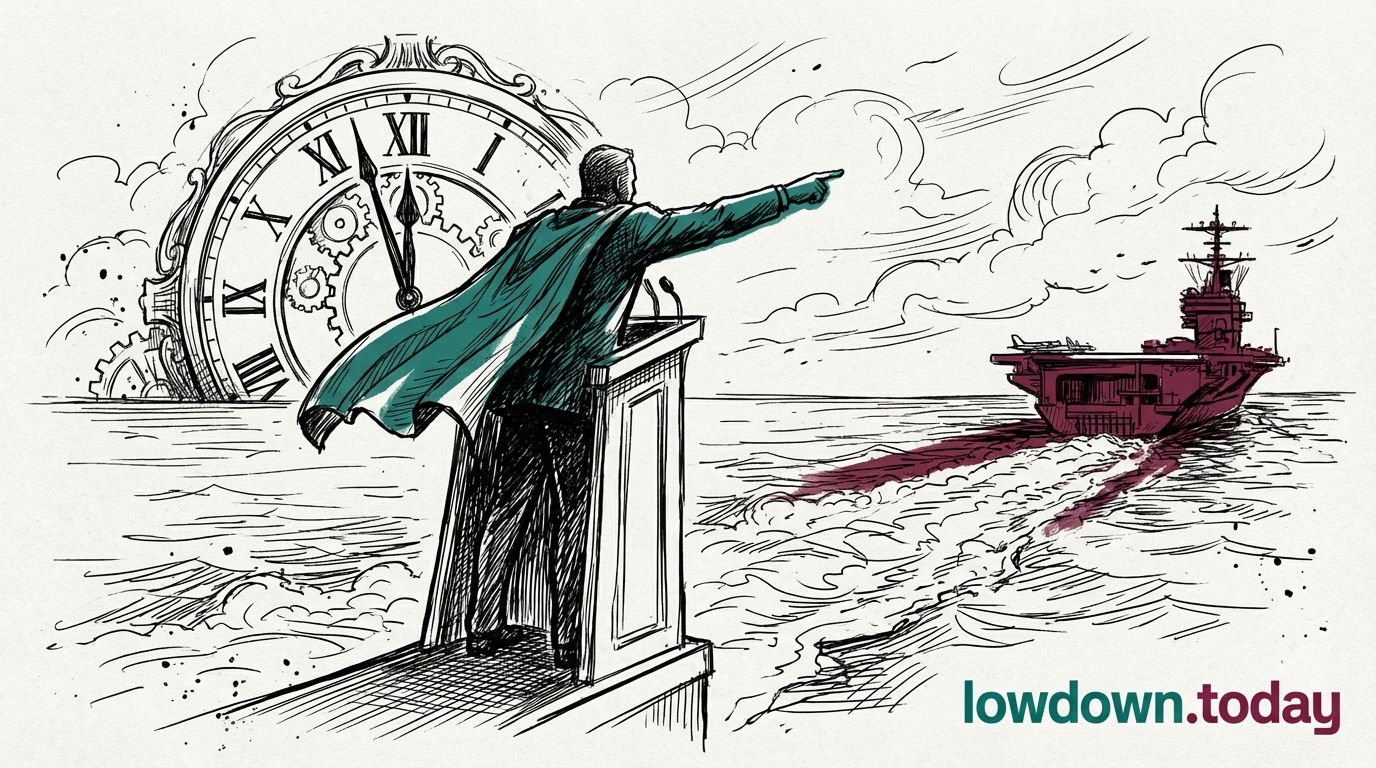
Ali Vaez of the International Crisis Group characterised six weeks of war in a single sentence: "In the attempt to prevent Iran from developing a weapon of mass destruction, the US handed Iran a weapon of mass disruption"1. Vaez is one of the few named analysts to have called both the initial Hormuz closure and the toll system's permanence in advance, which gives the framing weight beyond the soundbite. The structural inversion he is describing is concrete: the leverage Washington went to war to remove has instead been codified into Iranian domestic law and projected outwards through a working customs system. The weapon Vaez names is the one Tehran is now asking the US to legally ratify.
7APR
Vaez: a weapon of mass disruption
1 min read
10:19UTC
Ali Vaez of the International Crisis Group summarised six weeks of war in a single sentence: in trying to deny Iran a weapon of mass destruction, the US handed it a weapon of mass disruption.
ConflictDeveloping
Key takeaway
The leverage the US went to war to remove has been codified into Iranian law and projected outwards.
Deep Analysis
In plain English
Ali Vaez of the International Crisis Group , one of the few analysts who correctly called the Hormuz closure and the toll system's permanence , summarised the war in a single sentence: the US went to war to stop Iran building a weapon of mass destruction, and in doing so handed Iran a weapon of mass disruption. The weapon he means is the Hormuz toll system: a working customs authority over the world's most important oil chokepoint, codified into Iranian domestic law, already collecting revenue from French and Japanese ships. The leverage the US meant to remove has instead been legally embedded. That is what Iran is now asking Washington to ratify.
What could happen next?
- Meaning
Vaez's framing captures the structural inversion that has occurred: the war's stated objective , removing Iran's leverage , has instead produced the codification of a new and durable form of leverage that will outlast any ceasefire arrangement not explicitly structured to dismantle it.
First Reported In
Update #61 · Carriers retreat; Iran codifies Hormuz
Forces News· 7 Apr 2026
Read original →Different Perspectives

Wang Yi
China's foreign minister and Djibouti's issued a joint communique on 21 October saying the war should not reach the Horn of Africa and stressing free navigation through Bab al-Mandeb. The text names neither Iran nor the Houthis, and Djibouti hosts China's only overseas military base, opposite the Yemeni coast.

Ministry of External Affairs
India's foreign ministry called the attacks on Saudi civilian and energy sites "unacceptable" on 22 October and said they must stop at once. An Indian died at Dammam, Indians were injured there and at Shaybah, and about 4,000 Umrah pilgrims remain stranded by one MP's count.

Iraq
Iraq closed the al-Sheeb crossing with Iran to travellers and trucks from 21 October and said other crossings would close gradually. Unlike September's closure, which ended on a staged timetable, this one has none, and Iran's interior ministry said it received no notice.

Abdel Fattah el-Sisi
Egypt's president said on 21 October that Cairo's support would "defend Saudi territory, and does not include an attack on Yemen". Araghchi warned that Egyptian involvement would further complicate the situation, and Cairo's limit matches the one Ankara set on 8 October against attacking another state's soil.

UK Ministry of Defence
The MoD said on 20 October that RAF Typhoons over Saudi Arabia will not strike the Houthis, but extended tanker support to Saudi operations including against Houthi targets in Yemen. The tanker line sets no limit on strikes, so British aircraft may now refuel Saudi jets on bombing runs.

Turkey
Ankara sent the Mecca Joint Defence Agreement to parliament around 20 October, and its published text treats an attack on one party as an attack on all. Article 16 brings it into force only on the last ratification, so the 5 October invocation in Riyadh could not yet bind Turkey.
Written with AI from Lowdown's published reporting. Not individually reviewed by an editor. Editorial standards.