Skip to content
Briefings are running a touch slower this week while we rebuild the foundations.See roadmap
Iran Conflict 2026
7APR

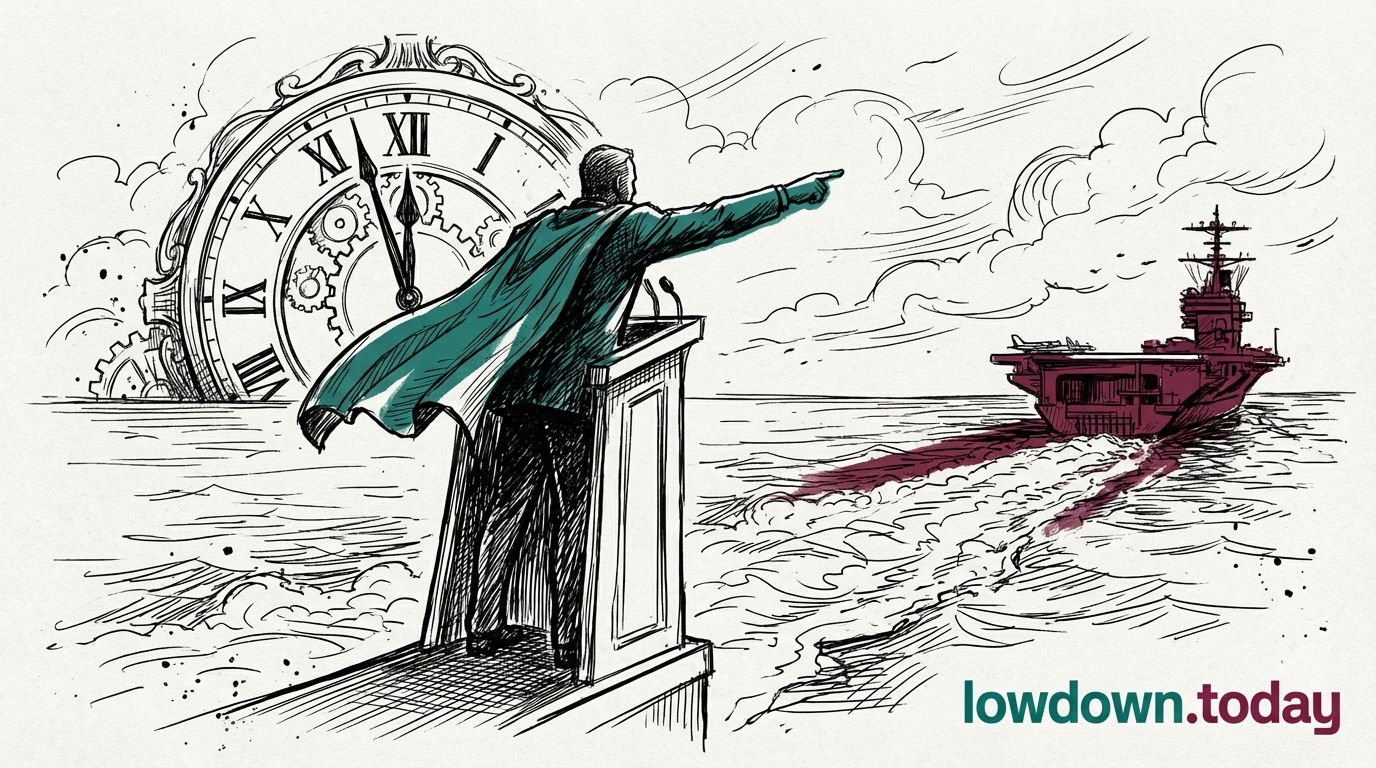
Trump Extends Hormuz Deadline for Fifth Time

2 min read
10:19UTC

Five deadlines in six weeks, zero enforcement. The coercive mechanism has become diplomatic cover for continued talks.

ConflictAssessed
Key takeaway

Five deadlines, zero enforcement; the threat is now the extension.

The 6 April power-grid deadline was superseded by a 48-hour Hormuz ultimatum, which has now been extended again to Tuesday 8pm ET (8 April). This is the fifth reformulation of the same threat in six weeks.

The pattern: 16 March to 23 March. 23 March to 6 April. 6 April replaced by 48-hour ultimatum expiring 7 April. 7 April extended to Tuesday. Each deadline arrived with escalating rhetoric. None produced action. Trump told Axios the US is in deep negotiations and threatened to blow up everything if no deal by Tuesday. The words are documented. The action is the extension itself.

Coercive diplomacy requires credible commitment to escalation. Five extensions in 42 days is the opposite of credibility. What the pattern reveals is that Trump has no appetite for the energy infrastructure campaign he threatens. Each extension is a policy decision disguised as a tactical pause. Iran's General Aliabadi dismissed Trump as helpless, nervous, unbalanced and stupid. The deadline no longer functions as leverage; it functions as domestic political communication.

The Islamabad Accord's timing is not coincidental. It provides Trump with a potential face-saving exit from the deadline cycle. If the accord gains traction, Tuesday's deadline can be reframed as a diplomatic success rather than a sixth capitulation.

Deep Analysis

In plain English

Trump has threatened to bomb Iran's power grid five times in six weeks and extended the deadline every time. The threats no longer carry weight because Iran knows they will not be acted on. The new peace plan from Pakistan may give Trump a way to step back from the deadlines without looking like he backed down.

Deep Analysis
Root Causes

US coercive diplomacy required credible escalation. Five deadline extensions destroyed that credibility. The gap between rhetoric and action has become the defining feature of US policy in this conflict, creating the diplomatic vacuum Pakistan filled.

Escalation

Mixed. The extension itself is de-escalatory (no strike). But each extension without consequence makes the eventual choice between striking and permanently abandoning the threat more binary. The Islamabad Accord offers a third path.

What could happen next?
  • US coercive credibility in the Middle East is materially damaged for the remainder of this conflict

  • Trump faces growing political exposure from both anti-war and hawkish constituencies

First Reported In

Update #60 · Pakistan's Ceasefire Plan Fills the Vacuum

Time· 6 Apr 2026
Read original
Different Perspectives
Islamabad (Pakistan Armed Forces and Foreign Ministry)
Munir's cancellation reflects Islamabad's assessment that no bridging formula survives the collision of Khamenei's uranium directive, Rubio's Hormuz red line, and the sequencing gap simultaneously; Naqvi's relay role signals continued Pakistani engagement without a mandate to close any of the three gaps.
Lloyd's of London war-risk market
Published PGSA coordinates give underwriters the cartographic input to model tanker route exposure inside the claimed zone; OFAC's Sunday GL V ruling determines whether Hengli-Singapore dollar-clearing routes carry secondary-sanctions risk from Monday, adding a compliance layer to the existing kinetic war-risk premium.
Hengaw Human Rights Organisation
Zaleh's trial lasted 'only a few minutes' before a conviction on PDKI membership charges at Naqadeh; the pattern of solitary detention, coerced confession, and minutes-long hearing is consistent with wartime political-charge architecture the organisation has documented across the Kurdish northwest.
Gulf Arab states (UAE, Bahrain, Kuwait)
The UAE has not published counter-coordinates to the PGSA's Hormuz zone map, leaving Emirati silence as the maritime-law response to Iran's charted boundary claim. Abu Dhabi's published position now defaults by omission toward implied acceptance of the zone's cartographic fact.
Beijing's Ministry of Commerce
MOFCOM's blocking order covers Hengli and four other designated refineries on the mainland but does not extend to the dollar-clearing layer in Singapore, making Sunday's GL V expiry the first live test of whether Beijing's sanctions-defiance architecture reaches the place where dollars settle.
The White House
The White House
Trump's verbal track on Iran has produced no signed Iran-specific presidential instrument across 84 days; both financial-sector EOs signed on 19 May are unrelated to Hormuz or the IRGC. Rubio's public naming of the Hormuz toll architecture as a deal-killer is the administration's most concrete new position this week.