Skip to content
Briefings are running a touch slower this week while we rebuild the foundations.See roadmap
Iran Conflict 2026
5APR

CENTCOM blockade tally hits 48 vessels

3 min read
12:52UTC

CENTCOM reported 48 vessel redirections by 3 May, four more than the 44 logged on 30 April, in the same three-day window the command was staging the Project Freedom escort fleet.

ConflictDeveloping
Key takeaway

CENTCOM runs inbound blockade and outbound escort from the same chokepoint with no published rule distinguishing them.

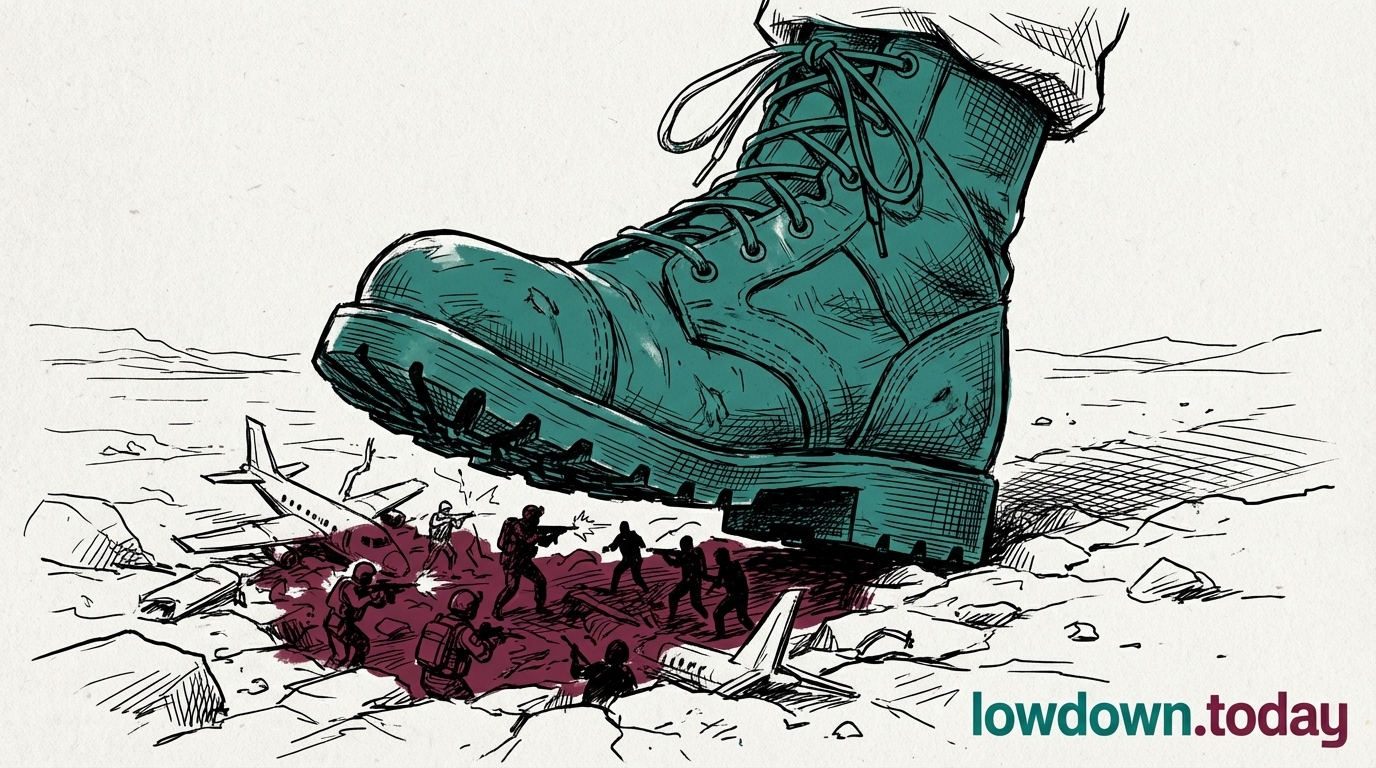
Admiral Brad Cooper's CENTCOM command reported 48 vessel redirections under the Hormuz blockade as of 3 May 2026, up from 44 on 30 April . 1 Four extra interdictions landed in the same three-day window CENTCOM was preparing the 4 May launch of Project Freedom , a 9.1 per cent increase against the 30 April figure. The two operations now run from the same combatant command in the same chokepoint with no public reconciliation of the dual postures.

The blockade points inbound. Vessels routing to Iranian ports get queried, redirected, or turned back. The 30 April CENTCOM tally recorded 44 vessels carrying 69 million barrels of crude diverted from Iranian terminals . Project Freedom points outbound. Stranded foreign-flag vessels caught inside the strait, by IRGC small-boat activity or by P&I clubs withdrawing war-risk cover, get escorted out. The same destroyers, the same operations centre, the same standing CENTCOM authority. No published rule distinguishes the two postures; no published criterion tells a captain whether an inbound tanker is a blockade target or a Project Freedom client.

CENTCOM has not published the missing rule for operational reasons, not editorial ones. Escort missions normally follow a written rule of engagement and a presidential finding under Title 10 or a UN Security Council mandate; Project Freedom has neither . The blockade runs under standing CENTCOM authority and the War Powers Resolution "hostilities terminated" letter that Trump sent Speaker Johnson and President Pro Tempore Grassley on 1 May. The first vessel queried by an IRGC small-boat will test which document the destroyer's captain reads, and which posture takes precedence when the tanker is flying the wrong flag.

The pace of interdictions also matters. Four additional redirections in three days suggests the inbound blockade is not slowing despite the diplomatic Pakistan channel opening on the same Sunday. CENTCOM is layering the escort track on top of the interdiction track rather than replacing it. Brent Crude is currently trading $21 below the 30 April high; the market has not yet priced the dual-posture risk.

Deep Analysis

In plain English

While the US was preparing to escort ships through the Strait of Hormuz starting 4 May, the same US military command was still blocking other ships from reaching Iranian ports, adding four more vessel redirections in three days. Both operations run from CENTCOM, the US military command responsible for the Middle East. Think of it like a traffic police unit that is simultaneously stopping certain cars from entering a road while also trying to escort other cars through the same road. The two jobs are being done by the same team with no public explanation of how they coexist.

Deep Analysis
Root Causes

The simultaneous blockade escalation and escort staging traces to CENTCOM's command structure: Admiral Cooper has authority under the Unified Command Plan to execute both the blockade and the escort without a separate presidential finding for each. The absence of any coordinating instrument between the two missions means each proceeds on its own operational logic without a mechanism to reconcile conflicts between them.

The four additional interdictions during Project Freedom staging also reflect the blockade's own operational momentum: CENTCOM's interdiction teams were already operating on a standing intercept posture established in mid-April, and no order was issued to pause that posture while escort operations were staged. The 9.1% three-day increase is the interdiction team doing its job while the escort team does its job, without any higher-level instruction to deconflict.

Escalation

The combination of four additional interdictions and Project Freedom staging means CENTCOM increased its coercive footprint in the same window it deployed the largest US force of the conflict. The IRGC's 30-day ultimatum and Majlis NSC ceasefire-violation ruling were issued the day these four additional interdictions were added. The causal sequence is not publicly documented, but the timing suggests the IRGC ultimatum responded to the combined interdiction-and-staging signal.

What could happen next?
  • Risk

    Operating a blockade and escort mission from the same command without reconciling their rules of engagement creates the conditions for a friendly fire or rules-of-engagement confusion incident if CENTCOM must simultaneously defend an escorted vessel and enforce blockade rules against an adjacent ship.

  • Consequence

    The 48-vessel interdiction count is the operational metric Iran's 30-day ultimatum is responding to. Each additional interdiction beyond 48 narrows the window for a diplomatic resolution before the IRGC deadline expires.

First Reported In

Update #88 · 15,000 troops unsigned; Pakistan carries first reply

Stars and Stripes· 4 May 2026
Read original
Different Perspectives
IAEA
IAEA
Director General Rafael Grossi appeared in person at the UNSC on 19 May and warned that a direct hit on an operating reactor 'could result in very high release of radioactivity'. The session produced a condemnation record but no resolution, and the Barakah perimeter was already struck on 17 May.
Hengaw (Kurdish rights monitor)
Hengaw documented three judicial executions and the detention of Kurdish writer Majid Karimi in Tehran on 19 May, establishing Khorasan Razavi province as the newest geography in Iran's wartime judicial record. The organisation's Norway-based operation continues to surface a domestic repression track running in parallel with every diplomatic and military development.
India
India
Six India-flagged vessels conducted a coordinated cluster transit under PGSA bilateral assurances during the 17 May window, paying no yuan tolls. New Delhi's inclusion in Iran's state-to-state passage track insulates Indian energy supply without requiring endorsement of the PGSA's yuan-toll architecture or alignment with the US coalition.
Pakistan
Pakistan
Pakistan is the only functioning diplomatic bridge between Tehran and Washington. Its role is relay, not mediation in the settlement sense: it conveyed Iran's 10-point counter-MOU in early May, relayed the US rejection, and is now passing 'corrective points' in the third documented exchange of this sub-cycle without either side working from a shared text.
UK and France (Northwood coalition)
Twenty-six coalition members have published no rules of engagement eight days after the Bahrain joint statement; Lloyd's underwriters have conditioned war-risk reopening on written ROE from either Iran or the coalition. Italian and French mine-countermeasures deployments are operating on the in-water clearance task CENTCOM Admiral Brad Cooper's 90% mine-stockpile claim does not address.
Saudi Arabia
Saudi Arabia
Riyadh has not publicly commented on the Barakah strike or the 50-47 discharge vote. Saudi output feeds the IEA's $106 base case; the $5 Brent premium above that model reflects institutional uncertainty no Gulf producer can compress through supply adjustment alone.