Skip to content
Welcome, thoughtbot's Giant Robots listeners!Start here
Iran Conflict 2026
4APR

Grid strike deadline looms over Iran

2 min read
09:24UTC

The third energy ultimatum expires on 6 April with no extension announced. Previous deadlines were extended days in advance.

ConflictAssessed
Key takeaway

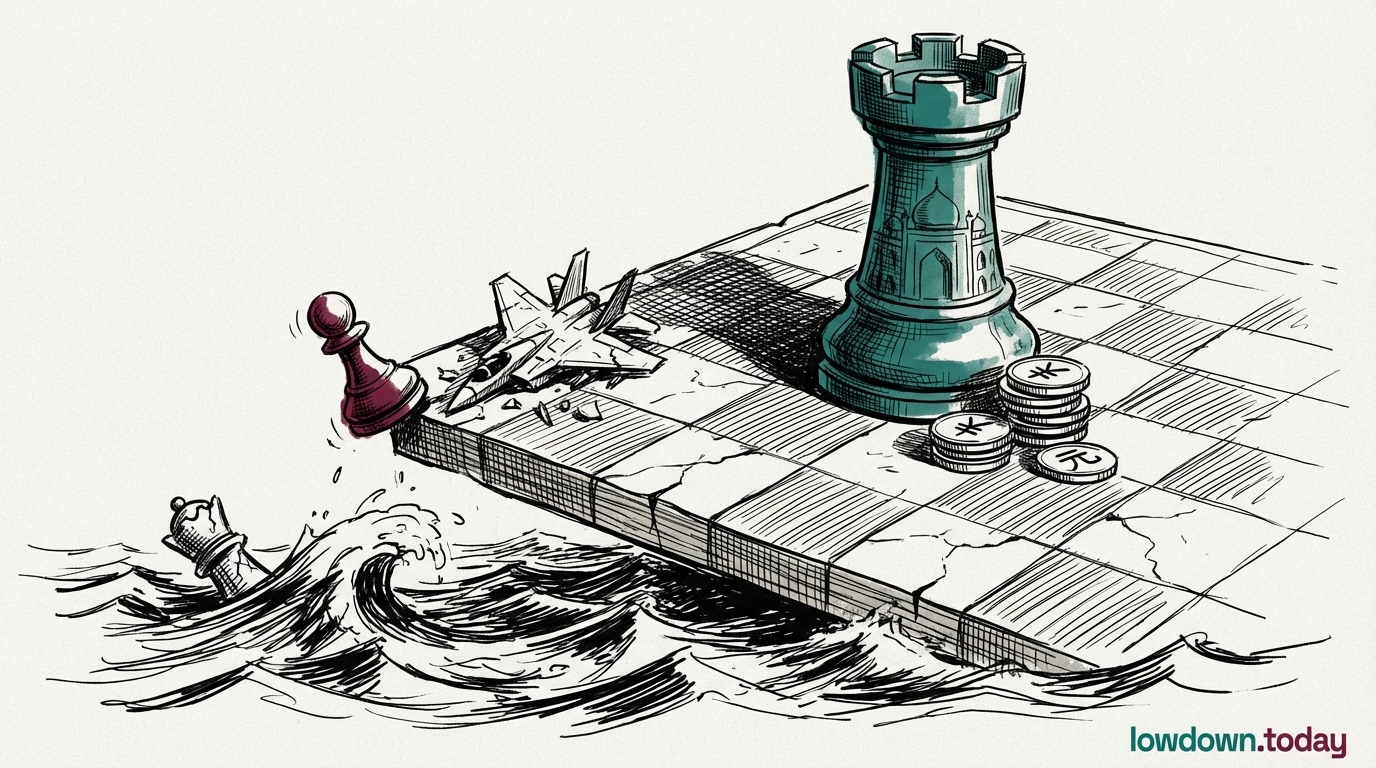
Enforcing the deadline fractures alliances; extending it again exhausts the threat.

Trump's third energy deadline expires at 8pm EDT on 6 April. Iran must reopen the strait of Hormuz or face strikes on 15 identified power grid nodes, a scenario analysts project would leave Iran without electricity until 2027. No extension has been announced as of 4 April morning. Prior extensions came two to three days in advance.⁠1

The deadline arrives in a changed context. France and Japan just transited Hormuz by paying Iran. The US lost its first aircraft. Iran's Majlis voted 221-0 to suspend IAEA cooperation. The previous two deadlines (16 March, 23 March) were extended; the third was set for 6 April on 27 March. Each extension eroded the threat's credibility.

Three outcomes: grid strikes, a fourth extension, or quiet abandonment. Enforcing it now would require strikes against civilian power infrastructure while allies actively pay Iran for passage. Not enforcing it would confirm the deadline mechanism is spent.

Deep Analysis

In plain English

Trump has three times set a deadline for Iran to reopen the strait of Hormuz or face strikes on its power grid. The third deadline expires on 6 April. The previous two were extended at the last minute. As of 4 April, no extension has been announced, but France and Japan just paid Iran to use the strait. If Trump enforces the deadline, he strikes civilian infrastructure while allies are doing deals with Iran. If he extends again, the threat stops meaning anything.

Deep Analysis
Root Causes

Each deadline extension was driven by allied pressure and the absence of a clear enforcement trigger. France, Germany, and the UK lobbied against grid strikes on civilian infrastructure at each previous extension.

The Pakistan-Vance back-channel before Kharazi's wounding provided a diplomatic off-ramp that justified delay. Neither factor has been resolved; both have worsened as France and Japan's transits signal the collective posture is already broken.

What could happen next?
  • Risk

    Grid strikes on civilian power infrastructure would trigger a European and UN response that fractures remaining alliance support for the campaign.

    Immediate · High
  • Consequence

    A fourth extension would confirm the deadline mechanism is exhausted, removing coercive pressure on Iran permanently within this conflict.

    Short term · High
  • Opportunity

    Quiet abandonment of the deadline, without announcement, could allow face-saving de-escalation if paired with a back-channel ceasefire signal from Pezeshkian.

    Short term · Low
First Reported In

Update #58 · First US aircraft fall over Iran

CNBC / Al Jazeera / NPR· 4 Apr 2026
Read original →
Different Perspectives
Wang Yi
Wang Yi
China's foreign minister and Djibouti's issued a joint communique on 21 October saying the war should not reach the Horn of Africa and stressing free navigation through Bab al-Mandeb. The text names neither Iran nor the Houthis, and Djibouti hosts China's only overseas military base, opposite the Yemeni coast.
Ministry of External Affairs
India's foreign ministry called the attacks on Saudi civilian and energy sites "unacceptable" on 22 October and said they must stop at once. An Indian died at Dammam, Indians were injured there and at Shaybah, and about 4,000 Umrah pilgrims remain stranded by one MP's count.
Iraq
Iraq
Iraq closed the al-Sheeb crossing with Iran to travellers and trucks from 21 October and said other crossings would close gradually. Unlike September's closure, which ended on a staged timetable, this one has none, and Iran's interior ministry said it received no notice.
Abdel Fattah el-Sisi
Egypt's president said on 21 October that Cairo's support would "defend Saudi territory, and does not include an attack on Yemen". Araghchi warned that Egyptian involvement would further complicate the situation, and Cairo's limit matches the one Ankara set on 8 October against attacking another state's soil.
UK Ministry of Defence
The MoD said on 20 October that RAF Typhoons over Saudi Arabia will not strike the Houthis, but extended tanker support to Saudi operations including against Houthi targets in Yemen. The tanker line sets no limit on strikes, so British aircraft may now refuel Saudi jets on bombing runs.
Turkey
Turkey
Ankara sent the Mecca Joint Defence Agreement to parliament around 20 October, and its published text treats an attack on one party as an attack on all. Article 16 brings it into force only on the last ratification, so the 5 October invocation in Riyadh could not yet bind Turkey.

Written with AI from Lowdown's published reporting. Not individually reviewed by an editor. Editorial standards.
