Skip to content
You can now search across every topic, entity and event.What's new
Iran Conflict 2026
4APR

ASML booms, Europe's fab gap holds

3 min read
09:24UTC

ASML raised full-year guidance to €43-45bn on 15 July, its second increase in two quarters, and dropped the export-control hedge it carried in Q1. The added capacity is booked for fabs in Taiwan, Korea and Arizona, not Europe.

ConflictDeveloping
Key takeaway

ASML is booming on AI demand, but its new capacity serves fabs outside Europe.

ASML raised its full-year 2026 guidance to €43-45bn on 15 July, its second increase in two quarters, and dropped the export-control language it had written into Q1 guidance. The Dutch firm in Veldhoven builds the lithography machines every advanced chipmaker depends on, and it has gone quiet on the risk that defined its previous quarter. None of the added strength reaches a European leading-edge fab. 1

The quarter beat expectations: €9.3bn in net sales, a 54.0% gross margin, €2.9bn of net income, and 86 lithography systems sold, up from 67 in Q1. The earlier Q1 range of €36-40bn had sat €300m below analyst consensus . In that first-quarter release, chief executive Christophe Fouquet wrote that guidance "accommodates potential outcomes of ongoing discussions around export controls", a line that wrote Washington's trade policy into ASML's forward numbers. The Q2 release and earnings call carried no such hedge, even with the MATCH Act, the US bill to govern ASML's deep ultraviolet (DUV) lithography sales to China, live in Congress since 24 June . 2

Fouquet attributed the raise to demand for advanced logic and memory chips, the processors that train and run AI systems. China guided at roughly 20% of full-year sales, close to Q1's 19% and far below the 36% of late 2025, so the collapse that defined the Q1 story has stabilised rather than deepened. ASML is adding 30% to its 2026 low-numerical-aperture (low-NA) extreme ultraviolet (EUV) capacity, from about 65 units to about 85, for delivery in 2027, with matching expansion under study for its DUV immersion tools.

Those tools serve the fabs that already lead the world: TSMC in Taiwan, Samsung in South Korea and US plants in Arizona. No new European leading-edge fab has been announced to receive them. ASML builds the tools; the most advanced chips get printed elsewhere, and an order book running well ahead of last year does nothing to close that distance .


Deep Analysis

In plain English

ASML is a Dutch company that makes the machines used to print the tiny circuits onto computer chips. Only ASML makes the newest type, called EUV (extreme ultraviolet) lithography systems, so nearly every advanced chip in the world, from smartphones to AI processors, depends on its equipment. On 15 July, ASML told investors it now expects to sell €43-45bn worth of equipment this year, up from its earlier €36-40bn forecast, driven largely by chipmakers building capacity for AI processors. ASML also stopped warning investors about the risk that new US export rules could block some of its China sales, a sign it feels more confident about that risk than it did in April, even though a proposed US law, the MATCH Act, could still tighten those restrictions.

Deep Analysis
Root Causes

ASML holds a global monopoly on EUV lithography, the only tool capable of printing chips below roughly 7 nanometres, so demand from AI-driven leading-edge fab expansion flows through one company regardless of where the fab sits.

Europe has no domestic customer for ASML's most advanced EUV tools: the fabs actually running them are in Taiwan, South Korea and the US. That means this quarter's results measure Asian and American capital spending, not European fab capacity, even though the machines themselves are built in Veldhoven.

What could happen next?
  • Consequence

    A further tightening of the MATCH Act would directly cut into ASML's roughly 20% China revenue share without affecting its AI-driven order book elsewhere.

  • Risk

    Dropping the export-control hedge from guidance removes an early-warning signal for investors if the MATCH Act does pass.

First Reported In

Update #12 · ASML's tool boom skips Europe's logic gap

ASML· 16 Jul 2026
Read original
Causes and effects
This Event
ASML booms, Europe's fab gap holds
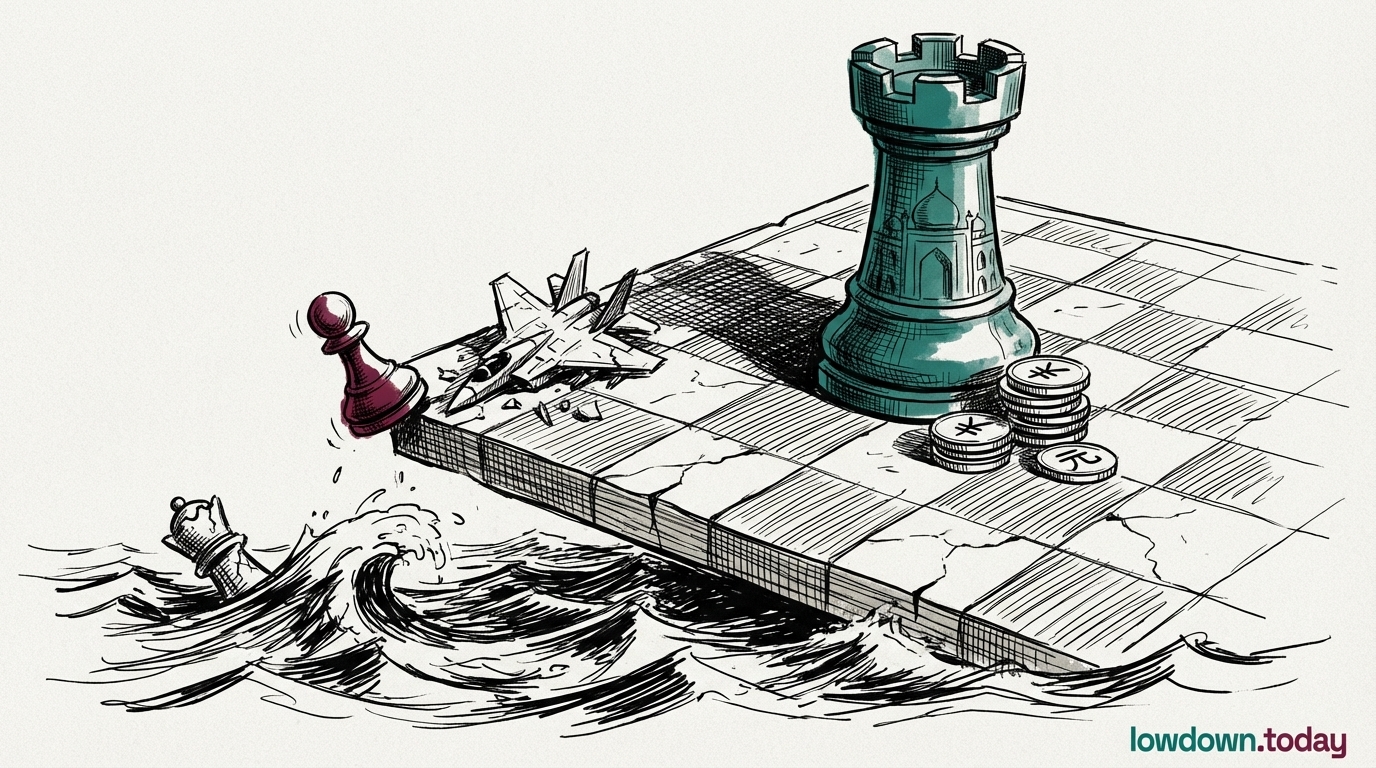
ASML's record quarter widens rather than narrows the gap between European tool-making and European chip-making.
Different Perspectives
Oil traders
Oil traders
Sent Brent down 2.29 per cent to $98.38 a barrel on reports that mediation was reviving, moving the price on CENTCOM's quiet night rather than on Trump's same-day promise of a bigger operation with no deadline attached.
Iran
Iran
An Iranian official called the same mediation account completely misleading, denying it received any US proposal via Baghdad on the same day Iraq denied delivering one, leaving neither denial able to settle what actually passed between the two capitals.
Iraq
Iraq
Called groundless the New York Times account that its prime minister carried a US ceasefire proposal to Tehran, a denial that also protects Baghdad's effort to avoid becoming a party to a war fought by aircraft it does not control.
OHCHR
OHCHR
Recorded 17 civilian seafarer deaths since the war began, a population neither the Pentagon nor Iran's Health Ministry counts in its own tally, and called for urgent action on 6,000 crew stranded across roughly 400 vessels in the Strait of Hormuz.
Houthis
Houthis
Enforced the blockade on Saudi-linked shipping it declared on 20 July by hitting the NCC Masa and then an Aramco facility at Jazan, moving from radio warnings to strikes on land after four days without a confirmed hit.
Saudi Arabia
Saudi Arabia
Struck Houthi military sites near Hodeidah the same day the NCC Masa was hit, while its coalition spokesman insisted Hodeidah, Ras Issa and Salif all remain open to navigation. The distinction protects the ports Yemen's population depends on for food and fuel even while punishing the group behind the tanker strike.



