Skip to content
Briefings are running a touch slower this week while we rebuild the foundations.See roadmap
Iran Conflict 2026
27MAR

Google fine stuck on von der Leyen's desk

3 min read
14:13UTC

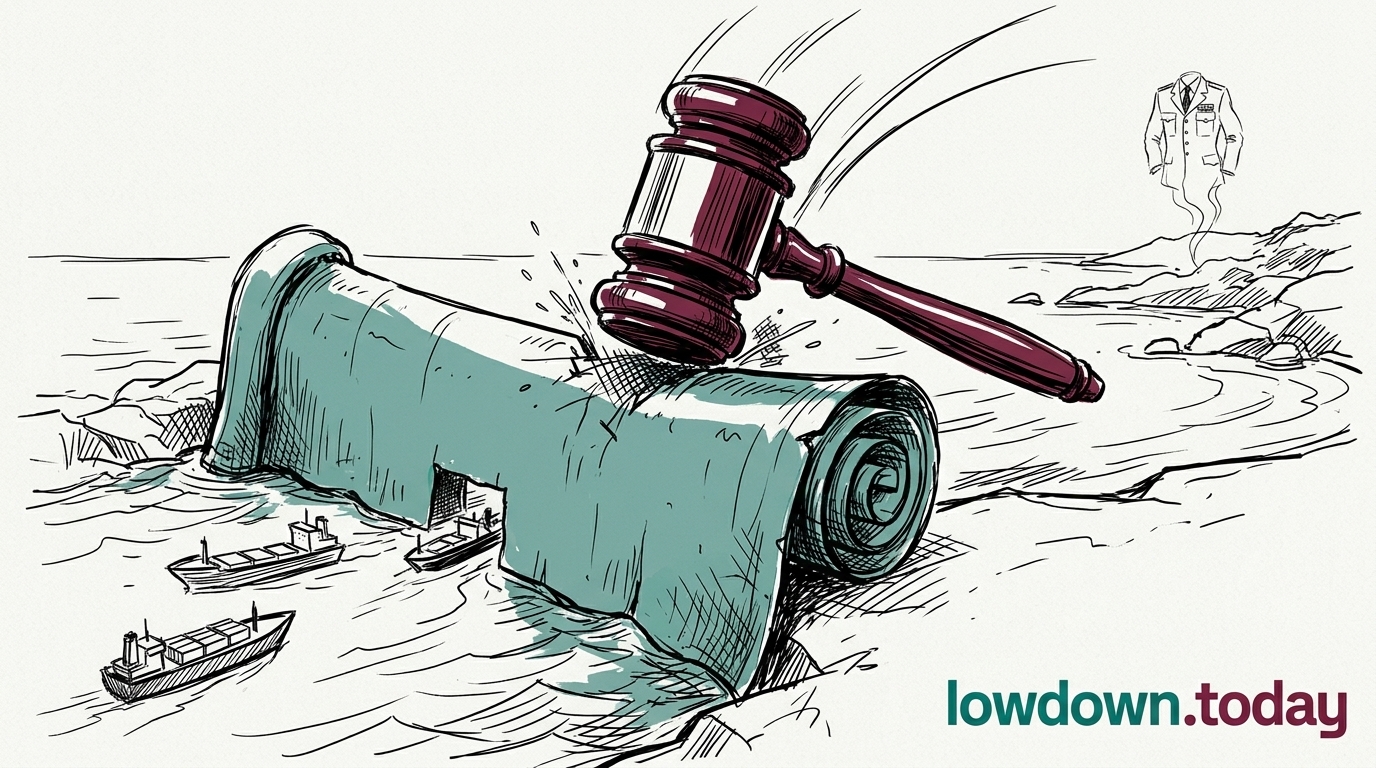
The Commission's record DMA fine against Google for self-preferencing, scheduled for March, remains unissued, with the hold-up attributed to a personal intervention by President Ursula von der Leyen.

ConflictDeveloping
Key takeaway

A record DMA fine against Google sits unissued at von der Leyen's office before the recess.

The European Commission's record DMA (Digital Markets Act) fine against Google for self-preferencing remains unissued, despite being scheduled for March 1. The DMA is the EU regulation that designates large platforms as gatekeepers and bars them from favouring their own services. The penalty sits in the high triple-digit-million-euro range, which would exceed the EUR 200m DMA record levied on Apple in 2025 . the Commission had confirmed it was preparing the fine on 25 May ; the new development is why it has not landed.

The hold-up has been attributed to a personal intervention by Commission President Ursula von der Leyen, which moves the delay from the case team to her office 2. In May, more than 30 civil-society organisations led by Open Markets Institute Europe wrote to her expressing "grave concern" 3. A fine attributable to a President's personal hold, rather than to the officials who built the case, converts a competition ruling into a bargaining counter in the EU-US trade talks, which is the discretion the DMA's design was meant to remove.

Timing sharpens the stakes. A binding ruling forcing Google to share search-ranking data with rivals is due on 27 July . If the fine clears von der Leyen's office before the summer recess, the two actions would form a double-barrel enforcement sequence against Alphabet inside five weeks. If it does not, Google's rivals keep waiting for a remedy first promised in spring while the conduct continues, and Washington gains a talking point that DMA enforcement bends to politics.

Deep Analysis

In plain English

The EU passed a law called the Digital Markets Act to stop very large tech platforms from unfairly favouring their own products. Google, for instance, shows its own shopping results and maps above rivals in search. The Commission's enforcement team completed its investigation months ago and recommended a record fine. The fine has not been issued because EU Commission President Ursula von der Leyen personally intervened to hold it back. More than 30 consumer and tech groups wrote to her in May 2026 asking her to release the decision. The fine is expected to be hundreds of millions of euros, and it would be followed by a separate order forcing Google to share its search data with rivals.

Deep Analysis
Root Causes

The delay has a documented proximate cause: Commission President von der Leyen's personal intervention. The structural cause is the EU-US regulatory-tariff coupling that formed in early 2026. The US Section 301 investigation naming DMA cloud probes as economic warfare created a credible threat of retaliatory tariffs on EU exports.

For Germany, whose automotive industry faces up to USD 200bn in threatened tariff exposure, DMA enforcement against US platforms became a variable in a tariff negotiation rather than an autonomous legal process.

A secondary structural cause is the three-deadline cluster confirmed for late July and early August 2026: the USTR Section 301 final determination on 24 July, the binding DMA Google search-data decision on 27 July, and EU AI Act GPAI enforcement on 2 August.

Releasing the Google self-preferencing fine before that window would turn a single enforcement action into the first salvo of a six-week regulatory sequence that Washington has already characterised as coordinated attack on US technology companies.

What could happen next?
  • Risk

    A confirmed presidential hold on a completed DMA case sets a precedent that geopolitical pressure can pause EU competition enforcement, which Alphabet's legal team will cite in any future fine appeal.

  • Consequence

    If the fine releases before 27 July, the six-week triple-enforcement window (DMA fine, DMA search-data order, AI Act GPAI) creates the most concentrated EU-US digital regulatory pressure in history.

First Reported In

Update #7 · Sovereignty arrives, minus Brussels

Steptoe LLP· 3 Jun 2026
Read original
Different Perspectives
Markets
Markets
Brent crude rose 2.2 per cent to $96.34 on 10 June, reversing a 7 per cent weekly decline built on deal optimism, as the overnight exchange repriced the Strait of Hormuz risk premium in a single session. The move reflects transit-risk repricing rather than supply shock: Iran's exports had already collapsed to below 300,000 barrels per day.
Pakistan
Pakistan
Pakistan's Naqvi channel, the only mediation track carrying both civilian and military buy-in, was stress-tested by live ordnance within 48 hours of the 6-7 June Tehran visit. Whether Washington informed Islamabad of the imminent strike plan while Naqvi was in Tehran remains undisclosed, putting the channel's neutrality under scrutiny.
Kuwait
Kuwait
Kuwait hosted the third Iranian strike on its soil since the 3 June airport drone attack, with Ali Al Salem airbase targeted in the three-country salvo. Its recent $1.98 billion Anduril Anvil counter-drone purchase signals it is rearming rather than reconsidering its hosting posture.
Bahrain
Bahrain
Bahrain absorbed the IRGC barrage via PAC-3 intercepts with its magazine already at 87 per cent depletion and no resupply before 2027. Sounding air-raid sirens over Manama, it faced the intercept burden with the thinnest defensive stack in the Gulf coalition.
Jordan
Jordan
Jordan reported all five incoming missiles intercepted with no injuries and no damage, a clean defensive performance that strengthens Amman's case for staying in the Western coalition without escalating its own posture. It now sits on Iran's target list for the first time despite not being a party to the Abraham Accords confrontation.
Iran / IRGC
Iran / IRGC
Foreign Minister Araghchi posted on X that US forces should 'leave our region if you want to be safe' and framed the exchange as a US defeat, while the IRGC claimed 21 targets hit and an F-35 hangar destroyed. The claims serve a domestic and Arab-audience framing rather than a verified battle-damage assessment.