Skip to content
Welcome, thoughtbot's Giant Robots listeners!Start here
Iran Conflict 2026
24MAR

Five finance ministers push windfall levy on energy

3 min read
05:37UTC

Germany, Italy, Spain, Portugal and Austria wrote jointly to Commissioner Wopke Hoekstra on 4 April calling for a new EU-wide contribution modelled on the 2022-23 solidarity levy.

ConflictDeveloping
Key takeaway

Five capitals have put a windfall levy on the table before the Commission's April energy calendar closes.

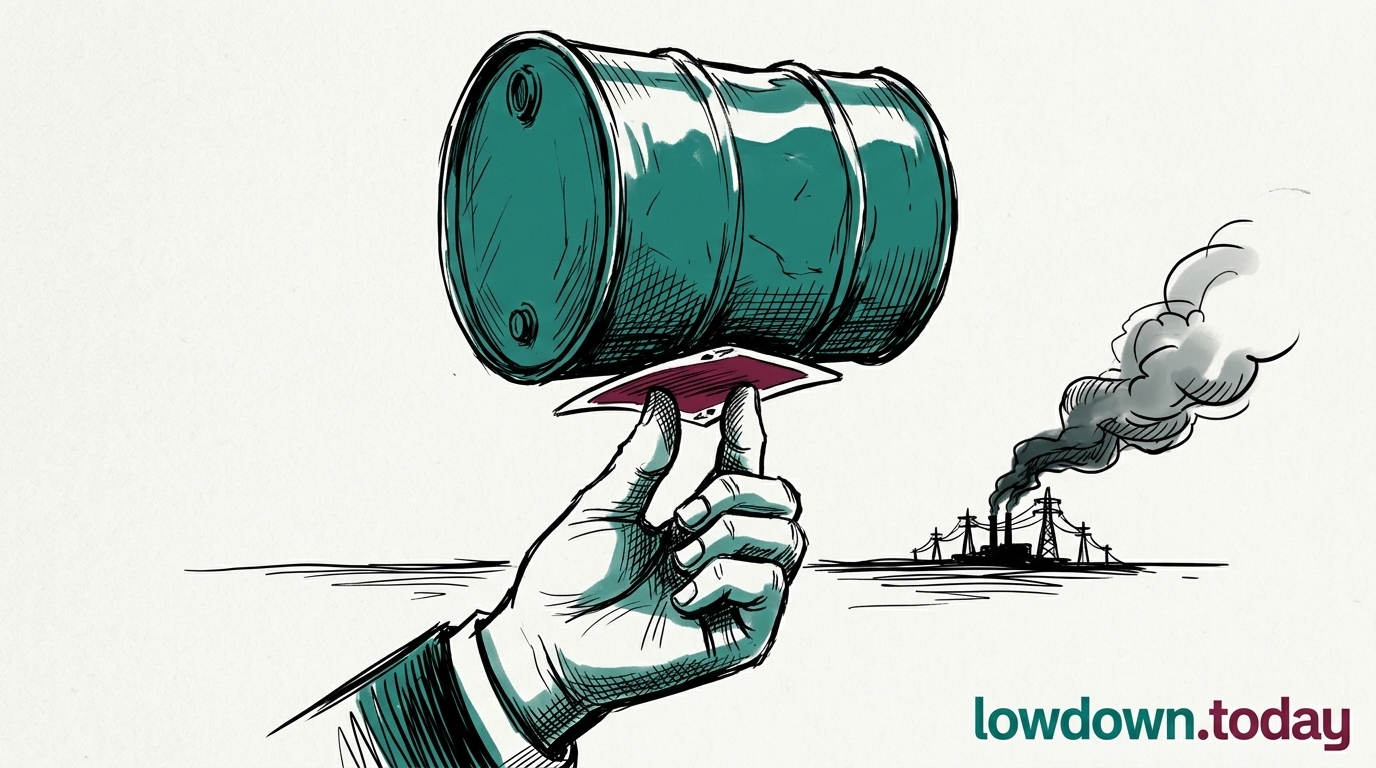
Finance ministers of Germany, Italy, Spain, Portugal and Austria wrote jointly to EU Climate Commissioner Wopke Hoekstra on 4 April calling for a new EU-wide windfall contribution on energy company profits, modelled on the 2022-23 solidarity levy⁠1. Eurozone inflation rose to 2.5% in March from 1.9% in February, largely on energy.

The political mechanism is familiar from the 2022 solidarity levy: governments facing renewed household cost-of-living pressure look for a revenue instrument that does not require direct fiscal transfer and lands on politically visible corporate profits. The signatories are the five member states running the highest consumer-facing gas tariffs relative to pre-2022 baselines, and the Ember analysis showed EU household gas bills still 16% above 2021 levels.

The Commission's position is more constrained than the 2022 moment. The reduced 80% November storage target is already a concession to the supply-side difficulty of the Bruegel €35 billion refill; stacking a windfall contribution on top of a Russian LNG ban implementation in the same fortnight compresses the room for negotiation with industry. If adopted, the levy redistributes cost from consumer to energy-profit balance sheets; if deferred, it becomes a campaign issue in member states with 2026 elections on the calendar.

The operational read for energy-sector finance leads is that the 4 April letter is a forward commitment, not a proposal. It places a funded position on the table before the 40th Gas Regulatory Forum convenes in Madrid on 29 April context, which means the Forum's agenda now includes a redistribution argument the Commission did not choose to open.

Deep Analysis

In plain English

When gas prices spike, energy companies making much higher profits than normal on existing contracts and assets receive what are called 'windfall profits'. In 2022-23, during the last major energy crisis, the EU introduced a one-off levy on energy companies to capture some of these extra profits and use them to support consumers. On 4 April 2026, the finance ministers of Germany, Italy, Spain, Portugal, and Austria jointly wrote to the EU's Climate Commissioner calling for a new version of this levy. They cited a rise in Eurozone inflation from 1.9% to 2.5% in March, largely driven by energy costs. The proposal faces the same design challenge as last time: if the levy reduces the financial incentive for energy companies to invest in new supply infrastructure, it could worsen the very shortage that is causing the high prices.

What could happen next?
  • Risk

    A hastily designed levy repeating 2022-23's national divergence would face legal challenge across multiple member states, delaying any consumer relief by 12-18 months.

  • Opportunity

    If designed with the UK EPL's investment allowance structure, a 2026 levy could fund consumer relief while preserving incentives for LNG terminal expansion investment that Europe requires to close the 180-cargo structural gap.

First Reported In

Update #2 · TTF EUR 42 as Russian LNG ban enters range

European Commission· 15 Apr 2026
Read original →
Different Perspectives
International Energy Agency
G7 members agreed on 2 October to release up to 100 million barrels through the IEA over four months, front-loading diesel.
China
China
China signed the 15 October text reaffirming the Resolution 2216 arms embargo on the Houthis. The Wall Street Journal reported that Conflict Armament Research found Chinese parts in a Houthi copy of Iran's Kheibarshekan missile.
Russia
Russia
Russia joined the 15 October consensus condemning the Houthis, a month after vetoing a mandate for a UN panel of experts on Iran sanctions on 17 September. One Western official told Bloomberg that Moscow is providing Iran with missiles, and the White House rejected the assessment.
India
India
National Security Adviser Ajit Doval raised seafarer safety with Mohsen Rezaei on 12 October, after a drone hit the Petro Dolphin with 11 Indians aboard at Sohar. External Affairs Minister S. Jaishankar urged that attacks on commercial shipping and seafarers be avoided.
Lebanon
Lebanon
President Joseph Aoun met UN peacekeeping chief Jean-Pierre Lacroix in Beirut on 14 October as UNIFIL winds down before its mandate ends on 31 December. Two days later Qatar's prime minister pledged in Beirut to fund a solar plant for Lebanon.
Kataib Hezbollah
Kataib Hezbollah
The militia announced a halt to operations except against "hostile aircraft" and denied any disarmament deal with Prime Minister Ali al-Zaidi. A day later Quds Force chief Esmail Qaani urged eliminating "remaining traces of the US presence in other arenas".

Written with AI from Lowdown's published reporting. Not individually reviewed by an editor. Editorial standards.