Skip to content
Briefings are running a touch slower this week while we rebuild the foundations.See roadmap
Iran Conflict 2026
23MAR

EU bars Hungary from €16bn arms fund

2 min read
05:40UTC

The European Commission withheld Budapest's €16.2 billion SAFE allocation while approving France and Czechia the same day, the first use of EU defence spending as punishment against a member state.

ConflictAssessed
Key takeaway

The EU used its own defence budget as punishment against a member state for the first time.

The European Commission froze Hungary's access to €16.2 billion under the SAFE programme (Security Action for Europe) on 25 March 1. France and Czechia had their SAFE plans approved the same day. Hungary is the sole country frozen among 19 participants.

The trigger is Budapest's continued blockade of the €90 billion Ukraine loan . Orbán nominally dropped his objection in exchange for Zelenskyy's commitment to repair the Druzhba pipeline within 1 to 1.5 months, but Hungary re-blocked the loan at the EU summit on 19 March. An EU diplomat told Euronews it is "difficult to agree billions for Orbán when he violates loyal cooperation" 2.

SAFE was designed to incentivise collective European defence spending, not to punish dissent. By freezing a member state's allocation for political non-cooperation rather than technical non-compliance, the Commission has created an enforcement tool outside the Article 7 procedure. This approach is faster and more financially painful than rule-of-law conditionality, which took years to produce results against Hungary.

EU treaty structures require unanimity for foreign policy decisions, giving any single state veto power. The SAFE freeze bypasses this by using Commission-level programme administration, which operates by qualified majority, to punish behaviour that unanimity rules protect. Whether this accelerated coercion produces compliance or hardens Budapest's resistance will shape EU governance for years.


Deep Analysis

In plain English

The EU set up a shared defence spending pot to help member states rearm. Hungary is the only one of 19 participants whose €16.2 billion allocation has been frozen. Why? Hungary keeps blocking an EU loan to Ukraine that the other 26 members agreed on. The EU is using its defence fund as a bargaining chip: comply with the bloc's Ukraine policy, or lose your share of the rearmament money. It matters because it sets a precedent: for the first time, the EU is using its own defence budget as a punishment rather than a reward.

Deep Analysis
Root Causes

Hungary's position stems from Orbán's domestic political economy, not ideological sympathy with Moscow.

Hungary's energy sector is structurally dependent on Russian gas and oil via the Druzhba and Brotherhood pipelines. Orbán has used this dependence as leverage within the EU, trading his veto on Ukraine support for energy exemptions and funding concessions since 2022.

The April 12 Hungarian elections create a short-term incentive for Orbán to appear sovereign against EU pressure, even at the cost of €16.2 billion in frozen rearmament funds. The freeze may harden rather than soften his position in the near term.

The deeper structural issue is that EU treaty design gives any single state veto power over foreign policy, a feature designed for small-scale disagreements that becomes a systemic vulnerability when one member state actively undermines the bloc's security consensus.

First Reported In

Update #8 · Pentagon diverts funds; 948 drones fired

Euronews· 27 Mar 2026
Read original
Different Perspectives
IAEA
IAEA
Director General Rafael Grossi appeared in person at the UNSC on 19 May and warned that a direct hit on an operating reactor 'could result in very high release of radioactivity'. The session produced a condemnation record but no resolution, and the Barakah perimeter was already struck on 17 May.
Hengaw (Kurdish rights monitor)
Hengaw documented three judicial executions and the detention of Kurdish writer Majid Karimi in Tehran on 19 May, establishing Khorasan Razavi province as the newest geography in Iran's wartime judicial record. The organisation's Norway-based operation continues to surface a domestic repression track running in parallel with every diplomatic and military development.
India
India
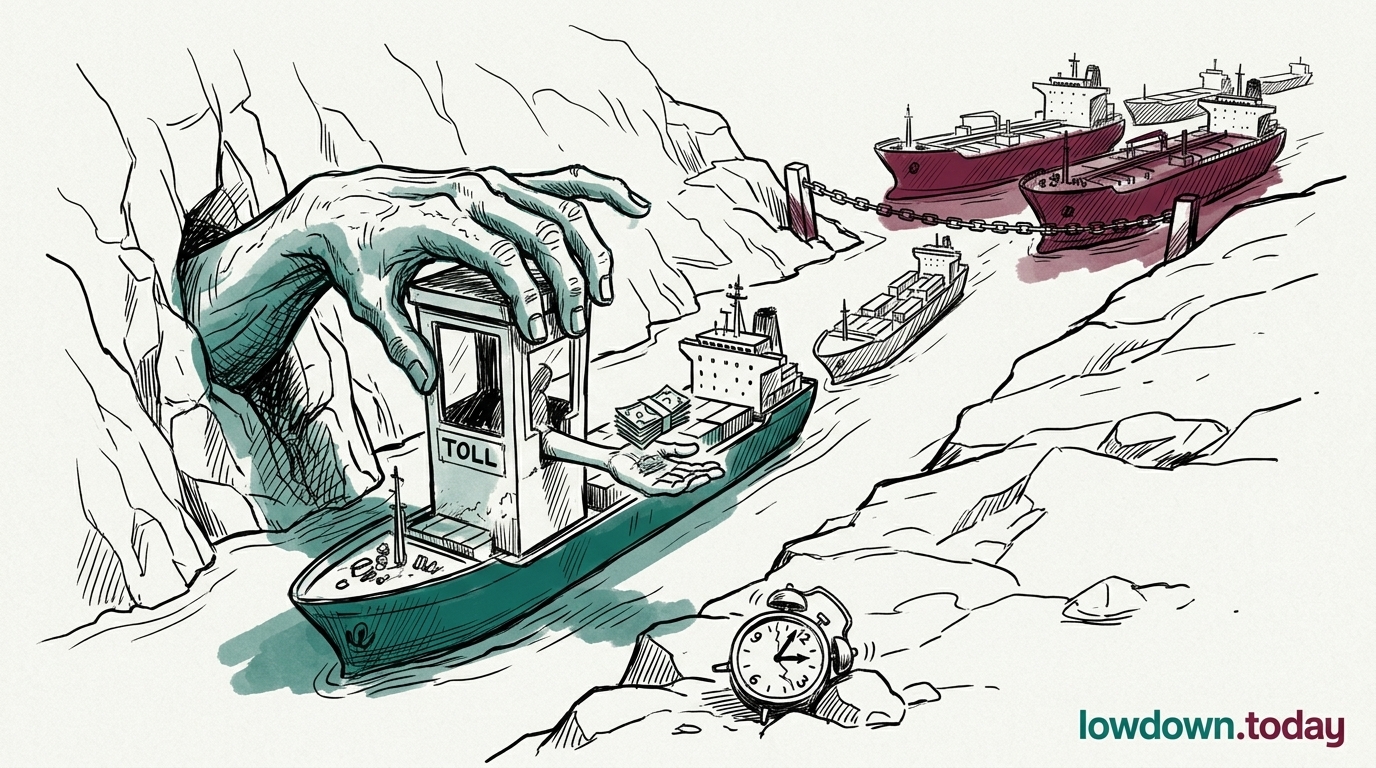
Six India-flagged vessels conducted a coordinated cluster transit under PGSA bilateral assurances during the 17 May window, paying no yuan tolls. New Delhi's inclusion in Iran's state-to-state passage track insulates Indian energy supply without requiring endorsement of the PGSA's yuan-toll architecture or alignment with the US coalition.
Pakistan
Pakistan
Pakistan is the only functioning diplomatic bridge between Tehran and Washington. Its role is relay, not mediation in the settlement sense: it conveyed Iran's 10-point counter-MOU in early May, relayed the US rejection, and is now passing 'corrective points' in the third documented exchange of this sub-cycle without either side working from a shared text.
UK and France (Northwood coalition)
Twenty-six coalition members have published no rules of engagement eight days after the Bahrain joint statement; Lloyd's underwriters have conditioned war-risk reopening on written ROE from either Iran or the coalition. Italian and French mine-countermeasures deployments are operating on the in-water clearance task CENTCOM Admiral Brad Cooper's 90% mine-stockpile claim does not address.
Saudi Arabia
Saudi Arabia
Riyadh has not publicly commented on the Barakah strike or the 50-47 discharge vote. Saudi output feeds the IEA's $106 base case; the $5 Brent premium above that model reflects institutional uncertainty no Gulf producer can compress through supply adjustment alone.



