Skip to content
Briefings are running a touch slower this week while we rebuild the foundations.See roadmap
Iran Conflict 2026
13MAR

Seventh US soldier dies of Day 1 wounds

2 min read
04:41UTC

An Army soldier wounded in a 1 March attack in Saudi Arabia — the war's opening day — died on Sunday, ten days after the strike that killed him.

ConflictDeveloping
Key takeaway

The nine-day gap between wounding and death, combined with the 'health-related incident' classification for the eighth death, creates a fragmented public casualty record that structurally reduces political accountability for US losses in Operation Epic Fury.

A seventh US service member died on Sunday from injuries sustained in a 1 March attack in Saudi Arabia — the opening day of Operation Epic Fury. The Army soldier has not been identified pending notification of next of kin.

The death extends the toll from the same cluster of early strikes that killed the six Army Reserve logistics soldiers returned through Dover Air Force Base on Saturday . Those six — the youngest Sgt. Declan Coady, 20, from West Des Moines; the oldest CW3 Robert Marzan, 54, from Sacramento — were all logistics personnel, not a combat formation. A soldier wounded on Day One and dead on Day Ten is a reminder that casualty counts from any single strike unfold over weeks and months. US military hospitals in the region are still treating an undisclosed number of wounded from the opening salvos.

Every confirmed US combat fatality in this war dates to the first seventy-two hours. No new combat deaths have been reported since. This could reflect improved force protection after an initial period when forward-deployed logistics units lacked adequate shielding against Iranian drone and missile attacks. It could reflect IRGC targeting priorities shifting toward Gulf energy infrastructure — the Shaybah oilfield , fuel depots, Saudi and Emirati civilian sites — and Israeli targets. The IRGC's 109-drone, 9-missile salvo against the UAE on a single day last week confirms Iran retains offensive capacity. The question is where it chooses to aim.

Deep Analysis

In plain English

A US soldier badly wounded nine days ago has died, bringing total American deaths to eight since the war began. The military won't release his name until his family is notified. Seven of the eight deaths were from combat or combat wounds; one was a soldier who died in Kuwait from a health problem during deployment — a category that does not count as 'killed in action.' These distinctions matter because 'died of wounds' deaths don't appear in the same news story as the original attack, and 'health-related' deaths may not appear in combat death counts at all, making it harder for the public to track the real human cost of the operation.

Deep Analysis
Synthesis

The classification architecture — KIA, died of wounds, health-related incident — is not merely administrative. It shapes War Powers Resolution reporting obligations, VA benefits eligibility, and the official metrics by which Congress and the public assess the scope of US involvement. An administration seeking to characterise US participation as limited benefits structurally from fragmented casualty accounting regardless of intent; this is a known feature of how the classification system interacts with political communication, documented across multiple post-Vietnam conflicts.

Root Causes

US forces in Saudi Arabia and Kuwait are co-located with allied military infrastructure that Iran has explicitly targeted throughout the conflict. There is no force protection posture short of full withdrawal that eliminates this exposure, and the administration's framing of the US role as 'support' rather than 'combat' creates a political incentive to avoid publicly acknowledging the degree of direct Iranian targeting of US positions.

Escalation

Eight US deaths in nine days from a nominally support-and-protection role — not a primary combat posture — suggests casualty rates will rise if the conflict extends into a third or fourth week, particularly given that IRGC targeting of US-adjacent Saudi and Kuwaiti infrastructure has continued. The 1 March attack in Saudi Arabia that produced this death has not been publicly attributed by name; if it was a deliberate direct IRGC strike on a US position rather than collateral damage, it represents an Iran-US engagement the administration has an interest in not foregrounding.

What could happen next?
  • Consequence

    The 'died of wounds' classification ensures this death enters the public record separately from the 1 March attack that caused it, fragmenting the casualty narrative in ways that reduce its immediate political salience.

    Immediate · Assessed
  • Risk

    If the 1 March Saudi Arabia attack was a deliberate IRGC strike on a US position rather than collateral damage, its non-public attribution preserves an ambiguity about the level of direct Iran-US combat engagement that the War Powers Resolution would otherwise require to be reported to Congress.

    Short term · Suggested
  • Risk

    At eight deaths in nine days from a nominally support role, the casualty rate could become a domestic political liability if the conflict extends — particularly if US forces are quietly drawn into more direct combat roles without formal acknowledgement.

    Medium term · Suggested
  • Precedent

    The 'health-related incident' classification for the Kuwait death sets a precedent for limiting the official combat death count, a practice that has historically eroded public trust in wartime government communication when the full picture emerges retrospectively.

    Long term · Assessed
First Reported In

Update #30 · Mojtaba named leader; oil $116; acid rain

The Hill· 9 Mar 2026
Read original
Causes and effects
This Event
Seventh US soldier dies of Day 1 wounds
All seven US combat-related deaths trace back to the war's opening days, raising the question of whether early force protection gaps have been closed or whether the pattern reflects a shift in Iranian targeting away from US positions.
Different Perspectives
Gulf shipping and insurance markets
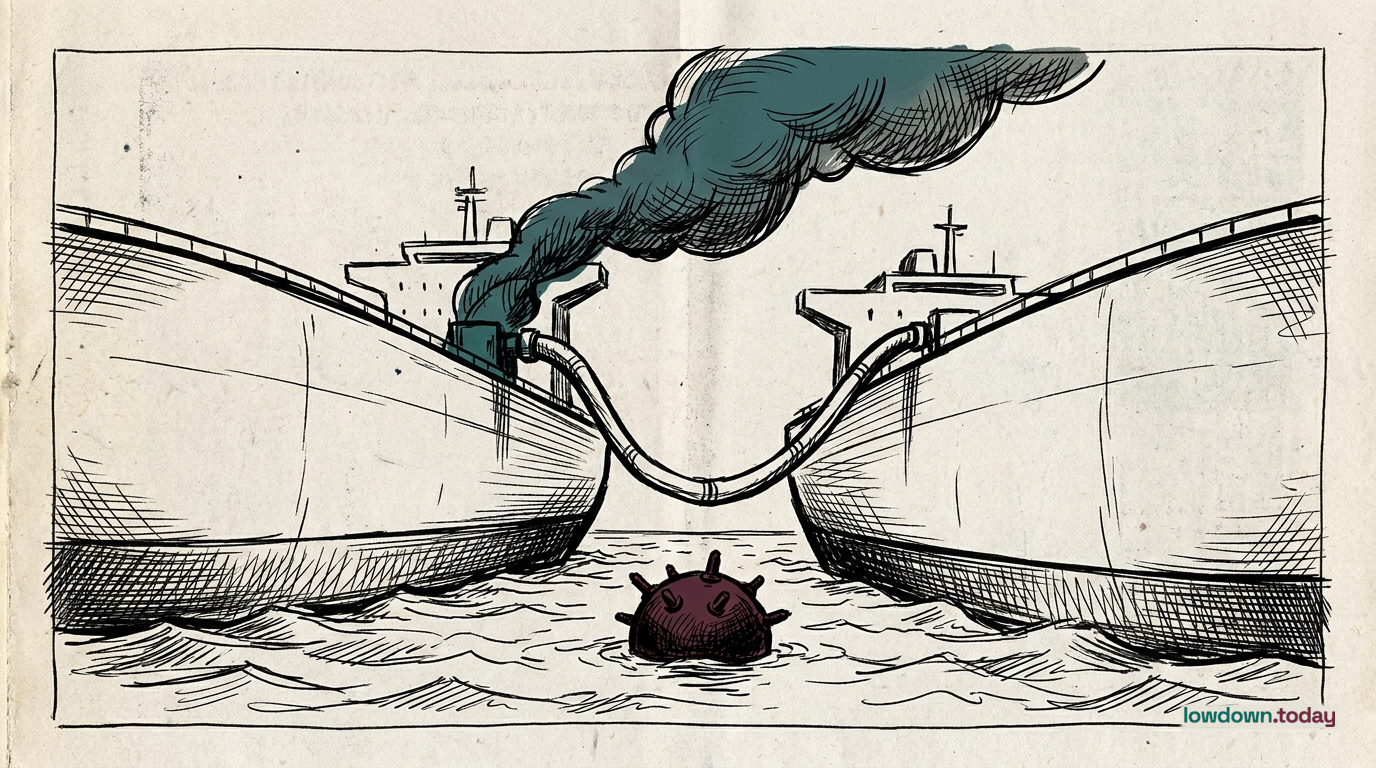
With Hormuz and Bab el-Mandeb both hostile at once, war-risk underwriters face their first dual-chokepoint pricing problem; the rerouting hedge that absorbed one closure is gone for Israeli-linked hulls. Any deal that reopens Hormuz without a Houthi stand-down clause delivers only partial shipping relief.
Russia and China
Russia and China
Russia and China met IAEA chief Grossi jointly in Geneva on 5 June to coordinate an advance blocking position against Washington's censure resolution, the first documented instance of proactive pre-session obstruction rather than reactive post-vote dissent. Beijing's move came four days after OFAC designated Shanghai Qianye Energy under Iran energy sanctions.
Saudi Arabia
Saudi Arabia
Saudi Arabia was left out of the emergency $4.01 billion Patriot waiver Qatar received on 2 May as its own PAC-3 stocks ran near-empty from intercepting Iranian salvoes over Aramco facilities. Riyadh is on a standard 18-month FMS queue behind a production line booked through 2030, with no equivalent priority to Qatar's Al Udeid basing role.
Houthis (Ansar Allah)
The Houthis declared a complete ban on Israeli Red Sea navigation on 8 June and struck Jaffa, their first attack on Israeli territory since April, seven days after the Tasnim authorisation to activate other fronts including Bab el-Mandeb. The declaration put both chokepoints under hostile authority simultaneously.
Iran
Iran
Iran agreed the 9 June mutual halt after the Mahshahr exchange and coordinated with Russia and China to block Washington's IAEA censure resolution, using the Board as a second front while the bilateral pause held on the military one. Tehran's acceptance of the Lebanon carve-out contradicts the linkage position it stated on 1 June.
Benjamin Netanyahu and the IDF
Israel struck the Karun Petrochemical plant at Mahshahr on 8 June over Trump's explicit objection, then agreed a halt with Iran the following day scoped on Israeli terms with Lebanon carved out. Netanyahu's posture is that the IDF will not accept Iranian missile factories as off-limits regardless of US diplomatic timelines.