Skip to content
Welcome, thoughtbot's Giant Robots listeners!Start here
Iran Conflict 2026
8NOV

Russia's diesel ban loses its end date

2 min read
19:56UTC

Novak tied any lifting of Russia's diesel export ban to an unspecified market recovery and pushed the parallel gasoline ban out to end-2026, removing the 31 July terminus the desk had modelled.

ConflictDeveloping
Key takeaway

Novak removed the diesel ban's expiry, leaving European gasoil curves with no fixed date to price the unwind.

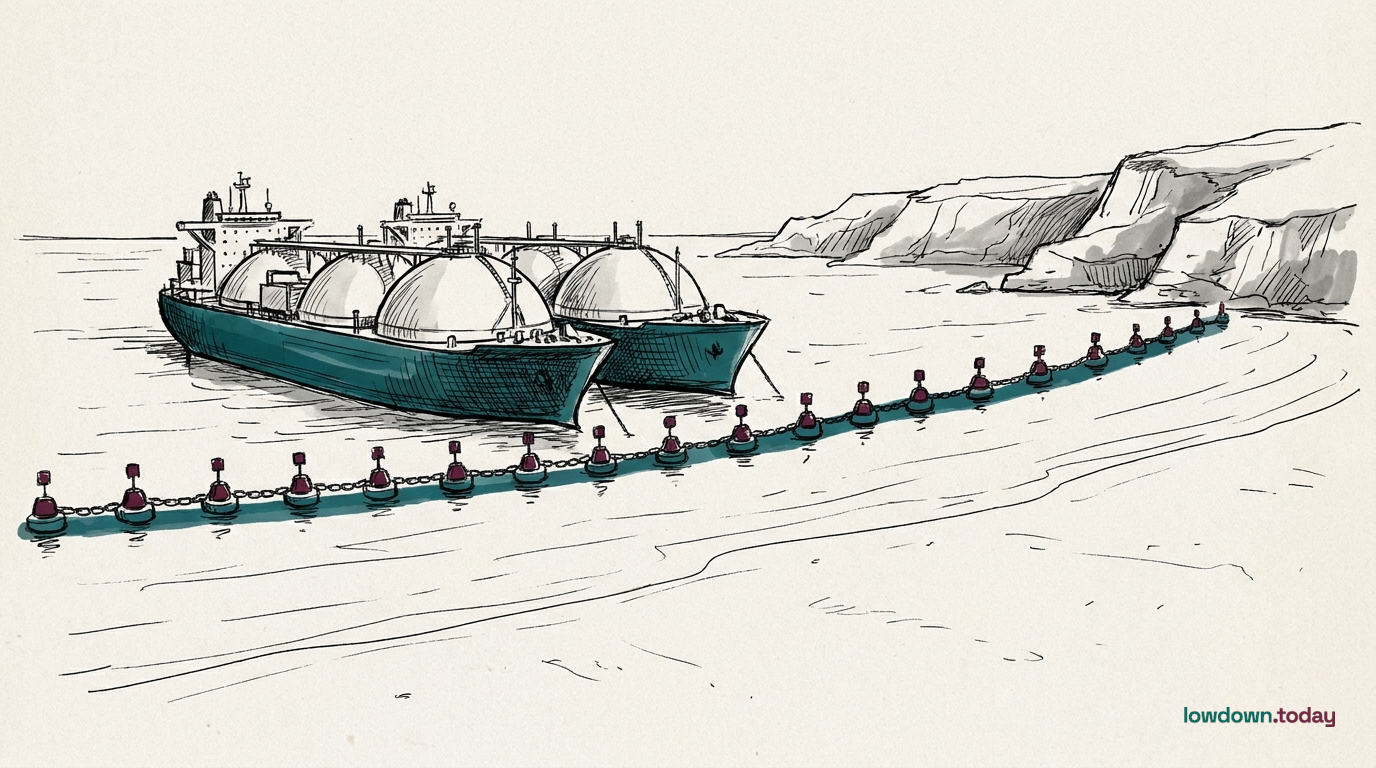
Deputy Prime Minister Alexander Novak tied any lifting of Russia's diesel export ban to an unspecified market recovery, with no calendar date attached, and extended the parallel gasoline export ban to end-2026, per Interfax on 25 July⁠1. Novak has held the energy brief in the Russian government for more than a decade and is the official who announces these instruments, so his framing is the operative one until a decree says otherwise. The ban restricts export of refined diesel from Russian refineries, which removes from the seaborne market the barrels that would ordinarily arbitrage a European product shortage.

This desk has carried the measure as running to 31 July since Novak set that terminus on 8 July. That date passed without a successor instrument and without a lapse, and the Argus assessments of 30 and 31 July show the constraint fully in force on either side of it. A constraint that was supposed to expire and simply did not is a different object from one that has been formally extended, because there is no new document to read.

Anyone modelling European gasoil forward has lost a date they could price against. A ban with a stated end can be priced: the curve carries the constraint to the terminus and releases it, and the shape of that release is tradeable. Tie the lifting to a market-recovery judgement made in Moscow and announced when it is announced, and the risk moves out of the calendar and into an assessment nobody publishes in advance. Time spreads on European gasoil now carry that judgement as an open-ended term, which pushes the exposure toward optionality and away from a dated roll, and it sits directly behind the supply picture that produced this window's record refining margins.

Deep Analysis

In plain English

Russia restricts how much diesel and petrol it exports, in part to keep enough fuel for its own domestic market. This desk had expected the diesel restriction to lapse on 31 July. Instead, Russia's deputy prime minister said any lifting now depends on an unspecified 'market recovery', with no date attached, and pushed the separate petrol restriction all the way to the end of 2026. That means traders betting on when Russian diesel exports resume no longer have a date to plan around, only a vague condition nobody can verify from outside Russia.

Deep Analysis
Root Causes

Novak's shift from a fixed lapse date to an unspecified market-recovery condition removes the one anchor forward curves had for pricing the ban's end; a fixed date lets hedgers build a calendar spread around it.

A condition-based trigger, an unpublished and unobservable threshold, cannot be priced directly, so the market is left extrapolating from the same crack and freight data already driving the current record rather than from any policy signal.

What could happen next?
  • Consequence

    Without a fixed reference date, expect forward diesel prices to keep tracking the physical crack and freight signals already elevated in this briefing rather than any Russian policy calendar, until Moscow names a concrete trigger.

First Reported In

Update #22 · The premium unwinds; the diesel crack does not

Interfax· 3 Aug 2026
Read original →
Causes and effects
This Event
Russia's diesel ban loses its end date
A supply constraint with a published expiry became one with no expiry, so the forward curve has nothing fixed to price the unwind against.
Different Perspectives
Office for Budget Responsibility
The OBR's 28 October forecast assumed $82 oil for 2026 and 2027, from market prices for the ten working days to 19 August, and blamed dearer wholesale energy on the war without naming Iran. It expects CPI inflation close to 4% in early 2027 even at that price.
Hengaw, Kurdish rights group
Hengaw reported the 3 November hangings of Amirhossein Maleki and Amirhossein Ebrahimi in Isfahan, saying Ebrahimi was tortured into confessing and that nine of 12 people sentenced to death in the case have now been hanged. Iran's judiciary holds that the defendants killed members of the security forces.
FINTRAC, Canada's financial intelligence unit
FINTRAC worked with the US Treasury on the 6 November designation of eight money services businesses in British Columbia, Ontario and Quebec. Treasury says the businesses still operate, some under new names, so closing them falls to Ottawa.
Abdul Qadir al-Dakhil, Governor of Nineveh
Al-Dakhil cancelled three Mosul International Airport contracts on 7 November over alleged links to armed groups, after meeting Prime Minister Ali al-Zaidi in Baghdad. He named no group or company, and said the contracts will go to international companies.
Kuwait
Kuwait
Kuwait condemned the Houthi missile fired towards the Madinah region on 5 November and restated its support for Saudi Arabia, the Qatar News Agency reported. Its state tanker company, Kuwait Oil Tankers Company, is among the Gulf state fleets on Iran's expanded Hormuz list.
Scott Bessent, US Treasury Secretary
Treasury designated an alleged Chandigarh false-flag network on 4 November and eight Canadian exchangers on 6 November, while State sanctioned alleged MANPADS intermediaries. None of the actions touches an oil buyer; they target the paper, cash and procurement around Iran's trade.

Written with AI from Lowdown's published reporting. Not individually reviewed by an editor. Editorial standards.
