Skip to content
Welcome, thoughtbot's Giant Robots listeners!Start here
Iran Conflict 2026
7SEP

IMO logs three new merchant casualties

2 min read
14:39UTC

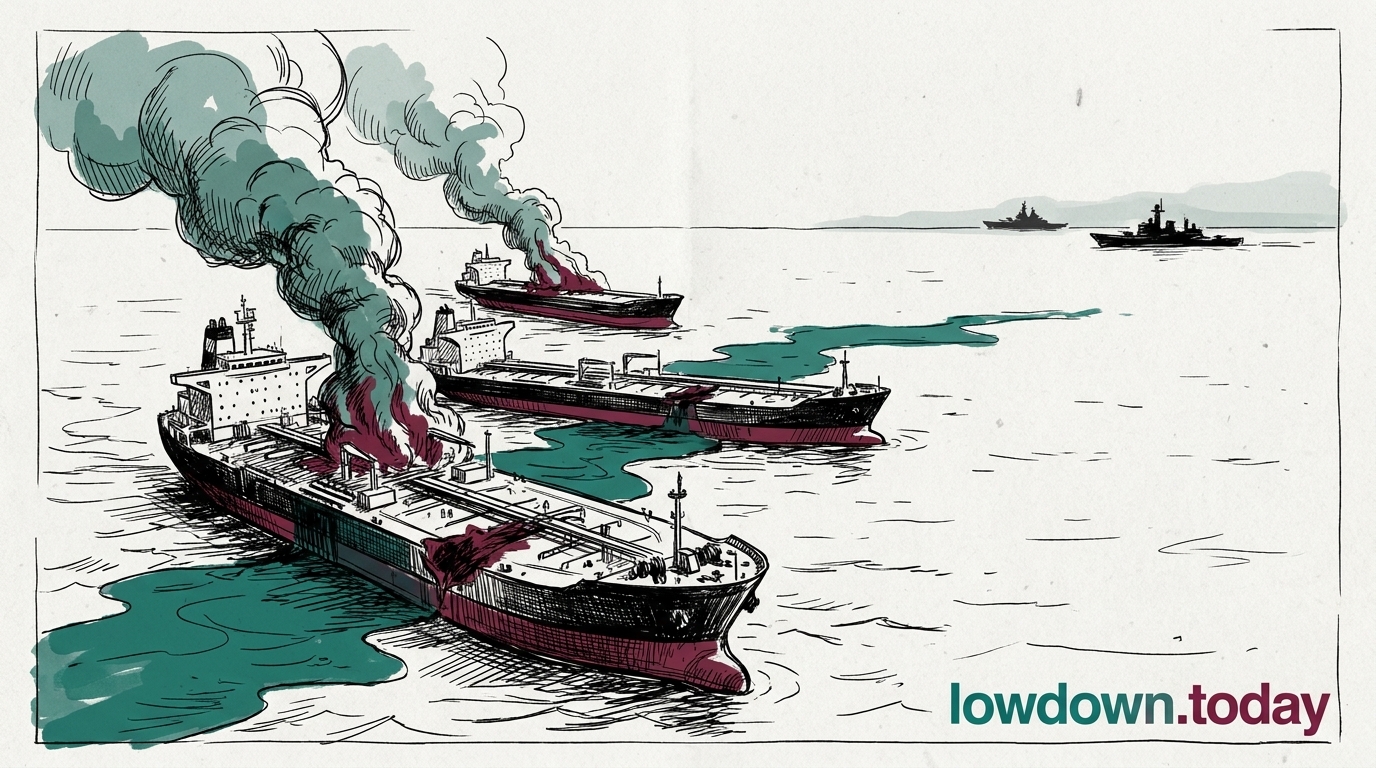
The IMO added Horizon 1, Hercules Star and New Andros to its confirmed-incident register. One hull appears on that register and on CENTCOM's list of successes on the same day.

ConflictAssessed
Key takeaway

Three named merchant casualties join a register that neither belligerent controls.

The International Maritime Organization (IMO), the United Nations agency responsible for the safety of international shipping, added three merchant casualties to its confirmed-incident record through 10 September⁠1. Horizon 1 was damaged on 8 September. Hercules Star was damaged on 9 September, and its charterer reported one crew member killed and a second missing⁠2. New Andros was damaged the same day while carrying fuel oil⁠3.

Every entry on that register carries a vessel name, a date and a location, and neither US Central Command nor the Islamic Revolutionary Guard Corps compiles it. That independence is the whole of its value. Both belligerents issued competing accounts of the same water this week, and an underwriter setting a war-risk premium for the Strait of Hormuz cannot price either one. The register's limits show up in its own entries. An unclaimed projectile killed a crew member aboard an outbound vessel on 18 August, and no name, flag or operator was ever published for the ship. A casualty that can be counted but not attributed tells an owner what happened and nothing about what to avoid.

Horizon 1 is the awkward case. CENTCOM named it as one of the crude carriers its forces disabled, and the IMO recorded it as damaged on the same date, which means a single hull is counted as a victory in Tampa and as a casualty in London. Neither entry is wrong. They are two institutions measuring different things about one event, and the gap between them is where the human cost of this war goes uncounted: a disabled vessel is an achieved military objective to one and a crew in a lifeboat to the other.

Deep Analysis

In plain English

The International Maritime Organization (IMO) is the United Nations agency that sets global shipping safety rules and keeps an official count of attacks on commercial vessels. By 10 September, the IMO's confirmed count reached 75 attacks and 22 deaths among ship crews since the war began. Three ships were newly added to that list in this period: Horizon 1, Hercules Star, where one seafarer was killed, and New Andros. These are ordinary merchant sailors, not military personnel, caught in a conflict between states. The IMO's own plan to evacuate around 6,000 of the most exposed seafarers has been on hold, even though roughly 20,000 people working at sea in the region remain exposed to the risk.

Deep Analysis
Root Causes

IMO's own evacuation plan for at-risk seafarers, targeting roughly 6,000 people, has remained paused since before this reporting period, even as the organisation estimates about 20,000 seafarers, port workers and offshore crews remain exposed. The gap between the exposed population and the paused evacuation capacity is structural, not a resourcing shortfall from this week alone: the last full evacuation, in June, moved only 2,900 of the seafarers now again at risk.

The toll rose by five confirmed incidents and three deaths in the 13 days to 10 September, a faster rate of increase than the prior stretch of the war, without any new mechanism, coalition escort, evacuation, or ceasefire, entering the record to explain the acceleration.

What could happen next?
  • Consequence

    The confirmed toll rose by five incidents and three deaths in 13 days, a faster pace than the previous reporting window, while the IMO's own evacuation plan for at-risk seafarers remains paused.

First Reported In

Update #177 · 23 to 3: Iran goes to the Security Council

International Maritime Organization· 11 Sept 2026
Read original →
Causes and effects
This Event
IMO logs three new merchant casualties
The IMO register is the one count neither belligerent compiles, which is why an insurer reaches for it when CENTCOM and the IRGC disagree.
Different Perspectives
Wang Yi
Wang Yi
China's foreign minister and Djibouti's issued a joint communique on 21 October saying the war should not reach the Horn of Africa and stressing free navigation through Bab al-Mandeb. The text names neither Iran nor the Houthis, and Djibouti hosts China's only overseas military base, opposite the Yemeni coast.
Ministry of External Affairs
India's foreign ministry called the attacks on Saudi civilian and energy sites "unacceptable" on 22 October and said they must stop at once. An Indian died at Dammam, Indians were injured there and at Shaybah, and about 4,000 Umrah pilgrims remain stranded by one MP's count.
Iraq
Iraq
Iraq closed the al-Sheeb crossing with Iran to travellers and trucks from 21 October and said other crossings would close gradually. Unlike September's closure, which ended on a staged timetable, this one has none, and Iran's interior ministry said it received no notice.
Abdel Fattah el-Sisi
Egypt's president said on 21 October that Cairo's support would "defend Saudi territory, and does not include an attack on Yemen". Araghchi warned that Egyptian involvement would further complicate the situation, and Cairo's limit matches the one Ankara set on 8 October against attacking another state's soil.
UK Ministry of Defence
The MoD said on 20 October that RAF Typhoons over Saudi Arabia will not strike the Houthis, but extended tanker support to Saudi operations including against Houthi targets in Yemen. The tanker line sets no limit on strikes, so British aircraft may now refuel Saudi jets on bombing runs.
Turkey
Turkey
Ankara sent the Mecca Joint Defence Agreement to parliament around 20 October, and its published text treats an attack on one party as an attack on all. Article 16 brings it into force only on the last ratification, so the 5 October invocation in Riyadh could not yet bind Turkey.

Written with AI from Lowdown's published reporting. Not individually reviewed by an editor. Editorial standards.
