Skip to content
You can now search across every topic, entity and event.What's new
Iran Conflict 2026
3SEP

Majlis codifies Hormuz toll in law

2 min read
16:40UTC

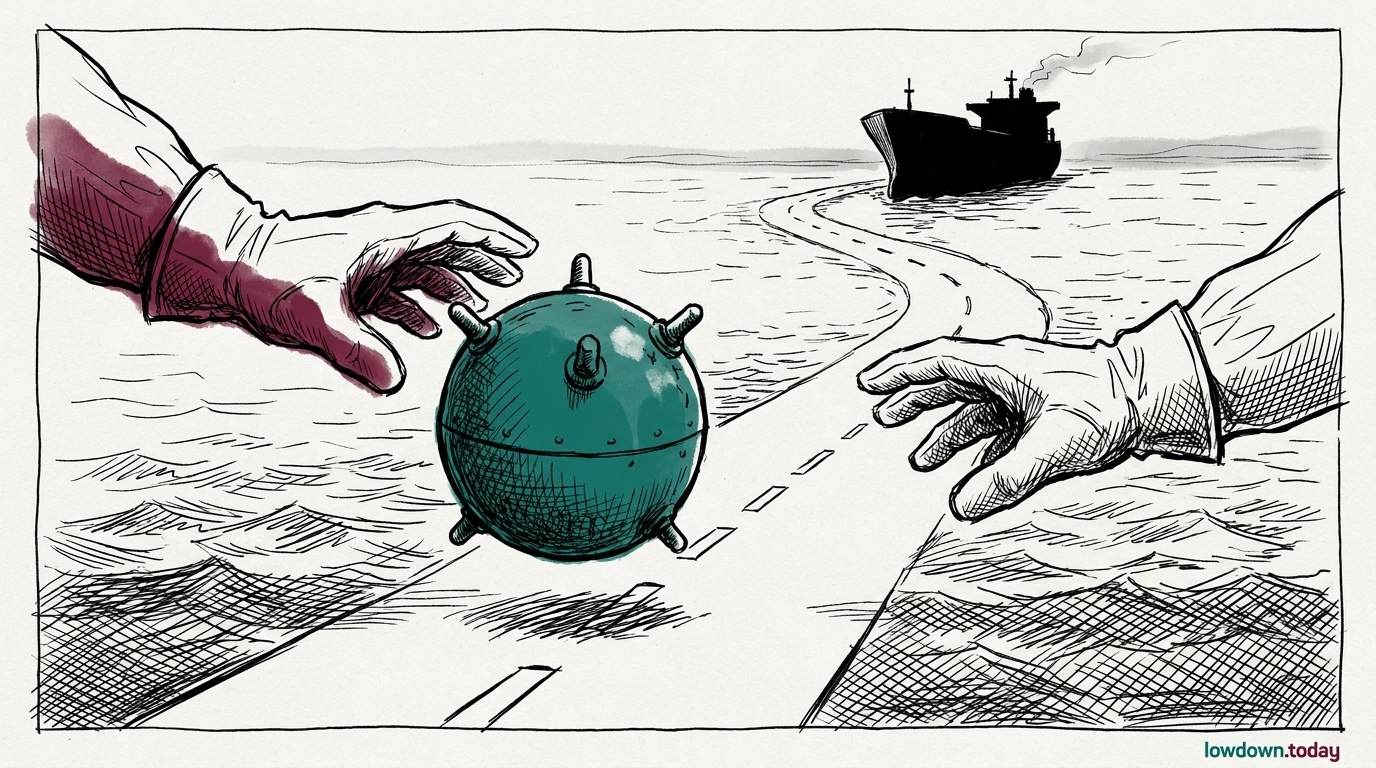
The blockade that began as a military measure is becoming domestic legislation, with projected revenues reaching $800 million per month.

ConflictDeveloping
Key takeaway

Iran is converting a wartime blockade into permanent law, making reversal a sovereignty question.

Iran's Majlis began drafting legislation on 31 March to codify the IRGC's Hormuz toll into permanent domestic law. 1 A vote was expected before the end of March but cannot proceed until parliament reconvenes. At projected scale, revenue estimates reach $600 million to $800 million per month from oil tankers and LNG carriers combined.

The legislative step matters because it changes the nature of what the toll is. An operational wartime measure can be reversed by the military that imposed it. A law can only be reversed by the parliament that passed it, with Guardian Council approval, after a political process that no Iranian politician has incentive to initiate. Shadow fleet vessels already account for 80% of Hormuz transits , and the toll is being paid by state-backed Chinese container ships. The infrastructure is built. Legislation is the lock.

The last time a state imposed transit fees on a major international waterway was the Ottoman Empire's Bosphorus tolls, abolished by the 1936 Montreux Convention. Iran's version is being codified in real time during an active war. The NPT withdrawal bill remains frozen in the same parliament : the Majlis has not sat in 31 days, with no reconvening date announced. When it does sit, both bills advance simultaneously.

Deep Analysis

In plain English

Iran's parliament is writing a law to permanently charge ships a toll to cross the Strait of Hormuz. The law has not passed yet because parliament has not met in over a month. The difference between a wartime toll and a permanent law is significant. A wartime toll can end when the war ends. A law can only be changed by parliament, which means it could last for decades regardless of how the war ends. The last time a country charged transit fees on a major international waterway was the Ottoman Empire, which charged Bosphorus tolls until a 1936 international agreement abolished them. Iran is trying to do the same thing in 2026.

What could happen next?
  • Precedent

    If enacted, this would be the first domestic law codifying a sovereign charge on an international strait in modern maritime history, challenging UNCLOS innocent passage rights.

    Long term · 0.85
  • Consequence

    Reversing the toll post-war becomes a sovereignty dispute requiring treaty revision rather than a military question, making it functionally permanent.

    Medium term · 0.8
  • Risk

    When parliament reconvenes, both the toll bill and the NPT withdrawal bill advance simultaneously, presenting the international community with two irreversible legislative facts at once.

    Short term · 0.7
First Reported In

Update #53 · Trump drops Hormuz goal; toll becomes law

NBC News / Lloyd's List· 31 Mar 2026
Read original
Different Perspectives
China's foreign ministry
Spokesman Lin Jian rejected Treasury Secretary Scott Bessent's 25 August warning that Iranian oil buyers face an "economic D-Day", saying sanctions do not help and that Beijing would safeguard its own rights and interests. China's Iranian crude imports had already halved for unrelated reasons.
Iraq's government and Erbil authorities
Erbil authorities said 10 explosive-laden drones were shot down over the city on 1-2 September with no casualties. Iraq's government condemned the attacks without naming Iran as their source, and neither Washington nor Baghdad confirmed the IRGC's claim to have hit US bases there.
Bahrain Defence Force
The General Command said air defences intercepted several Iranian missiles and drones on 1-2 September and called the use of such weapons against civilians and private property a flagrant violation of international humanitarian law.
Kuwait's Fire Force and foreign ministry
KUNA reported a hostile Iranian drone struck a residential complex in Kuwait City on 2 September; Fire Force spokesman Brigadier General Mohammad Al-Gharib said losses were confined to property. Kuwait's foreign ministry called the attack a clear breach of its sovereignty.
Jordan's Armed Forces
Petra carried a statement that air defences intercepted eight missiles violating Jordanian airspace early on 31 August and 10 of 13 fired on 1 September. The statement named no target and did not address the IRGC's claim to have struck Camp Titin and killed US personnel.
CENTCOM
CENTCOM
CENTCOM's 1 September target list named IRGC air defence, radar, maritime and mine-laying sites in Iran but no tanker, after Axios reported anonymous officials describing a Trump-approved "tanker for tanker" drone policy. A CENTCOM spokesman declined to confirm the policy and referred questions to policymakers.